
The Trees That Make a Property Feel Like Home Also Need Thoughtful Care
Discover how thoughtful tree care, seasonal inspections, safe pruning, storm preparation, and timely professional help can protect the trees that give your property beauty, shade, and a lasting sense of home.
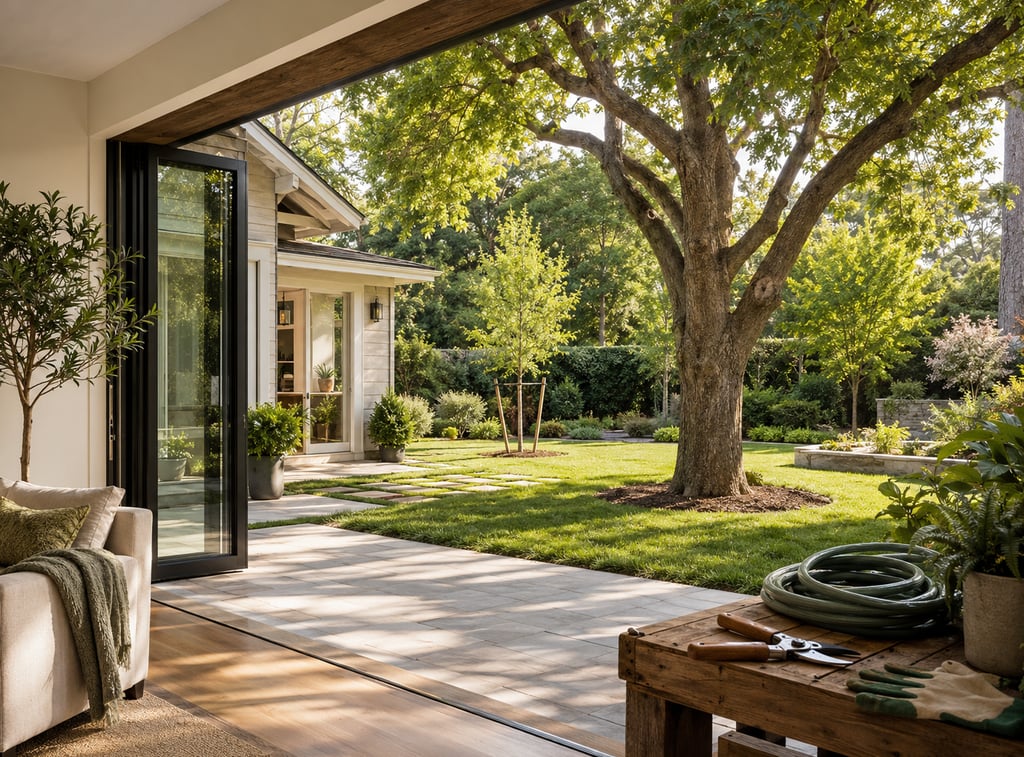

Some of the most meaningful parts of a home were never designed by an architect or installed by a contractor.
They grew there.
The oak that shades the back porch, the maple that changes color every autumn, or the line of evergreens that gives the yard privacy can shape the feeling of a property as much as the house itself. Trees soften hard edges, frame familiar views, shelter wildlife, and create comfortable places where people naturally want to spend time.
Over the years, they also become part of a family’s story.
Children may learn to ride bicycles beneath them. Neighbors may stop to talk in their shade. Holiday photographs may be taken beside them. A sturdy branch may hold a swing for years, while a flowering tree near the kitchen window quietly marks the return of spring.
These ordinary moments make mature trees feel permanent.
But trees are living organisms. They grow, adapt, experience stress, suffer injuries, and eventually decline. Even a tree that has stood quietly for decades may develop a weak branch, damaged roots, internal decay, or another condition that deserves attention.
Thoughtful tree care is not about making nature perfectly controlled. It is about helping healthy trees continue to thrive while recognizing when a tree could threaten the home, the yard, or the people who enjoy them.
You do not need to fear every leaning trunk or fallen twig. You simply need to know what deserves a closer look, what can be monitored, and when professional guidance may be the safest next step.
Why Mature Trees Add So Much to a Home
A young landscape can be attractive, but mature trees give a property something that cannot be recreated quickly.
They add height, depth, movement, and history. Their branches filter intense sunlight and create shifting patterns across the lawn, porch, and windows. Their canopies make a house look more settled into its surroundings rather than placed on an open piece of land.
Depending on their location, species, and condition, mature trees may also:
Shade patios, play areas, and outdoor seating
Reduce direct sunlight on portions of the house
Create privacy from roads and neighboring properties
Soften traffic noise and distracting views
Define different areas of a large yard
Protect smaller plants from intense afternoon sun
Provide nesting and feeding spaces for wildlife
Make sidewalks and driveways feel more welcoming
Give a neighborhood an established character
Create natural gathering places for family and friends
These benefits explain why homeowners often become deeply attached to the trees around their property. A mature tree is difficult to replace, not only because of its size but also because of the atmosphere it creates.
Caring for it is one way of protecting that value.
The goal should not be to remove trees simply because they require occasional attention. It should be to understand their condition well enough to make decisions that support both the landscape and the people living within it.
Familiar Trees Can Change Without Looking Different
A familiar landscape can create the illusion that nothing is changing.
You see the same trunk outside the window every morning. The same canopy reaches across the driveway. The same limbs cast shadows across the lawn. Because growth and decline often happen gradually, important changes can be difficult to notice.
Trees, however, are always responding to their environment.
Branches become longer and heavier. Roots expand through the soil. Nearby construction changes drainage or compresses the ground. Drought places stress on the canopy. Insects and diseases may affect weakened tissue. Storms twist limbs, disturb roots, and increase pressure on existing cracks.
A tree may look almost unchanged from a distance while significant changes are happening within its structure.
This does not mean homeowners need to examine every leaf or diagnose complex tree conditions themselves. It simply means that mature trees deserve the same occasional attention given to the roof, gutters, plumbing, and other important parts of a property.
A short walk around the yard once or twice a year can help you recognize what is normal. That familiarity makes new damage easier to spot.
Green Leaves Do Not Tell the Whole Story
A full canopy usually feels reassuring, but leaves alone cannot confirm that a tree is structurally sound.
A tree may continue producing leaves while decay develops inside its trunk or roots. One part of the canopy may look healthy even though another section is declining. Some structural weaknesses do not affect leaf growth until the damage becomes extensive.
The opposite can also be true. A tree with temporarily sparse foliage is not necessarily dying. Drought, seasonal weather, insect activity, transplant stress, and normal species-specific patterns can all affect how a tree looks during a particular year.
A more complete view considers several areas:
The soil surrounding the tree
Visible surface roots
The root flare at the base
The main trunk
Large branch connections
The balance of the canopy
Dead or broken limbs
Wounds, cracks, and cavities
Changes in leaf density
Differences that have appeared over time
No single feature always provides a complete answer.
A hollow-looking area does not automatically mean a tree is about to fall. A slight lean may be completely normal if the tree has grown that way for decades. Mushrooms near the base may be harmless in one situation and a clue to internal decay in another.
Context matters. So does change.
Professional evaluation becomes especially useful when a tree is large, located close to a structure, or showing several concerning symptoms at the same time.
Begin With a Simple Walk Around the Yard
You do not need specialized training to become more observant.
Start by looking at each mature tree from several directions. Step far enough back to see the full canopy, then move closer only when the area appears safe. Examine the trunk and the ground surrounding it without climbing the tree or standing under suspicious limbs.
Look for changes such as:
Newly broken or hanging branches
Large dead limbs
Fresh cracks in the trunk
Bark separating from the wood
Enlarging cavities
Mushrooms or fungal growth near the base
Damaged or exposed roots
Soil lifting on one side
A lean that appears new
Sparse foliage in one portion of the canopy
Branches touching the roof
Limbs hanging above vehicles or play areas
Vines hiding the trunk or major branches
Damage from lawn equipment
Standing water around the roots
Recent digging or construction nearby
Taking photographs can make this habit more valuable. Photograph important trees from the same locations once or twice a year. When the images are compared, you may notice a widening crack, thinning canopy, changing angle, or expanding cavity that would otherwise be difficult to remember.
You are not trying to diagnose every concern. You are building a clearer record of how the tree changes.
Thoughtful care often begins with noticing.
Dead Branches Should Not Be Forgotten
Trees naturally shed small twigs and branches. Finding minor debris beneath a mature tree is usually not unusual.
Large dead limbs deserve more attention.
Once a branch dies, the wood gradually loses strength. The branch may remain attached for months or even years, but wind, rain, decay, or the weight of smaller growth can eventually cause it to fall.
Possible signs of a dead branch include:
Missing leaves during the growing season
Dry or brittle twigs
Peeling or absent bark
Fungal growth
No visible buds when nearby branches are budding
Cracks where the branch joins the trunk
Smaller dead pieces frequently falling beneath it
A noticeably different color or texture from living branches
Location influences the level of concern.
A dead limb above an unused part of a wooded property presents a different risk from one hanging over a bedroom, driveway, sidewalk, play structure, or outdoor dining area. The condition of the branch matters, but so does what could be affected if it falls.
A large branch does not become safe simply because it remained in place during the last storm. Past stability cannot guarantee future stability.
Not Every Lean Means a Tree Is Dangerous
Many healthy trees lean.
A tree may grow toward sunlight, adapt to competition from nearby plants, or develop at an angle because of the slope beneath it. If it has leaned gradually throughout its life, its trunk and roots may have adapted to support that form.
A new or rapidly increasing lean is more concerning.
Look for related warning signs, including:
Freshly lifted soil near the roots
New cracks in the ground
Exposed or broken roots
Recent severe weather
Saturated or eroded soil
Damage at the base of the trunk
A newly split trunk
Sudden canopy thinning
Unusual movement or creaking
Soil can lose some of its ability to hold roots after prolonged rain, particularly when a tree already has damaged, restricted, or decayed roots.
After a storm, observe a leaning tree from a safe distance. Do not stand beneath it or approach an area where the soil appears to be moving. Keep people, pets, and vehicles away from the possible fall zone until the situation can be assessed.
The most useful question is not simply, “Does this tree lean?”
It is, “Has the lean or the ground around it changed?”
Cracks, Cavities, and Missing Bark Offer Important Clues
Trees can survive significant wounds.
They do not heal in the same way human skin does. Instead, they grow new tissue around damaged areas and attempt to limit the spread of decay. A healthy tree may live for many years with a visible scar, hollow, or old injury.
However, damage can reduce structural strength, especially when it affects a large portion of the trunk or an important connection between major branches.
Watch for:
Deep vertical or horizontal cracks
Splits between two main trunks
Cavities that appear to be growing
Loose or falling bark
Soft, crumbly, or discolored wood
Fungal growth emerging from the trunk
Fresh wounds from machinery or storms
Water repeatedly collecting in an opening
Insect activity around damaged tissue
Avoid filling cavities with concrete, foam, or household materials. These treatments do not restore the missing wood. They may trap moisture, interfere with the tree’s natural response, or conceal changes that should remain visible.
The apparent size of a wound is only one consideration. Its depth, location, surrounding wood, and connection to the canopy all influence its significance.
A modest crack at a major branch union may be more important than a much larger but stable old cavity elsewhere on the trunk.
Trees With Multiple Trunks Need Careful Observation
Some trees naturally develop multiple trunks or several large upright stems. This form can be beautiful, but the connections between those stems deserve attention.
When two trunks grow closely together, bark may become trapped between them. Instead of forming a strong connection, the stems can press against each other while remaining poorly attached.
As the tree grows, the canopy becomes heavier and the connection carries increasing stress.
Possible warning signs include:
A visible seam extending down the trunk
A crack between the stems
Bark pinched inside the connection
One stem moving separately in the wind
Recent splitting
Decay or weakness near the union
Water collecting between the trunks
Changes after severe weather
Not every multi-trunk tree is unstable. Many remain healthy and secure for decades. The concern depends on the strength of the connection, the size of the stems, the condition of the wood, and what lies beneath them.
Early evaluation may leave room for selective pruning, monitoring, or an appropriate structural support system. After a major split occurs, the available options may become more limited.
A Tree’s Roots Need Protection Too
A tree’s stability and health depend heavily on its roots and the soil surrounding them.
Because most roots remain underground, homeowners may not realize how easily ordinary property projects can affect them. Digging a trench, widening a driveway, installing a patio, changing the grade, or repeatedly driving heavy equipment across the yard can damage roots or compact the soil.
Roots require access to water, oxygen, and suitable soil. When the ground becomes heavily compressed, those resources become harder to reach.
Common sources of root stress include:
Construction near the tree
Utility installation
New patios, walkways, or driveways
Soil added over existing roots
Significant excavation
Repeated vehicle traffic
Prolonged flooding
Poor drainage
Severe drought
Mechanical damage
Root cutting
Heavy mulch piled against the trunk
The effects of root damage may not appear immediately. A tree can decline slowly over several growing seasons after construction or excavation disturbs its root zone.
Before beginning a major property project near a valuable tree, consider how the work may affect its roots. Changing a plan early is often easier than trying to restore a stressed or unstable tree later.
Mulch Helps Most When It Is Used Correctly
Mulch can support healthy soil, reduce competition from grass, conserve moisture, and protect surface roots from lawn equipment.
More mulch is not always better.
A tall mound of mulch placed directly against the trunk can trap moisture around the bark and conceal the tree’s natural base. It may encourage decay, give pests a protected place to live, and cause roots to grow into the mulch rather than the surrounding soil.
A more supportive approach is to:
Spread mulch in a broad, shallow layer
Keep mulch from touching the trunk directly
Leave the root flare visible
Check the depth of existing material before adding more
Extend the mulch outward when space allows
Use it to reduce mower and trimmer damage
The root flare is the point where the trunk naturally widens as it meets the ground. If the trunk appears to enter the soil like a straight post, the tree may have been planted too deeply or covered by too much soil or mulch.
A tree does not need to look as if it is growing from a small volcano to receive the benefits of mulch.
Pruning Should Solve a Specific Problem
Pruning is one of the most familiar forms of tree care, but removing branches is not automatically beneficial.
Every cut creates a wound. A properly chosen and correctly placed cut can improve structure, remove deadwood, create necessary clearance, or reduce a specific hazard. Excessive or poorly planned pruning can stress the tree and stimulate weak new growth.
Thoughtful pruning may be used to:
Remove dead, damaged, or diseased branches
Improve clearance over roofs and walkways
Reduce conflict with nearby structures
Address crossing or rubbing limbs
Guide the structure of a young tree
Reduce weight on a vulnerable branch
Improve visibility near a driveway
Restore balance after storm damage
Manage appropriate clearance from certain obstacles
The goal should not be to make every tree perfectly symmetrical. Trees have natural shapes that vary by species, age, and growing conditions.
Good pruning respects those differences.
A mature shade tree should not be cut as if it were a hedge. Large healthy branches should not be removed without a clear reason. The larger the cut, the more important it is to understand why it is necessary and how it could affect the rest of the tree.
Why Topping Can Create Lasting Problems
Topping involves severely cutting back large branches or removing much of the upper canopy, often leaving blunt stubs.
It can appear to solve a size problem quickly, but it frequently creates additional concerns.
After a significant portion of the canopy is removed, the tree may respond by producing clusters of fast-growing shoots. These shoots can become dense and may be more weakly attached than the original branches. Large cuts also expose considerable areas of wood to weather, insects, and decay.
Potential consequences include:
Severe stress caused by sudden leaf loss
Fast but weak regrowth
Large open wounds
Increased decay
Sun damage to previously shaded bark
An unnatural appearance
More frequent maintenance
Greater potential for future branch failure
Reduced long-term stability
If a tree has become too large for its location, selective pruning may sometimes help manage a specific conflict. In other cases, removal and replacement with a more suitable species may be the more realistic long-term choice.
Repeatedly cutting a large tree back to an unsuitable size rarely creates a healthy or low-maintenance result.
Branches Near the Roof Need a Balanced Approach
Trees growing near a house are not automatically a problem.
Their shade, privacy, and beauty may be part of what makes the home comfortable. However, branches that touch the roof or hang heavily over it deserve attention.
Ongoing contact can:
Wear or damage roofing materials
Bend or clog gutters
Deposit leaves and twigs in roof valleys
Keep sections of the roof damp
Create access routes for animals
Cause noise during windy weather
Block drainage
Damage exterior finishes
The answer is not necessarily to remove every branch extending toward the house. Aggressive pruning can harm the tree, disturb its balance, or create large wounds.
The goal is appropriate clearance based on the tree’s size, health, growth pattern, and relationship to the structure.
This is when searching for a tree service near me can become a practical step instead of a rushed response after an emergency. A qualified professional can examine the complete tree and help determine whether selective pruning, monitoring, structural support, or removal is appropriate.
The most thoughtful solution is often the one that protects the house while preserving as much healthy tree structure as reasonably possible.
Storms Can Create Damage That Is Easy to Miss
A tree may survive a storm without falling and still suffer significant damage.
Fallen trunks and broken branches are easy to see. Wind can also twist limbs, disturb roots, widen existing cracks, and partially separate large stems. Damaged branches may remain suspended in the canopy and become noticeable only after leaves begin to wilt or smaller pieces fall.
After severe weather, observe trees from a safe distance and look for:
Hanging or partially detached branches
Fresh cracks or splits
Newly exposed wood
Changes in the tree’s angle
Lifted soil near the roots
Branches resting on buildings
A suddenly uneven canopy
Damaged utility lines
Debris lodged above the ground
Major stems moving separately
Do not walk beneath a hanging branch to take a closer photograph. Never touch a tree or limb that is near a utility line, even when the line appears undamaged.
Some storm-damaged trees can recover with careful pruning. Others may have lost too much structural support. Green leaves do not prove that a damaged tree is stable, just as a broken branch does not automatically mean the entire tree must be removed.
The appropriate decision depends on what failed, how much healthy structure remains, and what another failure could affect.
Storm Cleanup Can Be More Dangerous Than It Appears
When a tree falls, the next step may seem obvious: cut the wood into smaller pieces and move it away.
Storm-damaged wood can hold tremendous amounts of tension and compression. A pinned limb may move suddenly when cut. A fallen trunk can roll. An elevated root plate may drop back into the ground after the weight of the trunk is removed.
Other hazards may include:
Unstable ladders
Wet or uneven ground
Broken structures
Hidden debris
Chainsaw kickback
Heavy rolling logs
Suspended branches
Limited escape routes
Utility lines
Damaged trees nearby
Homeowners may be able to gather small twigs or loose debris from a safe area. Large branches, uprooted trunks, suspended limbs, and trees touching structures or power lines require a much more cautious response.
Urgency should not erase safety.
Property damage can be repaired. A serious injury is much harder to undo.
Monitoring, Pruning, and Removal Have Different Purposes
Tree care is not limited to choosing between doing nothing and removing the entire tree.
Several approaches may be reasonable.
Monitoring
A tree with a stable old wound, long-standing lean, or minor cavity may only need periodic observation. Photographs and notes can help show whether anything is changing.
Selective Pruning
Pruning may remove deadwood, improve clearance, reduce strain on a vulnerable branch, or address damage without sacrificing the entire tree.
Structural Support
In certain situations, professionally designed cables or braces may reduce movement between stems or support a particular weakness. These systems require ongoing inspection and do not make a damaged tree permanently maintenance-free.
Improving the Growing Environment
Correcting excessive mulch, soil compaction, poor drainage, improper irrigation, or construction-related stress may improve conditions around the tree.
Removal
Removal may be appropriate when a tree has severe structural damage, advanced decline, significant root failure, or an unacceptable likelihood of harming people or property.
The right response depends on both the tree and its surroundings.
A declining tree in a distant wooded corner does not present the same consequences as one leaning over a bedroom. Risk involves the possibility of failure, the size of the tree or branch, and what lies within reach.
Removal Can Sometimes Be an Act of Care
Removing a mature tree can feel upsetting.
That reaction is understandable. Trees contribute shade, privacy, beauty, and memory. Their loss can make a familiar yard feel unexpectedly bright, empty, or exposed.
Keeping a severely compromised tree is not always kinder to the landscape.
An unstable tree may threaten the house, vehicles, gardens, neighboring trees, or people. It may fail unpredictably during a storm, causing much more damage than a planned removal would have created.
Removal may need serious consideration when:
The trunk has split significantly
Root failure is visible
The tree is dead or declining rapidly
Decay has weakened critical structural areas
Storm damage has destroyed much of the canopy
The tree repeatedly loses large limbs
Its location creates severe consequences if it fails
Construction has caused extensive root damage
Reasonable pruning cannot reduce the concern
The tree prevents an essential property repair
A responsible recommendation should be based on observable conditions rather than the inconvenience of leaves, shade, or ordinary maintenance.
If removal is necessary, the landscape can be restored thoughtfully. A new tree placed in a better location may eventually provide shade and character without recreating the same conflict.
The Stump Creates Its Own Decision
Removing the tree does not automatically remove the stump.
Some stumps can remain in natural or low-use areas without causing significant problems. Others interfere with mowing, landscaping, construction, pathways, or future planting.
A stump may:
Create a tripping hazard
Damage lawn equipment
Produce new sprouts
Occupy useful space
Complicate grading
Make yard maintenance harder
Draw attention to unfinished storm damage
Limit future design choices
Stump grinding reduces the visible portion below ground level. It does not remove the entire root system, and the soil may settle as remaining wood decomposes.
Before planting in the same area, consider drainage, sunlight, remaining roots, soil quality, and why the original tree was removed. If disease, poor drainage, or limited growing space contributed to the loss, placing another tree in precisely the same spot may recreate the problem.
Good Tree Care Begins With Choosing the Right Location
Many long-term tree conflicts begin when a species is planted in a location that cannot accommodate its mature size.
A small tree from a garden center may eventually develop a broad canopy. Its roots may encounter limited soil space. Its branches may grow into utility lines or press against a building.
Before planting, look beyond the tree’s current appearance and consider:
Mature height and canopy width
Rooting characteristics
Sunlight requirements
Soil and drainage preferences
Growth rate
Resistance to local weather
Seasonal debris
Distance from the house
Nearby sidewalks and driveways
Overhead and underground utilities
Maintenance requirements
Common pests or diseases
Suitability for the local climate
Fast growth can be appealing, but speed is not the only quality that matters. Some rapidly growing trees have weaker wood or require more frequent management.
A smaller tree placed in the right location may provide more long-term enjoyment than a large species that constantly conflicts with the property.
Young Trees Need Support Without Being Overmanaged
Young trees offer an opportunity to encourage healthy structure while their branches remain relatively small.
Early pruning may correct competing leaders, remove damaged growth, or improve the spacing of important branches before those concerns become harder to manage. However, young trees also need sufficient foliage to produce energy and establish strong roots.
Care should be measured rather than constant.
A newly planted tree may need:
Consistent water during establishment
Protection from mower and trimmer damage
Proper mulch placement
Enough space for roots to grow
Monitoring for insects and disease
Selective structural pruning
Temporary support only when necessary
Removal of restrictive ties or stakes at the proper time
A tree should not remain tightly staked for years. Some natural movement helps the trunk develop strength. Supports left in place too long may cut into the bark or restrict normal growth.
The early years are not about forcing a tree into a perfect shape. They are about providing conditions that allow it to become strong.
Questions to Ask Before Hiring Tree Professionals
Tree work may involve elevated cutting, large pieces of wood, heavy machinery, and branches that can move unpredictably. Clear communication matters.
Before work begins, consider asking:
What conditions did you observe?
Which branches or parts of the tree are concerning?
Is pruning a reasonable alternative to removal?
Why is removal being recommended?
How will the house and landscaping be protected?
What equipment will be used?
Will wood and debris be removed?
Is stump grinding included?
How far below ground will the stump be ground?
Who handles clearance around utilities?
Does the company carry appropriate insurance?
Will accepted pruning practices be followed?
Are local permits required?
How will unexpected conditions affect the cost?
What will remain on the property after cleanup?
Request a written scope of work.
“Trim tree” can mean very different things. A useful proposal should identify which trees are included, what type of pruning or removal will be completed, whether debris hauling is included, and what the property should look like afterward.
Clear expectations protect both the homeowner and the people performing the work.
Use Extra Caution With Post-Storm Offers
Major storms can create immediate demand for tree removal and cleanup. They may also bring unfamiliar crews into affected neighborhoods.
A quick response can be valuable when a driveway is blocked or a structure has been damaged. Even so, urgency should not prevent basic verification.
Before agreeing to substantial work:
Confirm the company’s identity
Request proof of insurance
Ask for a written price and scope
Understand the payment schedule
Avoid paying the entire amount in advance
Clarify whether debris removal is included
Ask how property damage will be handled
Take photographs before cleanup starts
Keep copies of estimates and receipts
Do not allow anyone to work unsafely near utility lines
A low price does not automatically indicate poor work, and a high price does not guarantee experience. Look for clear explanations, appropriate safety practices, and a well-defined scope.
You should feel informed, even when the situation is urgent.
Utility Lines Require Special Caution
Branches near electrical lines can create serious hazards.
Never attempt to cut a branch that is touching, resting on, or close enough to fall into a utility line. Wood and tools can conduct electricity, particularly when moisture is present.
If a tree or branch has brought down a line:
Stay far away
Keep children and pets back
Do not touch the tree or nearby objects
Do not drive over the line
Contact the appropriate utility or emergency service
Follow official safety instructions
Treat every downed line as energized, even if it does not spark or move.
The utility may handle routine clearance around certain lines, while property owners may be responsible for other vegetation. Responsibilities vary by location and the type of line involved.
This is never the right situation for an improvised solution.
Thoughtful Tree Care Makes a Yard More Enjoyable
Safety may be the most urgent reason to care for trees, but it is not the only one.
Selective pruning may allow more light to reach a garden, improve visibility from a window, or create comfortable clearance above a walkway. Removing deadwood can make a seating area feel more peaceful. Addressing a damaged tree may reduce anxiety whenever severe weather is forecast.
The goal is not to make the landscape rigid or overly manicured.
An inviting yard still has leaves, uneven branches, seasonal changes, birds, shadows, and occasional twigs on the grass. Nature does not need to be flawless to be beautiful.
Thoughtful care simply creates better conditions for people and trees to share the same space.
Sometimes that means preserving a beloved tree with measured attention. Sometimes it means letting a healthy tree grow naturally. It may also mean recognizing that one tree has reached the end of its safe life and allowing the landscape to change.
Create a Simple Seasonal Tree-Care Rhythm
Tree care becomes less overwhelming when it is included in ordinary seasonal home maintenance.
Spring
Look for limbs damaged during winter. Notice which parts of deciduous trees produce leaves and which remain bare. Check mulch depth and examine young trees for damaged stakes or restrictive ties.
Summer
Watch for wilting, unusual leaf loss, insects, or changes in canopy density. During dry periods, make sure newly planted trees receive appropriate water.
Fall
Observe branch structure as leaves begin to drop. Clear excessive debris from roofs, gutters, and drainage paths. Schedule non-emergency work before severe winter weather if necessary.
Winter
Bare deciduous trees may reveal branch unions and structural concerns more clearly. Look for deadwood, cracks, crossing branches, and limbs interfering with buildings.
After Severe Weather
Walk around the property from a safe distance. Look for hanging branches, new leans, lifted soil, trunk splits, and contact with structures or utility lines.
You do not need a complicated calendar. Consistent, realistic observation is more valuable than an ambitious maintenance plan that is never followed.
Keep a Record of Important Tree Work
A simple property record can help you understand how trees change over time.
Include:
Photographs taken from consistent angles
Approximate planting dates
Known tree species
Previous pruning
Storm damage
Professional evaluations
Pest or disease treatments
Construction near root zones
Removed trees
Stump-grinding work
Replacement planting
Estimates, invoices, and service dates
These notes can be especially helpful when a concern develops gradually.
You may discover that one section of the canopy has thinned over several years rather than several weeks. You may remember that roots were cut during a utility project. A dated photograph may show that a crack appeared after a particular storm.
Records turn uncertain memories into useful information.
It Is Normal to Feel the Loss of a Tree
A tree can become part of a home without being part of the building.
When it is removed, the change can feel surprisingly personal. A room may receive brighter light. A window may suddenly face a neighboring property. A familiar shadow, sound, or seasonal view may disappear.
It is reasonable to feel sad about that change.
Places carry memory, and trees often become markers of time. Their loss does not become meaningless simply because removal was necessary.
If a tree must come down, consider how the landscape can evolve:
Plant a smaller, more suitable tree nearby
Create a garden in the newly available sunlight
Use part of the wood for a meaningful household project
Add a seating area or shade structure
Plant several understory trees instead of one large tree
Wait through a season before redesigning the area
A landscape does not lose its meaning because it changes.
Sometimes care means protecting what remains healthy. Sometimes it means releasing what can no longer remain safely. Both decisions can come from respect.
A Practical Tree-Care Checklist
Once or twice a year, review the mature trees around your home.
Look Up
Are there large dead branches?
Are any limbs broken or hanging?
Is one part of the canopy noticeably thinner?
Are branches touching the roof?
Do major limbs hang over frequently used areas?
Has growth moved closer to utility lines?
Examine the Trunk
Are there new cracks or splits?
Is bark falling away?
Have cavities changed?
Is fungal growth present?
Do multiple trunks have weak-looking connections?
Is there fresh damage from equipment or weather?
Look at the Ground
Is soil lifting around the roots?
Have major roots been cut or damaged?
Does water collect near the trunk?
Has soil or mulch been piled against the base?
Has construction occurred nearby?
Is the ground heavily compacted?
Consider What Surrounds the Tree
What could be affected if a large branch fell?
Has the tree’s lean changed?
Are people or vehicles frequently beneath it?
Is the tree blocking safe access?
Did it recently experience storm damage?
Would a professional evaluation provide clarity?
Your role is not to personally solve every tree concern. It is to notice changes, protect the area when necessary, and seek appropriate help before a manageable issue becomes a crisis.
When a Tree Concern Needs Prompt Attention
Some tree conditions can be monitored or addressed during a scheduled appointment. Others require faster action.
Seek prompt professional help when you notice:
A tree leaning suddenly
Soil lifting around the roots
A large hanging branch
A newly split trunk
A tree or limb resting on a building
Damage involving utility lines
A major cracked branch over an occupied area
Rapid structural changes after a storm
A partially uprooted tree
A large section moving independently
Repeated major branch failures
A tree blocking emergency access
Keep people and pets away from the possible fall zone. Move vehicles only if doing so does not require walking or driving beneath an unstable branch.
If electrical lines are involved, remain at a safe distance and contact the utility or emergency authorities.
No yard task is important enough to justify standing beneath a visibly unstable tree.
A Beautiful Property Does Not Need Perfect Trees
No tree remains unchanged forever.
Branches break. Bark carries scars. Storms alter canopies. Roots adapt to imperfect soil. Older trees may develop cavities or unusual shapes that reflect decades of survival.
The purpose of tree care is not to erase every sign of age.
It is to understand which changes are part of a tree’s natural life and which may affect its health or stability. It is to make thoughtful decisions based on the condition of the tree, the design of the property, and the people who spend time there.
A well-cared-for landscape can still feel wonderfully natural.
It can include shade, movement, wildlife, fallen leaves, and branches that do not fit a perfect outline. Care simply helps those qualities coexist with practical home maintenance and reasonable safety.
The Bottom Line
Trees often provide the finishing touch that makes a house feel rooted.
They frame the view, soften the sunlight, shelter outdoor conversations, and mark the movement of the seasons. Their value is not limited to their height, age, or appearance. Much of it comes from how they make a property feel.
That is why they deserve attention before a large branch falls.
Walk around the yard occasionally. Learn what looks normal. Protect roots during construction. Use mulch carefully. Prune for a clear reason. Respond cautiously after storms. Ask detailed questions before hiring help.
Preserve healthy trees whenever that can be done responsibly, but recognize when removal may be necessary to protect the rest of the property.
Thoughtful tree care is not about controlling nature. It is about living alongside it with awareness, patience, and respect.
The trees that make a property feel like home will continue to change, just as the home and the people inside it do. With appropriate attention, many can remain part of the landscape for generations.
And when one can no longer remain safely, making a responsible decision gives the yard an opportunity to begin its next chapter.