
The Small Yard Problem That Can Turn Into a Big Home Repair Bill
Discover why small yard drainage problems can quietly become larger home repair concerns, how standing water affects daily life, and what homeowners should pay attention to before stress and costs grow.
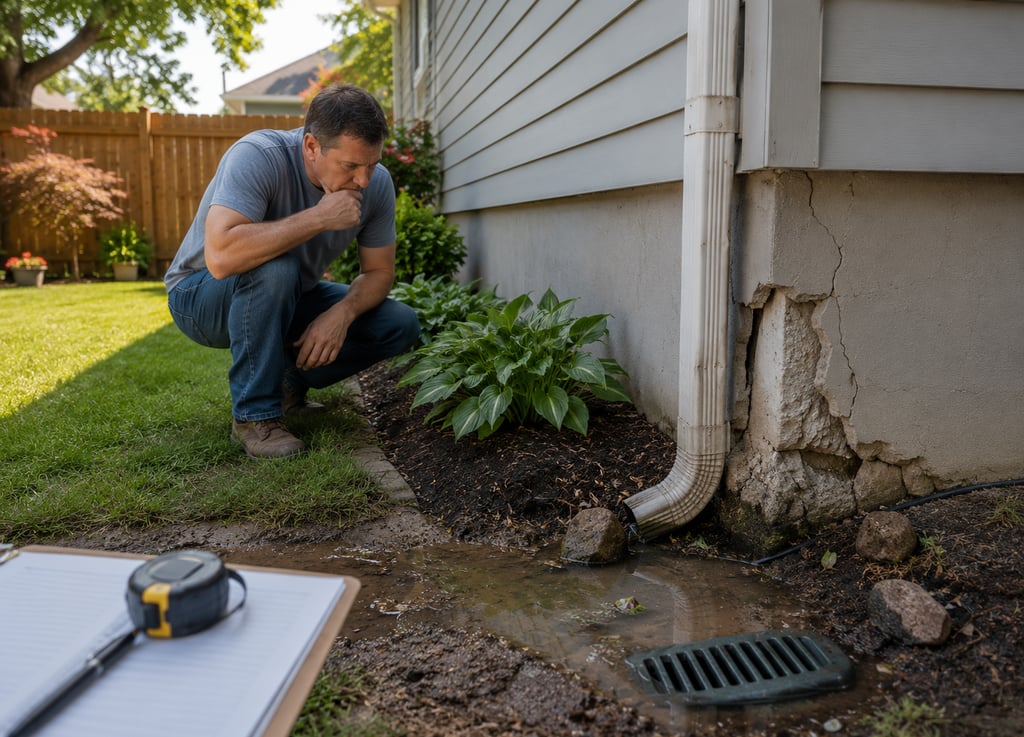
Some home problems arrive dramatically.
A ceiling stain that suddenly appears out of nowhere.
A dishwasher that stops working the night before guests arrive.
A toilet that decides today is the day it wants attention.
Those problems are inconvenient, yes, but at least they’re obvious.
You know something needs to be handled.
Then there are the quieter home problems.
The ones that don’t feel urgent enough to command immediate action.
A patch of grass that always seems soggy.
A puddle that forms in the same place every time it rains.
A muddy walkway that somehow never quite dries.
A musty smell near one side of the house that comes and goes.
A garden bed that keeps washing out.
A corner of the yard that just feels… off.
These problems are easy to delay.
Not because homeowners are careless.
Because adulthood is full.
There are work deadlines, family responsibilities, bills, errands, unexpected expenses, emotional stress, and the endless list of ordinary life things that compete for attention.
A weird wet patch in the yard usually doesn’t feel like the thing that deserves immediate energy.
Until one day, it becomes something bigger than a weird wet patch.
That’s the complicated thing about water.
It rarely stays where you expect it to.
And some of the most frustrating home repair stories begin with something that once looked harmless.
Why We’re So Good at Ignoring “Small” Problems
This is not really about homeownership.
It’s about being human.
Most people naturally prioritize problems based on urgency.
If water is actively leaking through your ceiling, that gets attention.
If your stove stops working, that becomes today’s problem.
If your internet goes down during an important work call, suddenly nothing else matters.
But a soggy yard corner?
That feels optional.
Manageable.
Postponable.
Something you’ll eventually get around to.
Part of that comes from uncertainty.
People often delay action not because they don’t care, but because they don’t know how serious something actually is.
And uncertainty creates emotional friction.
If investigating means discovering an expensive issue, many people understandably hesitate.
There’s also optimism.
We tell ourselves maybe it’s temporary.
Maybe the weather has just been unusual.
Maybe it’ll dry out next week.
Maybe that weird smell is nothing.
Maybe that muddy spot has always been there.
This kind of hopeful thinking is deeply normal.
It also explains why quiet problems sometimes become expensive ones.
Because by the time something feels urgent, the issue may have been developing for much longer than anyone realized.
Water Has a Way of Quietly Changing the Stakes
Water can look harmless.
A puddle is just a puddle.
A wet lawn is just inconvenient.
Mud is annoying but manageable.
At first, that’s often true.
But water behaves differently than many household nuisances.
It moves.
It settles.
It finds paths.
It reshapes soil.
It lingers in places where people didn’t intend for it to linger.
And because it often works gradually, the consequences are easy to underestimate.
A small drainage issue rarely announces its long-term intentions.
It just keeps repeating itself.
The same puddle.
The same muddy patch.
The same runoff pattern.
The same damp feeling after every storm.
Over time, repeated water behavior can affect the usability of outdoor spaces, the stability of landscaping, the condition of planted areas, and the overall sense that part of the property just doesn’t function the way it should.
The frustrating part is how normal it can start to feel.
Once something becomes familiar, people often stop evaluating whether it should be happening at all.
That normalization is where avoidable stress begins.
The Emotional Cost of Home Problems Nobody Talks About
People often discuss home issues in terms of repair costs.
That makes sense.
Money matters.
But there’s another cost that gets less attention.
Mental load.
Unresolved home issues create a surprising amount of emotional background noise.
Even small ones.
That soggy corner in the yard may not seem emotionally significant, but if you notice it every time it rains, avoid walking through that area, worry about guests stepping in mud, or wonder whether something is getting worse, it’s taking up mental space.
That matters.
Because home is supposed to feel like relief.
Not perfection.
Relief.
A place where your nervous system can soften.
A place where life feels a little less demanding.
When something in your environment keeps quietly asking for attention, even in subtle ways, that sense of ease becomes harder to maintain.
It’s not dramatic.
But it is real.
And small recurring stressors add up faster than people realize.
Standing Water Is Rarely Just About Appearance
A lot of homeowners initially treat standing water as a cosmetic annoyance.
Which makes sense.
The first noticeable issue is usually visual.
The yard looks messy.
The grass looks unhealthy.
The area feels unusable.
Shoes get muddy.
Walkways feel unpleasant.
But repeated moisture can affect more than appearance.
Water changes how outdoor spaces function.
It can make areas slippery.
Complicate maintenance.
Disrupt plant health.
Create erosion.
Interfere with how comfortably people use the property.
And if water consistently gathers near structural areas, the emotional stakes rise quickly.
No one likes uncertainty around home protection.
Even when the concern turns out to be manageable, the not knowing can feel stressful.
That’s why drainage conversations often become emotionally charged.
They touch on both comfort and security.
Temporary Fixes Feel Emotionally Satisfying
This is where many homeowners get stuck.
Because small fixes feel productive.
Move some soil.
Throw down gravel.
Redirect a hose.
Adjust watering.
Dig a shallow trench.
Try to outsmart the puddle.
Sometimes these efforts genuinely help.
Sometimes they mostly create temporary emotional relief.
And that distinction matters.
Because “I did something” feels reassuring.
Even when the actual issue hasn’t changed much.
That’s not criticism.
It’s a very human response.
People naturally prefer manageable solutions over complicated uncertainty.
But recurring drainage issues often need better understanding rather than repeated improvisation.
For homeowners trying to understand longer-term yard water management options, solutions like French drain systems are part of the broader conversation when water consistently behaves in ways surface-level fixes don’t fully address.
The key is not assuming every puddle needs intervention.
The key is noticing patterns instead of endlessly resetting the same frustration.
Why Foundation Anxiety Feels So Personal
Even mentioning foundation concerns can make homeowners tense.
And honestly, that reaction makes sense.
Certain home issues trigger emotional alarms faster than others.
Foundation-related uncertainty is one of them.
Not because every drainage issue becomes a structural problem.
That would be fear-based and unhelpful.
But because the possibility touches something deeper.
Safety.
Stability.
Financial security.
Home is more than property.
For most people, it represents emotional security too.
So anything that introduces uncertainty around protection naturally feels heavier than a simple maintenance inconvenience.
That emotional response often creates avoidance.
People don’t want bad news.
So they delay.
But uncertainty is often more stressful than information.
Clear understanding usually feels emotionally lighter than anxious guessing.
Outdoor Spaces Shape Daily Life More Than We Notice
A home is not just walls and rooms.
It’s the experience of the entire environment.
That includes outdoor spaces.
How easy it feels to walk through your yard.
Whether certain areas feel usable.
Whether your kids can play comfortably.
Whether outdoor gatherings feel inviting.
Whether stepping outside creates relaxation or irritation.
Small environmental annoyances quietly shape daily experience.
A perpetually muddy patch may sound minor.
But repeated inconvenience changes behavior.
People stop using certain spaces.
Avoid certain routes.
Feel mildly annoyed after every rain.
Adapt in ways they stop consciously noticing.
That friction affects how home feels.
And home feeling good matters.
Not because life should be picture-perfect.
Because our environments genuinely affect stress, mood, and daily comfort.
Why “Later” Gets More Expensive Than Expected
This applies to many parts of life.
Not just homeownership.
Problems that feel manageable often stay unaddressed because they don’t feel urgent enough.
That delay feels harmless.
Until circumstances change.
One season becomes another.
Weather patterns repeat.
The issue becomes familiar.
And what once felt temporary becomes part of the normal environment.
That normalization is risky.
Because familiar does not mean harmless.
It just means emotionally tolerated.
This is especially true with gradual environmental issues.
People adapt so effectively that they stop evaluating whether something should be happening at all.
That’s why “I’ve been meaning to deal with that” becomes such a common phrase.
Not because people are irresponsible.
Because gradual problems rarely create urgency until they become harder to ignore.
Home Stress Is Still Real Stress
Sometimes people dismiss home-related stress because it feels less important than other forms of pressure.
Work stress feels serious.
Financial stress feels serious.
Relationship stress feels serious.
A yard issue feels… trivial by comparison.
But stress doesn’t work that neatly.
The nervous system doesn’t carefully categorize every source.
Repeated unresolved friction still creates mental load.
Even small environmental frustrations contribute.
A cluttered unresolved issue still occupies attention.
Still creates subtle tension.
Still asks for emotional bandwidth.
The goal is not eliminating every inconvenience.
That would be unrealistic.
The goal is reducing avoidable sources of recurring stress where possible.
That’s practical self-care too.
Prevention Rarely Feels Exciting
This may be one reason prevention gets neglected.
It doesn’t create dramatic stories.
No one gets excited about responsibly addressing drainage patterns before bigger issues emerge.
Prevention feels ordinary.
Repair feels dramatic.
Human psychology tends to respond more strongly to dramatic things.
But much of peaceful homeownership comes from ordinary maintenance choices.
Quiet prevention.
Thoughtful attention.
Small decisions made before stress escalates.
That may not feel glamorous.
It does create stability.
And stability is deeply underrated.
Modern Life Makes Home Maintenance Emotionally Harder
There’s another layer worth acknowledging.
People are tired.
Not lazy.
Tired.
Decision fatigue is real.
Mental overload is real.
The average adult manages an enormous number of responsibilities.
That changes how home issues get handled.
Even solvable problems can feel emotionally heavy when people already feel stretched.
This is why practical advice matters more than guilt.
Shaming homeowners for delay helps no one.
Encouraging thoughtful awareness does.
Because many people are not avoiding action out of indifference.
They’re navigating bandwidth limitations.
That distinction matters.
What Actually Helps
Not panic.
Not catastrophic thinking.
Not assuming the worst.
What helps is curiosity.
Pattern awareness.
Gentle honesty.
Ask practical questions.
Does the issue happen consistently?
Only after heavy rain?
Only in one area?
Is it getting worse?
Has it become predictable?
Is it affecting usability?
Does the same frustration keep repeating?
Patterns tell useful stories.
And noticing patterns early usually creates more manageable options than waiting until stress escalates.
Joy Sometimes Looks Surprisingly Practical
Joy isn’t pretending life is flawless.
That’s not realistic.
Joy often looks much more grounded.
It looks like reducing recurring friction.
Creating calmer environments.
Choosing understanding over avoidance.
Making small thoughtful decisions that improve daily life.
Not because perfection matters.
Because peace matters.
A home does not need to be flawless to feel supportive.
But unresolved recurring stressors do shape emotional experience.
That’s worth respecting.
Final Thought
The quietest home problems are not always the least important.
Especially when water is involved.
A soggy patch in the yard may remain exactly what it appears to be.
Or it may be an early sign of a larger issue asking for attention.
The goal is not fear.
The goal is awareness.
Because a joyful home is not built through perfection.
It’s built through thoughtful care, practical attention, and the kind of small decisions that quietly protect peace of mind over time.