
The Small Signals Your Body Sends Before Something Actually Hurts
Learn how to recognize the early signals your body sends before pain begins. Discover how small daily habits, posture, and awareness can help prevent discomfort and support long-term wellness.
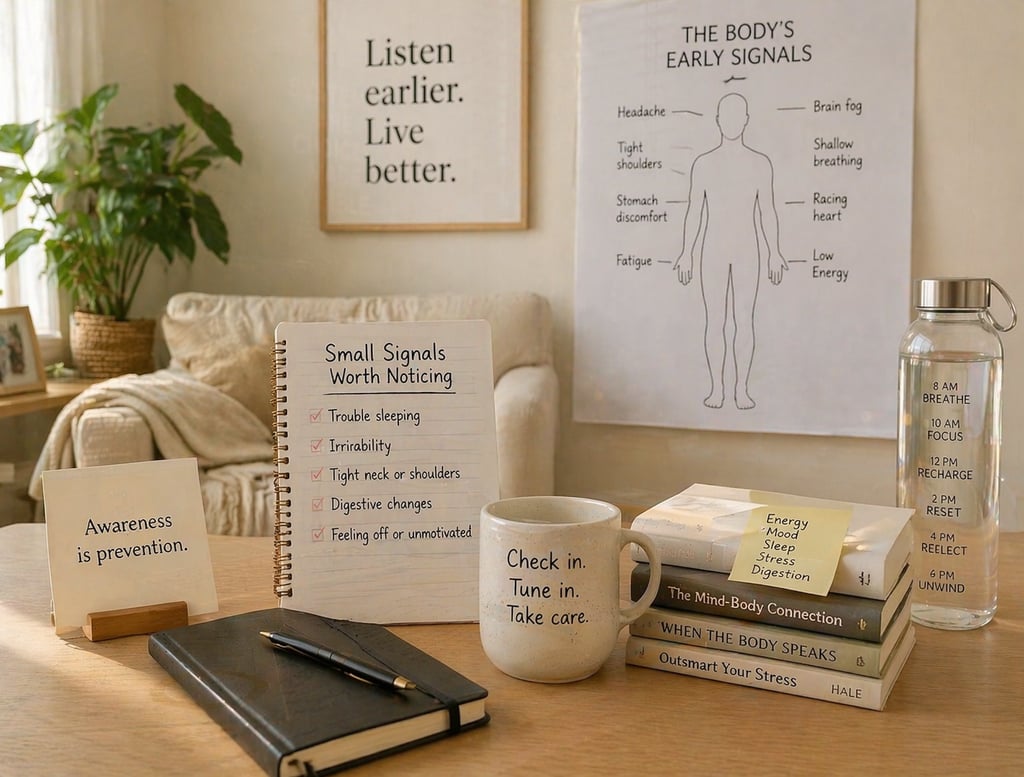
Most of the time, your body doesn’t go straight to pain.
It starts with something quieter.
A stiffness you notice when you wake up. A slight pull in your neck when you turn too quickly. A dull tension in your lower back that fades once you get moving.
Nothing that stops you from doing your day.
Nothing that feels urgent.
Just something you notice… and then ignore.
That’s usually how it begins.
Not with something dramatic—but with something easy to dismiss.
And the truth is, most people don’t think much about these early signals. Life moves fast. Responsibilities pile up. Discomfort that isn’t constant doesn’t feel like something worth addressing.
But those small signals aren’t random.
They’re your body’s way of communicating patterns.
And the earlier you learn to notice them, the easier it becomes to respond in a way that actually supports your well-being.
We’re Used to Waiting for Pain Before We Pay Attention
There’s a pattern a lot of us follow without realizing it.
If it doesn’t hurt, it’s fine.
If it hurts a little, we wait.
If it comes and goes, we ignore it.
If it becomes constant, that’s when we finally think about doing something about it.
It makes sense.
Pain feels like a clear signal. It demands attention.
But the problem is, pain is usually not the beginning of the issue—it’s the point where the body has run out of quieter ways to communicate.
By the time discomfort becomes consistent, the pattern causing it has often been building for weeks, months, or even longer.
That’s why addressing things earlier tends to feel easier.
Not because the problem is more serious—but because it’s less established.
The Signals Are Usually Subtle (At First)
Before anything becomes painful, the body often gives small, repeated cues.
They don’t interrupt your day.
They don’t force you to stop what you’re doing.
But they show up often enough to be noticed—if you’re paying attention.
Common early signals include:
Feeling stiff when standing up after sitting for a while
A slight imbalance when you shift your weight
Needing to stretch more often just to feel comfortable
Mild tension in your shoulders or neck at the end of the day
These moments are easy to overlook.
They feel temporary.
But they’re often connected.
And when they keep showing up in the same way, they’re usually pointing to a pattern in how your body is being used.
Your Daily Habits Matter More Than One Big Event
A lot of people assume discomfort comes from one specific moment.
A bad lift. A sudden movement. A single mistake.
Sometimes that’s true.
But more often, discomfort builds slowly from repetition.
The way you sit for hours at a time.
How you position your body while working.
How often you move—or don’t move—throughout the day.
These habits don’t feel significant in the moment.
But over time, they shape how your body responds.
This is what it often looks like in everyday life:
Sitting in the same position for long periods without breaks
Leaning forward while using a laptop or phone
Carrying tension in your shoulders without realizing it
Sleeping in positions that don’t support your body well
None of these habits feel urgent.
But they create patterns.
And your body adapts to those patterns, whether they’re helpful or not.
When Discomfort Becomes “Normal”
One of the reasons people don’t act on early signals is because those signals start to feel familiar.
A tight neck at the end of the day.
A sore back after sitting too long.
Shoulder tension during stressful weeks.
It becomes part of your routine.
You stretch a little. You adjust. You move on.
And because it’s manageable, it doesn’t feel like a problem.
But when something becomes “normal,” it doesn’t mean it’s healthy.
It just means your body has adapted to it.
And adaptation doesn’t always mean improvement.
Sometimes it means your body has learned to function around a pattern that isn’t ideal.
Why Most People Wait Longer Than They Should
There’s a common belief that something needs to get worse before it’s worth addressing.
If it’s not affecting your day, it can wait.
If it’s not constant, it’s probably fine.
If it’s manageable, it’s not urgent.
This way of thinking is understandable.
But it often leads to a cycle where small issues grow into larger ones simply because they were left alone for too long.
The tricky part is that the shift is gradual.
There’s no clear moment where something changes.
It just slowly becomes more noticeable.
And by then, it takes more effort to address.
Early awareness doesn’t mean overreacting.
It just means giving yourself the option to respond sooner instead of later.
Awareness Is More Powerful Than You Think
You don’t need to be an expert to understand your body better.
You just need to start paying attention.
Awareness isn’t complicated.
It’s noticing:
When discomfort shows up
What you were doing before it started
How it changes throughout the day
What seems to help or make it worse
These small observations create clarity.
And clarity makes it easier to make better decisions.
Instead of guessing, you start to see patterns.
And once you see patterns, you can start shifting them.
Small Adjustments Add Up Over Time
You don’t need a complete lifestyle change to support your body better.
Most of the time, small adjustments are enough to make a difference.
Things like:
Standing up and moving more frequently
Adjusting how you sit while working
Being mindful of how long you stay in one position
Stretching regularly instead of waiting for discomfort
These changes don’t need to be perfect.
They just need to be consistent.
Consistency builds new patterns.
And new patterns change how your body feels over time.
When It’s Worth Taking a Closer Look
Sometimes awareness and small changes are enough.
Other times, patterns continue even when you try to adjust.
That’s usually a sign that something deeper is going on.
Not necessarily something serious—but something worth understanding better.
Most people wait until discomfort becomes constant before exploring that next step.
But looking into things earlier can make the process feel more manageable.
Whether it’s simple movement assessments or a more structured evaluation, having a clearer understanding of how your body is functioning can help you respond more effectively.
Even taking time to explore resources from places like Limestone Chiropractic can offer insight into how these kinds of patterns are approached and what early-stage care can look like.
Not as a reaction to pain.
But as a way of understanding your body before things escalate.
You Don’t Need to Fix Everything at Once
It’s easy to feel like you need to correct everything immediately.
Better posture. More movement. Fewer bad habits.
But that kind of pressure usually leads to inconsistency.
What works better is a slower approach.
Noticing one pattern at a time.
Making one adjustment at a time.
Letting those changes settle into your routine.
Progress doesn’t need to be fast to be effective.
It just needs to be steady.
Your Body Is Always Communicating
The signals don’t stop.
They just change depending on how well you respond to them.
If they’re ignored, they tend to get louder.
If they’re noticed early, they often stay manageable.
That doesn’t mean every small discomfort needs attention.
But it does mean it’s worth being aware of what your body is telling you.
Because awareness gives you options.
And having options makes it easier to take care of yourself in a way that feels sustainable.
Making Space for Better Habits
You don’t need to overhaul your entire routine.
You just need to create small openings for change.
That might look like:
Taking short breaks to move throughout the day
Being more mindful of your posture without overcorrecting
Listening to discomfort instead of pushing through it
These aren’t dramatic changes.
But they shift your awareness.
And awareness changes how you move through your day.
Final Reflection
Your body rarely goes straight to pain.
It starts with signals.
Quiet ones. Subtle ones. Easy-to-ignore ones.
But they’re there for a reason.
The more you learn to notice them, the easier it becomes to respond in a way that supports you.
Not perfectly.
Not all at once.
Just gradually.
And that’s usually enough.