
The Small Neighborhood Details That Make Everyday Life Feel Easier
Discover how the small details of a neighborhood can quietly shape your daily happiness, routines, and well-being. Learn why walkability, green spaces, community connections, and thoughtful design often have a greater impact on everyday life than many people realize, and how choosing the right environment can help create a calmer, more connected lifestyle.
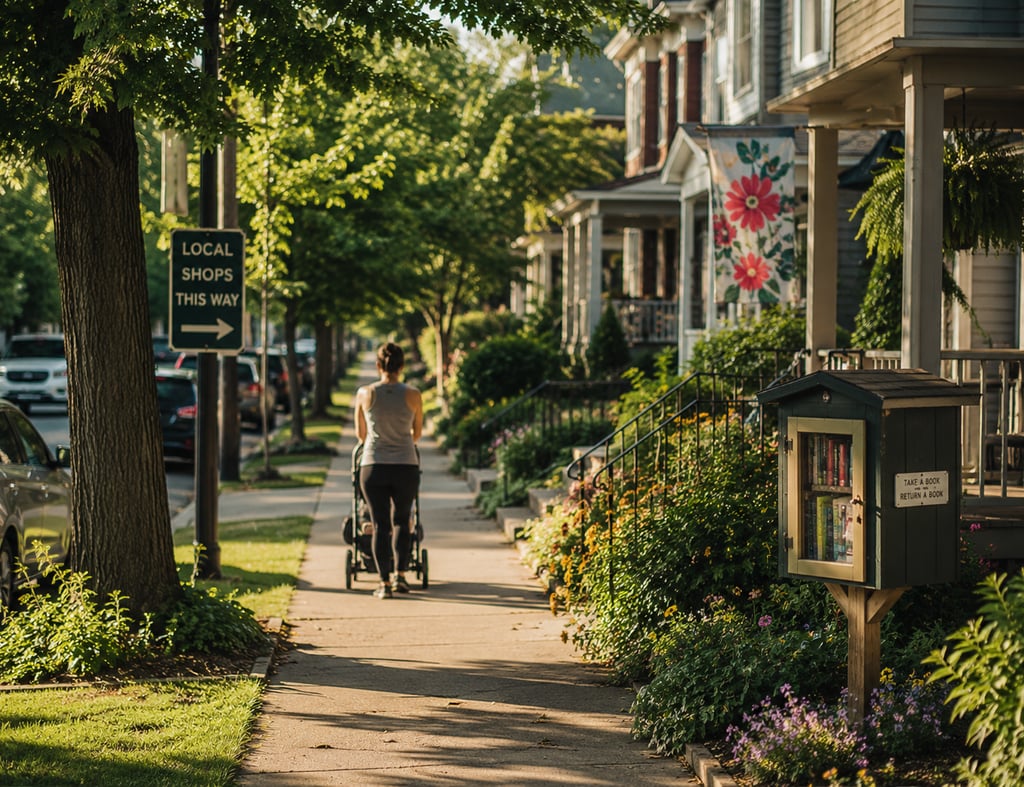
There is a moment that happens after the boxes are unpacked and the excitement of moving begins to settle. The house starts to feel familiar, but something else quietly begins shaping your experience long before you realize it. It's the neighborhood around you.
You notice the route you naturally take on an evening walk. You discover where the afternoon sunlight falls in the nearby park. You recognize the same neighbor walking their dog each morning. None of these moments seem especially significant on their own, yet together they become part of what makes everyday life feel comfortable, connected, and a little easier.
We often spend months choosing the right home, comparing layouts, finishes, and floor plans. Those decisions matter, but the life we build doesn't stop at the front door. The streets we drive, the spaces we share, and the routines our surroundings encourage all become part of the story we live every day.
Sometimes, the greatest difference isn't found in the house itself. It's found in the small neighborhood details that quietly make life feel better.
A Good Neighborhood Makes Ordinary Days Feel Less Complicated
Most of life isn't made up of major milestones.
It's the Tuesday mornings when everyone is trying to get out the door on time. It's grocery runs after work, evening walks before sunset, helping with homework at the kitchen table, or deciding whether there's enough energy left for one more family activity before the day ends.
Because these ordinary moments happen so often, the environment around us has a surprisingly large influence on how they feel.
A shorter drive home means dinner starts a little earlier.
A nearby walking trail makes fresh air feel like an easy choice instead of another task to schedule.
A quiet street gives children more opportunities to ride bicycles while parents relax a little more.
None of these conveniences dramatically change your life overnight.
Instead, they remove tiny sources of friction that quietly accumulate throughout the week.
We don't always notice when life becomes easier.
We usually notice when it becomes harder.
That's why neighborhoods deserve more attention than they sometimes receive. The right environment doesn't solve every problem, but it can reduce the number of small obstacles competing for your time and energy.
Home Is More Than the Space You Own
When people imagine home, they usually picture the rooms inside.
The living room where conversations happen.
The kitchen where favorite recipes are prepared.
The bedroom that becomes a place to rest after a long day.
These spaces are deeply important because they hold many of our memories.
Yet our experience of home extends much farther than the property itself.
Think about the first fifteen minutes after you leave your front door.
Do you immediately encounter heavy traffic?
Can you comfortably take a walk?
Are there places nearby where you naturally spend time?
Do you feel relaxed, or are you already thinking about the next inconvenience?
These experiences become part of your everyday rhythm.
Over time, they shape your habits almost without asking for permission.
If walking outside feels enjoyable, you're more likely to do it regularly.
If running simple errands takes less effort, you'll often have more time available for things that truly matter.
If the neighborhood feels welcoming, you're naturally encouraged to spend more time enjoying it instead of simply passing through it.
That's why choosing a place to live isn't only about selecting a house.
You're also choosing the environment that quietly supports thousands of ordinary decisions throughout the year.
The Quiet Relationship Between Your Environment and Your Mood
Most of us understand that our surroundings influence how we feel.
A cluttered workspace can make it difficult to concentrate.
Natural light often makes a room feel more inviting.
Peaceful music changes the atmosphere of a home.
The same principle applies outside our front door.
Our neighborhoods constantly influence our emotional experience, even if we rarely stop to think about it.
Imagine two different evenings.
In one, you leave work and spend nearly an hour sitting in traffic before arriving home already feeling mentally exhausted.
In the other, your commute is shorter, your street is quieter, and you still have enough daylight to enjoy a short walk before dinner.
Neither evening is perfect.
Neither removes the normal responsibilities of work or family life.
Yet one naturally leaves a little more room to breathe.
These small differences matter because emotional well-being isn't built only through vacations or major celebrations.
It's often shaped by the quality of ordinary days.
A peaceful environment doesn't eliminate stress.
It simply makes recovery from everyday stress a little easier.
Convenience Is Really About Creating More Time
Convenience sometimes gets an unfair reputation.
People occasionally associate convenience with shortcuts or the desire to avoid effort.
In reality, convenience often creates something much more valuable than saved minutes.
It creates options.
Think about the errands most people complete during an average week.
Stopping by the grocery store.
Picking up a prescription.
Visiting a local café.
Taking children to activities.
Meeting friends for lunch.
Walking the dog.
None of these tasks are especially complicated.
What makes them feel overwhelming is when each one requires extra travel, additional planning, or unnecessary stress.
Small conveniences don't simply save time.
They preserve energy.
That extra twenty minutes you didn't spend driving across town may become twenty minutes reading with your child before bed.
It might become time to cook dinner instead of ordering takeout.
It could become an evening walk that clears your mind after work.
The goal isn't to make every day perfectly efficient.
The goal is to leave enough space for the parts of life that bring genuine joy.
Walkability Changes More Than Physical Health
Walkability is often discussed in conversations about exercise or urban planning.
While both are important, walking changes something much deeper than step counts.
It changes your relationship with the place you live.
When walking feels safe, comfortable, and enjoyable, everyday life naturally slows down.
You notice seasonal flowers that weren't there last week.
You wave to neighbors you recognize.
You hear birds instead of traffic for a few minutes.
Children point out interesting things adults might otherwise miss.
These moments rarely appear on calendars.
No one schedules them weeks in advance.
Yet they become some of the experiences people remember most fondly about a neighborhood.
Walking also creates opportunities for spontaneous connection.
You may stop to chat with someone you've seen several times before.
A familiar face gradually becomes a friendly neighbor.
Children who regularly play outside often become friends simply because their routines naturally overlap.
Community doesn't always begin with organized events.
Sometimes it starts with seeing the same people often enough to say hello.
Green Spaces Give Busy Minds Permission to Slow Down
Modern life asks for our attention almost constantly.
Phones vibrate.
Notifications arrive throughout the day.
Work often follows us home through email and messaging apps.
It's easy to move from one responsibility to another without ever feeling like we've fully paused.
This is one reason nearby green spaces matter so much.
You don't need a weekend getaway to experience the calming effects of spending time outdoors.
Sometimes a neighborhood walking trail, a quiet pond, or a shaded park is enough to change the rhythm of an afternoon.
These places encourage something many of us struggle to practice on our own.
They invite us to slow down.
A child becomes fascinated by ducks at the pond.
A couple extends their evening walk because the weather is pleasant.
Someone sits on a bench for fifteen minutes before heading home.
Nothing remarkable happens.
Yet these moments often become the emotional reset that makes the rest of the day feel more manageable.
Green spaces remind us that not every productive moment needs to involve accomplishing something.
Sometimes simply being present is enough.
The Best Neighborhoods Support Healthy Habits Without Feeling Restrictive
One of the most interesting things about human behavior is that our surroundings often influence our choices more than our intentions do.
Many of us have said things like:
"I want to walk more."
"I should spend more time outside."
"I wish we ate dinner together more often."
"I'd like to spend less time on my phone."
These goals are meaningful, but they're also easier to achieve when the environment around us supports them.
If there's a pleasant walking trail nearby, you're more likely to take an evening stroll.
If there's a neighborhood park a few minutes away, spending time outdoors feels like a natural part of the weekend instead of an event that requires extensive planning.
If your commute leaves you with extra time each evening, it's easier to cook a meal, play a board game with your children, or simply sit on the porch before the day ends.
The healthiest routines rarely begin with extraordinary motivation.
More often, they begin because the next good choice is also the easiest one.
That's one of the quiet strengths of a thoughtfully designed neighborhood.
It gently encourages habits that support your well-being without demanding dramatic lifestyle changes.
The Value of Feeling Like You Belong
Belonging isn't something most people actively search for during a home tour.
Yet it often becomes one of the things they appreciate most after settling into a community.
Feeling connected doesn't necessarily mean knowing everyone on your street.
It can be much simpler than that.
It's recognizing familiar faces during a morning walk.
It's waving to someone while checking the mail.
It's watching children naturally find friends at the neighborhood playground.
It's feeling comfortable enough to stop and have a short conversation without looking at the time.
These interactions may last only a few minutes.
Their impact often lasts much longer.
Research has consistently shown that meaningful social connections contribute to emotional well-being, resilience during stressful seasons, and an overall sense of life satisfaction.
Those connections don't always develop through planned gatherings.
More often, they grow through repeated, ordinary moments.
A neighborhood that naturally creates opportunities for these small interactions quietly supports something many people are looking for:
A sense that they're part of a community instead of simply living near other people.
Every Season of Life Changes What "Home" Means
One of the beautiful things about life is that our priorities evolve.
The apartment that felt exciting in your twenties may no longer fit the life you're building a decade later.
The neighborhood that once seemed perfect because it was close to entertainment may gradually become less important than having quiet streets or nearby green spaces.
These changes aren't contradictions.
They're reflections of growth.
A young professional may value convenience and accessibility.
Parents often begin noticing parks, sidewalks, and schools.
Later in life, people may appreciate peaceful surroundings, low-maintenance living, or easier access to healthcare and recreation.
There isn't one perfect neighborhood for everyone.
There is only the neighborhood that best supports the life you're living right now while leaving room for the life you hope to create next.
That perspective changes how many people approach their search.
Instead of asking, "Is this a nice house?"
They begin asking, "Will this place support the way we want to live?"
It's a subtle difference.
It often leads to better decisions.
Community Design Is About More Than Appearance
Beautiful homes certainly make a strong first impression.
Well-maintained landscaping, attractive streets, and thoughtful architecture contribute to a neighborhood's character.
But good design goes much deeper than appearance.
The most successful communities are planned around how people actually live.
Can neighbors comfortably walk through the area?
Are there places where families naturally gather?
Do outdoor spaces encourage people to spend time together?
Does the layout reduce unnecessary traffic while making everyday movement easier?
These questions influence daily life far more than many people realize.
Thoughtful design creates opportunities.
It gives children places to explore.
It provides adults with opportunities to stay active without leaving the neighborhood.
It encourages conversations that happen naturally rather than requiring organized events.
Looking at communities that prioritize these kinds of everyday experiences can be helpful when considering what matters most beyond the home itself. If you're exploring Huntsville homes, it can be helpful to notice how features such as connected green spaces, walkable streets, and shared community areas quietly support everyday routines. Often, it's these details that make a neighborhood feel comfortable long after move-in day.
The goal isn't perfection.
It's creating an environment that works with your everyday life instead of against it.
The Little Moments Become the Memories We Treasure
Ask someone what they miss most after leaving a favorite neighborhood.
Very few people begin by talking about square footage.
Instead, they remember experiences.
Watching children learn to ride bicycles.
Walking the dog as the sun set each evening.
Seeing familiar neighbors wave from across the street.
Saturday mornings spent at the local park.
The route they walked so often they could enjoy it without thinking about where they were going.
These memories aren't created during extraordinary events.
They're built one ordinary day at a time.
That's one reason neighborhoods matter so much.
They become the backdrop for the routines that slowly shape our lives.
Without realizing it, we attach emotions to places because of what we consistently experience there.
The street where evening walks became family traditions.
The green space where children played for hours.
The bench where someone paused after difficult days.
The coffee shop that became part of every Friday morning.
These aren't grand moments.
They're meaningful because they happened repeatedly.
Over time, they become part of the story people tell when they describe what made a place feel like home.
Sometimes the Best Features Are the Ones You Hardly Notice
The most valuable neighborhood qualities often disappear into everyday life.
You stop thinking about how easy it is to take a walk because it has become part of your routine.
You forget how convenient nearby amenities are because running errands no longer feels stressful.
You no longer notice the peaceful streets because they've become your normal.
Ironically, these unnoticed comforts are often what people miss most after moving away.
It's similar to good health.
Most days, we don't actively think about feeling well.
We simply enjoy life because nothing is getting in the way.
Thoughtful neighborhoods work in much the same way.
When they quietly support your routines, reduce unnecessary stress, and make everyday activities easier, you spend less time thinking about your surroundings and more time enjoying your life within them.
When Your Surroundings Support the Life You're Trying to Build
It's easy to assume that building a better life starts with making bigger changes.
A new job.
A new routine.
A major goal.
A fresh start.
Sometimes those changes are exactly what's needed.
Other times, the biggest improvements come from something much quieter.
They come from living in a place that supports the person you're becoming.
Imagine wanting to spend more time outdoors but never having a safe or enjoyable place to walk.
Imagine hoping to become more active but facing long commutes that leave little energy at the end of the day.
Imagine wanting your children to spend more time outside, yet feeling uncomfortable letting them play close to home.
These situations don't make healthy habits impossible.
They simply make them harder.
When your surroundings remove those barriers, good habits often become less about discipline and more about opportunity.
The evening walk happens because it's pleasant.
The family picnic happens because the park is nearby.
The conversation with a neighbor happens because your paths naturally cross.
Little by little, your environment begins supporting the kind of life you wanted all along.
Choosing a Neighborhood With Your Future in Mind
One of the easiest mistakes to make when choosing a home is focusing only on today's needs.
Will the furniture fit?
Is there enough storage?
How long is the commute?
Those questions are important, but they're only part of the picture.
It's equally valuable to ask questions about your future.
How do you hope your weekends will look?
What kind of routines do you want your family to have?
Will this neighborhood still support your lifestyle if your work changes?
Can you imagine enjoying ordinary days here five years from now?
Thinking this way shifts the decision from buying property to building a life.
It encourages you to look beyond finishes and floor plans toward the experiences that will shape your days for years to come.
A neighborhood doesn't need to be perfect.
It simply needs to make it easier to live in a way that reflects your values.
Home Is Where Ordinary Days Begin
One of the most comforting truths about home is that it isn't created all at once.
It grows through repetition.
The same walking route every evening.
The familiar smile from a neighbor.
The coffee enjoyed on the front porch before work.
The laughter that drifts in from children playing outside.
The traditions that slowly develop without anyone planning them.
These are the experiences that quietly transform a house into something much more meaningful.
They remind us that belonging isn't something we purchase.
It's something we build.
Day after day.
Conversation after conversation.
Memory after memory.
Over time, those ordinary moments become the foundation of a life that feels rooted, familiar, and deeply personal.
Making Room for More Joy
At Joy Digital Magazine, we often return to one simple idea:
Joy doesn't usually arrive through perfection.
It grows through everyday experiences that help us feel connected, supported, and present.
That's why the little neighborhood details matter.
A quieter street may encourage one more evening walk.
A nearby green space may become the place where your family gathers every weekend.
A shorter commute may give you enough time to cook dinner together instead of rushing through another evening.
A friendly wave from a neighbor may remind you that you're part of something larger than your own daily routine.
None of these moments seem extraordinary on their own.
Together, they shape how life feels.
They influence our stress levels, our relationships, our routines, and even our ability to notice the good that already exists around us.
The place we call home becomes more than an address.
It becomes the setting where ordinary moments slowly become cherished memories.
Final Thoughts
Choosing where to live is about far more than selecting a beautiful house.
It's about choosing the environment where your daily life will unfold.
The neighborhood surrounding your home influences how easily you build healthy routines, how connected you feel to the people around you, how much time you spend outdoors, and how often you have opportunities to slow down and simply enjoy the moment.
While every person's priorities are different, one truth remains remarkably consistent:
The small details often matter the most.
The peaceful walking path.
The nearby park.
The familiar faces.
The convenient errands.
The quiet evenings.
The sense that you're exactly where you need to be.
Life will always have busy seasons and unexpected challenges.
But when your surroundings support the life you're trying to build, they quietly make those seasons a little easier to navigate.
And sometimes, that's exactly where more joy begins.