
The Small Home Problems That Create More Stress Than We Expect
Small household issues can create more stress than we realize. Discover how recurring home problems, unfinished tasks, and everyday frustrations quietly affect well-being and why addressing them can help create a calmer, more comfortable home.
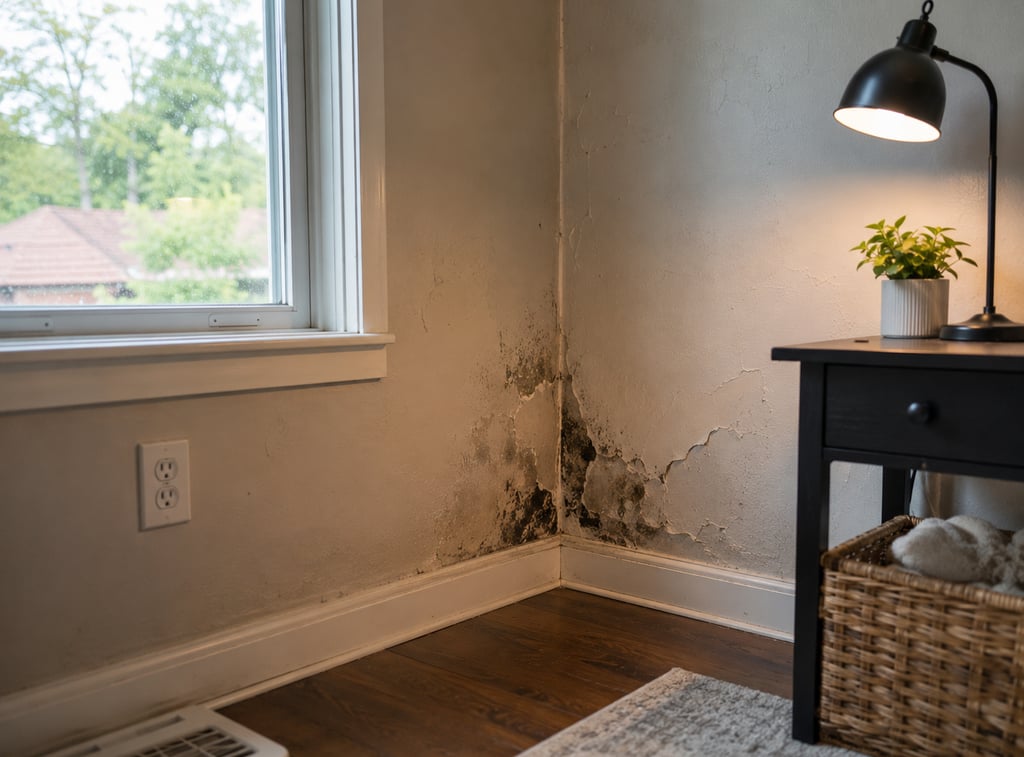
When people think about stress, they usually think about the big things.
Work deadlines.
Financial concerns.
Health challenges.
Major life decisions.
The things that keep us awake at night often seem large and important.
But there is another kind of stress that tends to receive less attention.
It's quieter.
More ordinary.
And surprisingly persistent.
It's the cabinet door that won't stay closed.
The clutter that keeps collecting in the corner of the room.
The maintenance issue you've been meaning to address for months.
The recurring household problem that keeps interrupting your sense of comfort.
None of these things seem serious on their own.
Yet together, they can create a surprising amount of mental noise.
Our homes are supposed to be places where we rest, recharge, and feel safe. When small problems begin to pile up, they can slowly change the way a space feels and, in turn, the way we feel inside it.
The good news is that many of these stressors are manageable.
And sometimes, improving our sense of well-being doesn't require a dramatic life change.
Sometimes it begins by paying attention to the small things that quietly ask for our attention every day.
Little Problems Have A Way Of Staying With Us
Most people have experienced this.
You notice something around the house that needs attention, but it doesn't feel urgent.
Maybe the bathroom drawer sticks.
Maybe a room always seems dusty no matter how often you clean.
Maybe there's a small issue you've promised yourself you'll handle next weekend.
At first, it doesn't seem like a big deal.
Then something interesting happens.
You start noticing it more often.
The problem becomes familiar.
The familiar becomes frustrating.
Eventually, it starts taking up more mental space than it probably deserves.
Psychologists sometimes describe these lingering concerns as "open loops." They remain unfinished in our minds, quietly asking for our attention.
One or two open loops may not matter much.
A dozen of them can become exhausting.
This is one reason seemingly small household problems can create unexpected stress.
They're not simply physical inconveniences.
They're tiny reminders that something remains unresolved.
Our Environment Quietly Shapes Our Mood
The spaces we spend time in influence us more than we often realize.
A room filled with natural light can feel uplifting.
A comfortable chair can make it easier to relax.
An organized space can create a sense of calm.
The opposite is also true.
A cluttered environment can feel mentally heavy.
A room that never feels clean can become frustrating.
An unfinished project can make a space feel incomplete.
This doesn't mean our homes need to look perfect.
Far from it.
A joyful home isn't a flawless home.
It's a space that supports our daily lives.
It's a place where we can breathe, rest, and recover from the demands of the world outside.
Sometimes the things that interfere with that sense of ease are surprisingly small.
A room that doesn't function well.
A recurring maintenance issue.
A problem we've been ignoring because it never feels urgent enough to address.
These things may seem minor, but they can slowly change our experience of home.
Small Frustrations Have A Way Of Accumulating
There is an interesting difference between major stress and minor stress.
Major stress usually announces itself.
You know it's there.
Minor stress often arrives quietly.
One inconvenience.
Then another.
Then another.
A cluttered counter.
A drawer that won't close.
A room that doesn't feel comfortable.
A maintenance issue that keeps returning.
Each problem seems manageable on its own.
Together, they can create a sense that your environment is constantly asking something from you.
The human mind is remarkably sensitive to unfinished business.
Even when we're not consciously thinking about a problem, it can still occupy mental energy.
This is one reason solving small household issues often feels surprisingly satisfying.
The issue itself may not have been significant.
But the mental space it occupied certainly was.
Comfort Comes From Knowing Things Are Working
Comfort isn't created solely through beautiful design or expensive furniture.
Much of our comfort comes from reliability.
The lights work.
The doors close.
The rooms feel inviting.
The spaces function the way we expect them to.
When something disrupts that feeling, we notice.
Maybe not immediately.
But eventually.
Our homes are deeply connected to our sense of security.
They are where we begin and end our days.
They are where we recover from difficult moments.
They are where we gather with the people we care about.
Because of this, even minor household problems can carry emotional weight.
The issue itself may be small.
Its effect on our peace of mind may not be.
Prevention Often Creates Peace Of Mind
Many stressful household problems begin as manageable concerns.
A little maintenance issue.
A subtle sign that something isn't quite right.
A small inconvenience that gradually becomes larger.
One of the most valuable habits homeowners can develop is learning to pay attention to these small signals.
Preventive care doesn't always feel exciting.
It rarely produces dramatic before-and-after photos.
But it often creates something incredibly valuable.
Peace of mind.
Knowing that your home is being cared for can reduce uncertainty and make daily life feel easier.
There is comfort in knowing that little concerns are being addressed rather than ignored.
It's one less thing demanding your attention.
The Goal Isn't A Perfect Home
It's easy to compare our homes to carefully curated images online.
Perfect kitchens.
Perfect living rooms.
Perfect organization systems.
Real life rarely looks like that.
Homes are lived in.
Things wear out.
Projects remain unfinished.
Unexpected problems happen.
That's normal.
A joyful home doesn't need to be perfect.
It simply needs to support the people living inside it.
The goal isn't eliminating every inconvenience.
The goal is creating an environment that feels comfortable, functional, and cared for.
Sometimes that means fixing a small issue you've been ignoring.
Sometimes it means finally organizing a room that's been causing stress.
Sometimes it means asking for help with a problem that's become difficult to solve on your own.
Some Problems Feel Small Until They Keep Returning
Recurring household issues can be particularly frustrating.
Anything that repeatedly interrupts comfort tends to feel larger over time.
A problem that happens once may be an inconvenience.
A problem that happens repeatedly can become a source of ongoing stress.
Homeowners dealing with recurring household concerns often begin researching resources such as professional pest control services after realizing that even seemingly minor problems can gradually affect comfort and peace of mind.
This isn't about overreacting.
It's about recognizing that our environments influence our well-being more than we sometimes acknowledge.
The small things matter.
Especially when they continue asking for our attention.
Taking Care Of Our Homes Is Also A Form Of Self-Care
We often think of self-care as rest, exercise, or time spent doing things we enjoy.
Those things certainly matter.
But there is another form of self-care that often goes unnoticed.
Creating an environment that supports our well-being.
Reducing unnecessary stress.
Addressing small frustrations before they become larger concerns.
A comfortable home can make it easier to rest.
A functional space can reduce daily frustration.
An organized room can create a sense of calm.
Taking care of our homes is, in many ways, another way of taking care of ourselves.
Because the spaces we live in influence our routines, our emotions, and our ability to relax.
Small Improvements Can Have A Big Impact
The interesting thing about home-related stress is that relatively small changes can create meaningful improvements.
Clearing out a cluttered area.
Repairing something that's been bothering you.
Creating a more functional space.
Addressing a recurring issue.
These changes often feel good because they restore a sense of control.
They remind us that our environments can change.
That things can become easier.
That our homes can better support the lives we're trying to live.
The improvement itself may be practical.
The emotional benefit can be surprisingly significant.
The Quiet Joy Of Things Working Well
Some of the best parts of home life are easy to overlook.
A room that feels peaceful.
A comfortable routine.
A space that works exactly the way you need it to.
These things rarely demand attention because they're doing precisely what they're supposed to do.
It's often only when something stops working that we realize how much we appreciated it.
The same is true of many small household details.
The little things matter.
Not because they're dramatic.
But because they quietly shape the way we feel every single day.
Final Thoughts
When we imagine creating a happier home, it's easy to focus on big renovations and dramatic transformations.
But some of the most meaningful improvements are much smaller.
Addressing a recurring issue.
Fixing something we've been postponing.
Creating a space that feels a little more comfortable and a little less stressful.
Our homes influence our well-being in ways we don't always notice.
And the small problems we ignore often carry more emotional weight than we realize.
The encouraging news is that small improvements can create meaningful change.
Because joy isn't always found in major transformations.
Sometimes it's found in the quiet relief that comes from knowing one less thing is competing for your attention.
One less problem lingering in the background.
One more reason to feel at ease in the place you call home.