
The Rooms That Bring Families Together Usually Weren't Designed by Accident
Discover why the rooms that bring families together are rarely designed by accident. Learn how intentional home design, everyday family rituals, environmental psychology, and thoughtfully planned living spaces can reduce stress, encourage meaningful conversations, and create lasting memories. Explore practical ways to design a home that supports connection, belonging, and everyday joy while making family life feel a little easier.
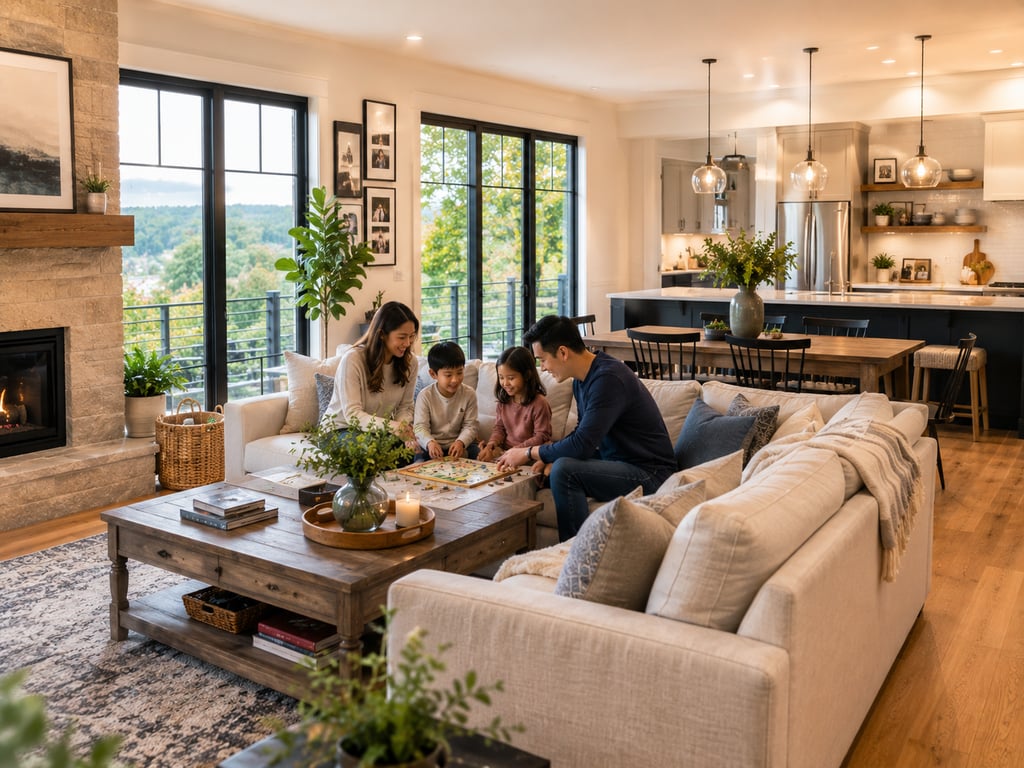
Have you ever noticed that some of your happiest family memories seem to happen in the same room?
Maybe it was where birthdays were celebrated year after year. Maybe it was the place where homework turned into conversations, where someone always stood stirring a pot while another person shared stories about their day, or where friends unexpectedly stayed hours longer than they planned.
When we think about the places that shaped our lives, we rarely remember them because they were perfectly decorated.
We remember how they made us feel.
We remember feeling welcomed.
Comfortable.
Safe enough to laugh loudly.
Relaxed enough to linger after dinner.
Free enough to simply be ourselves.
Those feelings don't appear by accident.
While relationships are built by people, the spaces surrounding those relationships quietly influence how often those moments happen. A thoughtfully designed room can encourage conversation, slow hurried routines, and make ordinary moments feel meaningful without anyone consciously noticing why.
That's one reason the rooms people cherish most usually weren't created by chance.
They were shaped intentionally, one thoughtful decision at a time.
Why Certain Rooms Become Memory Makers
Think back to your childhood home.
There's a good chance you can still picture one specific room in remarkable detail.
Perhaps you remember sunlight coming through the window every Saturday morning.
The smell of pancakes.
The sound of family members talking over one another.
The chair where a grandparent always sat.
The place where birthday candles were blown out every year.
Interestingly, psychologists have found that memories are often connected not only to events but also to environments.
Our brains naturally associate emotions with physical spaces.
That's why walking into a familiar room years later can instantly bring back memories you hadn't thought about in decades.
The room itself becomes part of the story.
This is one reason home design matters more than many people realize.
We're not simply arranging furniture.
We're creating the backdrop for thousands of ordinary moments that eventually become extraordinary memories.
Children may not remember the exact style of the cabinets.
They'll remember helping mix cookie dough on the counter.
Friends may not remember what color the walls were painted.
They'll remember laughing around the table long after dinner ended.
Years later, those seemingly ordinary experiences become the stories everyone still tells.
A joyful home isn't built around impressive design.
It's built around meaningful experiences.
Our Surroundings Quietly Shape Everyday Behavior
It's easy to assume that our decisions are based entirely on personality or preference.
In reality, our environment influences us constantly.
Behavioral scientists often describe this as "choice architecture."
Simply put, people naturally follow the path that's easiest.
If comfortable seating faces one another, conversations happen more naturally.
If everyone has enough room to help prepare dinner, cooking becomes something people share instead of one person's responsibility.
If clutter overwhelms every surface, people often feel mentally overwhelmed too.
None of these effects happen dramatically.
They happen quietly.
Day after day.
Small design choices create small behavioral changes.
Small behavioral changes become routines.
Routines eventually shape family culture.
That's why a thoughtfully designed home doesn't simply look different.
It feels different.
You find yourself lingering a little longer after meals.
Children naturally gather where parents already are.
Guests pull up another chair instead of leaving immediately after dessert.
Without realizing it, the environment begins encouraging the kind of life you hoped to create.
The Kitchen Became the Heart of the Home Long Before Open Floor Plans
Modern design magazines often describe the kitchen as the heart of the home.
In reality, it has held that role for generations.
Long before oversized islands and open-concept layouts became popular, families naturally gathered where food was prepared.
Cooking has always invited participation.
Someone washes vegetables.
Someone sets the table.
Someone samples dessert before anyone else notices.
Children ask questions while homework is spread across the counter.
Neighbors stop by and somehow end up staying through dinner.
Preparing food slows people down just enough for conversations to happen naturally.
Unlike scheduled family meetings, these interactions don't feel forced.
They simply grow out of shared activity.
Anthropologists have long noted that meals serve an important social purpose in nearly every culture.
Eating together reinforces belonging.
Sharing responsibility creates cooperation.
Preparing food alongside one another encourages conversation in ways that sitting face-to-face sometimes doesn't.
That's why the kitchen has remained such a meaningful space across generations.
It isn't simply where meals are made.
It's where relationships quietly deepen.
A Home Should Reflect the Life You're Living Today
One of the easiest traps to fall into is designing a home around imaginary routines instead of real ones.
We picture elaborate dinner parties.
Holiday gatherings.
Magazine-worthy decorating.
Perfectly organized counters.
Meanwhile, everyday life looks much different.
Children rush through the door carrying backpacks.
Shoes collect near the entrance.
Coffee is poured while checking calendars.
Dinner is prepared between work meetings and sports practice.
Real life is wonderfully imperfect.
A joyful home doesn't fight against that reality.
It supports it.
Instead of asking, "How should this room look?" consider asking a different question:
"How does our family actually use this space?"
Where do conversations naturally begin?
Where does everyone gather without being asked?
Where does clutter repeatedly collect?
Where do people instinctively pause at the end of the day?
Those answers reveal far more than design trends ever could.
Because the most meaningful homes aren't designed around appearances.
They're designed around everyday life.
And everyday life is exactly where joy has the greatest opportunity to grow.
Design Quietly Shapes the Rhythm of Everyday Life
It's fascinating how the smallest design decisions can influence the way an entire household functions.
Imagine walking into a room flooded with natural light.
The space feels open.
Inviting.
Calm.
Now imagine a room that's dimly lit, crowded with furniture, and difficult to move through.
Neither room changes who you are.
But each one subtly changes how you feel while you're there.
Researchers who study environmental psychology have found that our surroundings influence stress levels, mood, attention, and even how willing we are to interact with other people.
That's why thoughtful design is about much more than aesthetics.
It's about supporting everyday well-being.
Simple improvements can make a remarkable difference.
Comfortable seating encourages conversations to last longer.
Good lighting makes cooking, reading, and homework feel less tiring.
Clear walkways allow several people to share the same space without constantly navigating around one another.
Practical storage reduces visual clutter, which many people find mentally calming.
None of these changes creates joy on its own.
Instead, they remove unnecessary friction.
And when life feels a little easier, people naturally have more energy for one another.
A Home Should Support Every Season of Family Life
Families are always changing.
A newly married couple uses a home differently than parents with young children.
Teenagers bring different routines than toddlers.
An empty nest creates opportunities for spaces to serve entirely new purposes.
The healthiest homes evolve alongside the people living inside them.
Unfortunately, many homeowners continue trying to make yesterday's layout work for today's reality.
A room that once functioned perfectly may no longer support how the family actually lives.
That's completely normal.
Rather than asking whether your home follows current design trends, consider asking questions like these:
Does this room encourage us to spend time together?
Is it easy for multiple people to share this space?
Does the layout support our daily routines?
Are there unnecessary frustrations we experience every day?
What small changes would make life feel easier?
These questions focus less on appearances and more on experience.
Because a joyful home isn't static.
It grows alongside the people who call it home.
Build Spaces That Invite People to Stay
Have you ever visited someone's home intending to stay for only thirty minutes, only to realize several hours had passed?
Those homes have something special.
People feel comfortable there.
Nobody seems rushed.
Conversation flows naturally.
Children wander in and out while adults continue talking.
Someone starts making coffee even though nobody asked.
Those experiences rarely happen because the home is extravagant.
They happen because the environment quietly communicates something important:
You're welcome here.
Creating that feeling doesn't always require dramatic renovations.
Sometimes it's improving how people move through a room.
Sometimes it's adding seating that encourages conversation instead of pointing everyone toward a television.
Sometimes it's increasing storage so everyday clutter no longer dominates shared spaces.
Sometimes it's rethinking the layout entirely so the room better supports the way the family actually lives.
For homeowners looking to create spaces that encourage connection as much as functionality, working with experienced Huntsville General Contractors can help transform ideas into practical designs that reflect everyday routines. Thoughtful improvements aren't simply about updating finishes. They're about creating rooms where conversations happen more easily, meals become more enjoyable, and family life feels less hurried.
The best design decisions often become invisible.
You don't constantly notice them.
You simply notice that life feels easier.
Joy Doesn't Live Inside Perfect Homes
Modern culture has quietly convinced many of us that our homes should always be ready for photographs.
Perfectly arranged shelves.
Spotless counters.
Matching décor.
Beautiful lighting at every hour of the day.
Real homes rarely look like that.
Nor should they.
A joyful home often contains evidence of life being fully lived.
A puzzle waiting to be finished.
Cookbooks left open on the counter.
Children's artwork hanging proudly on the refrigerator.
A blanket tossed across the couch after movie night.
Fresh flowers beginning to wilt because someone enjoyed them all week instead of replacing them immediately.
These aren't signs that a home is unfinished.
They're signs that people actually live there.
Perfection can sometimes make a house feel intimidating.
Authenticity makes it feel welcoming.
Guests aren't looking for flawless styling.
They're looking for warmth.
Connection.
Acceptance.
Those qualities have very little to do with expensive furniture and everything to do with the atmosphere people create.
Joy grows where people feel free to be themselves.
Small Rituals Matter More Than Big Renovations
Home improvements certainly influence everyday life.
The routines families build inside those spaces influence it even more.
Think about the rituals your family already shares.
Saturday morning pancakes.
Pizza and movie night.
Homework around the kitchen island.
Sunday afternoon baking.
Coffee together before everyone leaves for work or school.
Celebrating birthdays with the same homemade recipe every year.
None of these traditions requires an extraordinary house.
They simply require consistency.
Over time, those ordinary routines become part of a family's identity.
Children grow up expecting them.
Parents look forward to them.
Guests begin associating your home with those experiences.
Years later, people may not remember exactly when those traditions started.
They'll simply remember that they always happened.
And that's one of the beautiful things about joyful homes.
They don't become meaningful because of one remarkable day.
They become meaningful because ordinary days are lived there, together, over and over again.
Your Home Is Always Teaching Something
Whether we realize it or not, our homes become classrooms for the people who live in them.
Children learn what hospitality looks like by watching how guests are welcomed through the front door.
They learn generosity when they see meals shared without expecting anything in return.
They learn conversation by listening to adults put away their phones and give one another their full attention.
They learn kindness when disagreements are handled with patience instead of frustration.
Most of these lessons aren't taught intentionally.
They're absorbed through repetition.
A home where people regularly gather around the table quietly teaches that spending time together matters.
A home where celebrations are honored, even in simple ways, teaches gratitude.
A home where everyone feels heard teaches belonging.
The physical space doesn't create those values.
The people do.
But a thoughtfully designed environment makes it easier for those moments to happen again and again.
That's one reason creating spaces for connection is such a meaningful investment.
You're not simply improving a room.
You're shaping the environment where everyday lessons about love, patience, generosity, and togetherness are learned.
The Best Homes Leave Room for Real Life
Sometimes the greatest obstacle to creating a joyful home isn't the house itself.
It's the pressure to make everything perfect.
Social media often shows beautifully styled kitchens with spotless countertops, coordinated décor, and magazine-worthy lighting.
There's nothing wrong with appreciating beautiful spaces.
The problem begins when comparison convinces us that our homes aren't good enough until they look like someone else's.
Real homes tell a different story.
They have fingerprints on the refrigerator.
Homework spread across the table.
A loaf of bread cooling on the counter.
Shoes waiting by the door after a long day.
Fresh flowers that are beginning to fade because someone enjoyed them instead of replacing them immediately.
Signs of everyday life don't diminish a home's beauty.
They often become part of it.
A lived-in home tells a story.
It reflects birthdays celebrated, conversations shared, meals prepared, and ordinary evenings that slowly became treasured memories.
When people feel accepted, they stop worrying about appearances.
They laugh more.
Stay longer.
Talk more openly.
That atmosphere is difficult to decorate into existence.
It grows naturally when people know they're welcome exactly as they are.
The Smallest Changes Often Have the Biggest Impact
Many homeowners assume meaningful improvements require major renovations.
Sometimes they do.
Often, however, the biggest difference comes from much smaller adjustments.
Adding better lighting above a table where everyone naturally gathers.
Creating a place for children to sit while dinner is being prepared.
Reducing clutter so the room feels calmer and easier to move through.
Replacing furniture that unintentionally blocks conversation.
Displaying family photographs where people naturally pause.
Keeping fresh fruit, flowers, or a favorite cookbook within easy reach.
Opening the curtains each morning to welcome natural light.
Creating a coffee or tea corner that encourages slower mornings.
None of these changes is particularly dramatic.
Together, they quietly influence how people experience the space every day.
Joy is rarely created through one grand gesture.
It's usually built through thoughtful details repeated consistently over time.
Creating a Legacy Through Everyday Moments
When we hear the word "legacy," we often think about major accomplishments or significant milestones.
In reality, much of a family's legacy is created through ordinary routines.
The recipe that's prepared every holiday.
The conversations that always happen while dinner is cooking.
The tradition of welcoming neighbors with homemade desserts.
The habit of lingering around the table after everyone has finished eating.
These moments may seem ordinary while they're happening.
Years later, they become the memories people return to again and again.
Many adults can still remember the smell of a parent's favorite meal, the sound of laughter coming from the kitchen, or the feeling of sitting at the same family table every evening.
Those memories weren't carefully manufactured.
They grew naturally because the home created opportunities for them to happen.
That's one of the most beautiful things about intentional living.
You don't have to create extraordinary experiences every day.
You simply create space where ordinary experiences can flourish.
Joy Is Built One Day at a Time
A joyful home isn't completed the day the paint dries.
It isn't finished when the furniture arrives.
And it certainly isn't measured by whether every room looks perfect.
Joy grows slowly.
It grows through shared breakfasts before school.
Through neighbors who feel comfortable stopping by unexpectedly.
Through birthday candles blown out around the same familiar table.
Through quiet evenings spent talking while dishes are washed together.
Through the countless little moments that seem ordinary until enough years have passed for us to realize they were extraordinary all along.
Every home has imperfections.
Every family experiences busy seasons, difficult conversations, and unexpected challenges.
Joy doesn't require the absence of those things.
It simply asks us to make room for connection in the middle of them.
When our homes support that purpose, they become far more than beautiful places to live.
They become places where people feel known, welcomed, encouraged, and loved.
Final Takeaway
The rooms that bring families together rarely become meaningful by accident.
They grow into places of belonging through thoughtful choices, everyday routines, and environments that encourage people to slow down and enjoy one another's company.
Whether those choices involve rearranging furniture, improving storage, increasing natural light, creating a more functional kitchen, or making larger updates that better support your family's lifestyle, the ultimate goal remains the same.
To create a home that works with your life instead of against it.
The most memorable homes aren't defined by perfection.
They're defined by warmth.
By conversations that continue long after dinner.
By traditions that begin without anyone realizing it.
By ordinary evenings that quietly become lifelong memories.
Because at the end of the day, the rooms that matter most aren't the ones that impress visitors.
They're the ones that help the people inside them feel connected, supported, and truly at home.