
The Quiet Ways Your Home Affects How You Feel Every Day
Discover the quiet ways your home influences your mood, energy, relationships, and daily well-being. Learn practical, encouraging ways to create a more comfortable living space that supports a happier, healthier life—one small change at a time.
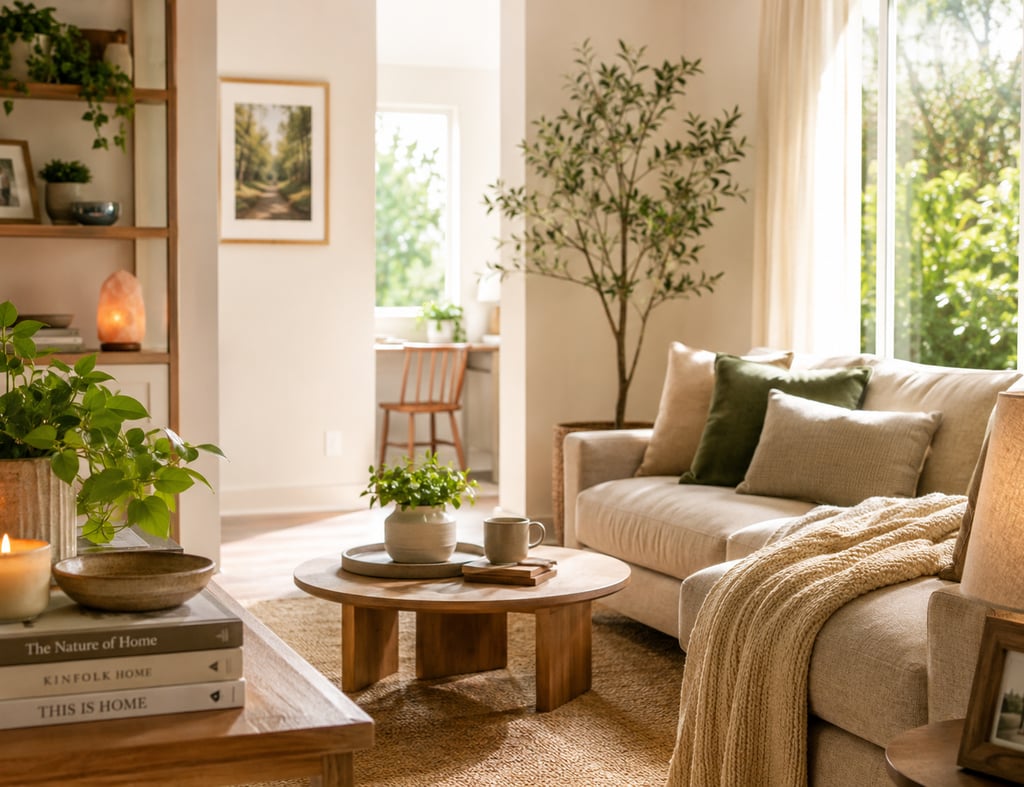

There are moments when life feels unexpectedly heavy.
Nothing dramatic has happened. Your work is manageable. Your family is doing well. Your calendar isn't overflowing. Yet by the middle of the afternoon, you're mentally exhausted. You struggle to focus on simple tasks, become impatient over small inconveniences, or find yourself longing to escape your own space for a while.
It's easy to assume that these feelings always begin inside us.
We blame stress, lack of motivation, or poor sleep. Sometimes those explanations are accurate. But sometimes the answer is much closer to home than we realize.
The environment we live in quietly shapes the way we think, feel, and move through each day. Every room we spend time in sends subtle signals to our minds and bodies. The amount of natural light entering a window, the comfort of the air, the level of background noise, and even how easily we move from one daily task to another all influence our experience in ways that rarely demand attention.
Unlike major life events, these influences don't announce themselves. They work quietly, becoming part of the background until we forget they're there.
That's why improving how a home feels isn't necessarily about buying new furniture or starting an expensive renovation. More often, it's about learning to notice the everyday details that either support your well-being or slowly wear away at it.
When we begin paying attention to those details, we often discover that joy isn't something we have to search for elsewhere. Sometimes it's waiting to be uncovered right where we already live.
Home Is More Than a Place You Return To
Ask someone to describe their home, and they'll probably start with practical details.
They might mention the number of bedrooms, the size of the kitchen, the neighborhood, or the style of the house. These details help define a property, but they rarely capture what makes a home meaningful.
Think instead about how your home makes you feel.
Does walking through the front door bring a sense of relief after a long day? Do certain rooms invite you to slow down, while others seem to leave you restless? Is your home a place where conversations happen naturally, or does everyone tend to retreat into separate corners?
These emotional responses develop over time.
Our homes become the backdrop for birthdays, difficult conversations, ordinary Tuesday dinners, children's laughter, quiet mornings, and evenings spent unwinding after work. The physical space doesn't create these memories by itself, but it influences how comfortably they unfold.
Researchers who study environmental psychology have long explored the relationship between our surroundings and our emotional well-being. Their work suggests that physical environments can affect stress levels, attention, mood, and even how connected we feel to the people around us.
You don't have to understand the science to recognize the experience.
Most people have walked into a place that immediately felt peaceful.
Likewise, most have entered a room that somehow felt tense, cluttered, or exhausting without knowing exactly why.
Our homes communicate with us constantly.
The question is whether we're listening.
The Invisible Conversations Between You and Your Environment
Every day, your brain processes an astonishing amount of information without asking for your permission.
It notices the brightness of a room before you consciously look around.
It registers changes in temperature before you reach for a sweater.
It adapts to recurring sounds, lingering odors, and familiar routines so efficiently that you stop thinking about them altogether.
This ability is one of the brain's greatest strengths.
Without it, we'd become overwhelmed by every sensory detail around us.
But adaptation also has a downside.
When something becomes familiar, we often stop evaluating whether it's helping or hurting us.
Perhaps one room in your home has always felt slightly warmer than the others.
Maybe you've grown accustomed to working under lighting that strains your eyes by late afternoon.
Perhaps there's a hallway that always feels cluttered because items accumulate there day after day.
None of these situations seem urgent.
They're simply part of life.
Or so it seems.
The reality is that each small discomfort asks your brain to perform tiny adjustments throughout the day. You move to a different chair because one feels too warm. You search for an item that doesn't have a permanent home. You shift your position because airflow feels uneven. You become distracted by a repetitive noise you barely notice anymore.
Each adjustment is minor.
Together, they consume mental energy.
This concept is sometimes referred to as cognitive load. While we often associate cognitive load with demanding work or complicated decisions, our physical surroundings contribute to it as well. Environments that require constant adaptation leave us with fewer mental resources for creativity, patience, focus, and connection.
That's why two homes of similar size and appearance can create entirely different emotional experiences.
One quietly supports daily life.
The other quietly complicates it.
The Difference Between a Beautiful Home and a Comfortable One
It's easy to confuse beauty with comfort.
After all, we're surrounded by images of perfectly styled interiors. Magazine spreads and social media feeds showcase immaculate living rooms, spotless kitchens, and carefully arranged décor that appear almost too perfect to touch.
These spaces are inspiring.
But they're not necessarily the reason someone feels happy at home.
A comfortable home isn't defined by expensive finishes or professionally designed rooms.
It's defined by how naturally life happens inside it.
Can you prepare dinner without feeling overwhelmed by the space?
Can family members gather without everyone competing for the one comfortable seat?
Does your bedroom encourage rest, or does it remind you of unfinished work?
Can you focus when you need to concentrate?
Do you feel physically at ease throughout the day?
These questions matter because comfort extends beyond appearance.
It's possible to admire a beautifully decorated room while feeling strangely unsettled inside it.
Likewise, a modest home with worn furniture and simple décor can feel incredibly welcoming because every part of it supports the people living there.
The goal isn't to create a home that impresses visitors.
It's to create one that cares for the people who call it home.
That shift in perspective often changes the way we think about improvement.
Instead of asking what needs to look different, we begin asking what needs to feel different.
The Quiet Impact of Light Throughout the Day
Light is one of the most overlooked influences on emotional well-being.
Most of us notice it only when it's missing.
We comment on gloomy weather or dark winter afternoons, yet rarely consider how the lighting inside our homes affects us every single day.
Natural light does far more than brighten a room.
It helps regulate our internal body clock, supports healthy sleep patterns, and influences our alertness from morning through evening.
A room filled with gentle morning sunlight often encourages people to wake gradually and begin the day with more energy.
Spaces that remain dim throughout the day can unintentionally contribute to sluggishness or make work feel more mentally demanding.
This doesn't mean every room needs floor-to-ceiling windows.
Small adjustments often make a meaningful difference.
Opening curtains earlier in the day.
Moving a reading chair closer to a window.
Choosing warmer lighting for evening relaxation instead of harsh overhead fixtures.
Using task lighting where concentration is needed.
These changes don't transform life overnight.
Instead, they quietly support the rhythms that make each day feel a little easier.
And sometimes, that's exactly what we need.
Why Physical Comfort Affects Emotional Well-Being
When people think about emotional health, they often focus on thoughts, relationships, or personal habits.
Physical surroundings receive far less attention.
Yet our bodies constantly influence our emotions.
Imagine trying to relax while you're too warm.
Or concentrating while the air feels heavy and stale.
Or sleeping through the night in a room that never seems to maintain a comfortable temperature.
These experiences don't necessarily create major problems.
They simply make ordinary tasks require more effort.
Over time, that effort accumulates.
Comfort isn't about luxury.
It's about reducing unnecessary distractions so your mind can focus on the things that truly matter.
This includes maintaining comfortable temperatures throughout the home, improving airflow, reducing excessive humidity, and creating spaces where your body naturally feels at ease.
When physical comfort improves, emotional resilience often follows.
We become a little more patient.
A little more focused.
A little more willing to enjoy the present moment instead of simply getting through it.
These changes may seem subtle, but they're often the foundation upon which larger improvements are built.
The Emotional Cost of Tiny Daily Frustrations
Most people don't become overwhelmed because of one major inconvenience.
They become overwhelmed because of dozens of small ones.
The cabinet door that never closes properly.
The room that's consistently warmer than the rest of the house.
The workspace that's always just a little too cramped.
The light switch that doesn't work the first time.
The drawer that sticks every morning.
The shoes that never seem to have a place by the door.
Each issue seems too small to deserve immediate attention.
So we postpone it.
Tomorrow becomes next month.
Next month becomes next year.
Eventually, those small frustrations become so familiar that we stop seeing them altogether.
But our minds don't.
Every recurring inconvenience becomes another tiny interruption during the day. Individually, they're insignificant. Together, they shape the emotional atmosphere of a home.
This is one reason why addressing seemingly minor problems can feel surprisingly rewarding.
The improvement isn't only physical.
It's psychological.
Each solved problem removes one more obstacle between you and a calmer day.
Home Shapes the Way We Relate to One Another
It's easy to think of our homes as personal spaces.
But they're also shared spaces, and that means they quietly influence our relationships.
Think about some of your favorite memories with the people you love.
Perhaps they happened around the dinner table, where conversations stretched longer than expected.
Maybe they unfolded on a comfortable couch during a rainy afternoon, everyone laughing over an old movie.
Or maybe they happened on an ordinary weekday when nothing remarkable occurred except the comforting feeling of simply being together.
The setting wasn't the reason those moments mattered.
But it helped make them possible.
The opposite is true as well.
When a home feels uncomfortable, tense, or difficult to navigate, everyone living there feels it.
Parents may become less patient after repeatedly dealing with small frustrations throughout the day.
Children often respond to the emotional atmosphere around them, even when they can't explain why they feel unsettled.
Couples juggling work, household responsibilities, and family schedules may find themselves reacting to one another with shorter tempers, not because the relationship is struggling, but because the environment itself quietly adds to the mental load.
This doesn't mean every disagreement is caused by the house.
Of course not.
Life is naturally complicated.
But when home becomes a place that supports recovery instead of creating additional stress, it becomes easier to approach one another with patience, kindness, and understanding.
Sometimes the greatest gift a home offers isn't beautiful décor.
It's emotional breathing room.
The Habits Your Home Quietly Encourages
Most of us like to believe our daily habits are the result of discipline.
While motivation certainly matters, our surroundings often have a much stronger influence than we realize.
Imagine two different mornings.
In the first, your coffee mug is easy to find, natural light fills the kitchen, breakfast ingredients are within reach, and your workspace is already organized.
Without much effort, your morning feels calm and intentional.
Now imagine another scenario.
You can't find your keys.
The kitchen counter is crowded with yesterday's mail.
The room feels stuffy.
You're already uncomfortable before the day has fully begun.
Neither morning changed who you are.
The environment simply made certain behaviors easier or harder.
This idea appears throughout behavioral science.
When healthy habits are convenient, we're more likely to repeat them.
When every task requires extra effort, even simple routines begin to feel exhausting.
That's why thoughtful homes often support positive habits without anyone noticing.
A comfortable chair encourages reading.
An uncluttered dining table invites family meals.
A peaceful bedroom encourages earlier bedtimes.
A functional workspace makes it easier to concentrate.
None of these changes require extraordinary willpower.
They're simply examples of an environment working with you instead of against you.
The Comfort You Stop Noticing
One of the remarkable things about human beings is our ability to adapt.
We become accustomed to almost anything.
The hallway that always feels colder.
The room upstairs that's noticeably warmer.
The slight humming noise that visitors immediately notice but you've long forgotten.
The uneven airflow that leaves one part of the house comfortable while another never quite feels right.
Over time, adaptation becomes acceptance.
We stop asking whether something could be better because we've grown used to the way things are.
This is especially true when it comes to indoor comfort.
Temperature changes often happen gradually.
Airflow slowly becomes less effective.
Humidity shifts with the seasons.
Rooms that once felt balanced begin feeling slightly different, but the changes are so subtle that they rarely seem urgent.
Instead of recognizing the pattern, many people simply adjust.
They use another fan.
Add another blanket.
Open a window.
Move to another room.
These small adaptations work for a while.
But they're often signs that the home is quietly asking for attention.
If you've noticed that certain rooms never seem to cool evenly, your air conditioner runs longer than it once did, or your home simply doesn't feel as comfortable as it used to, taking time to understand possible causes can be worthwhile. Resources explaining common issues related to air conditioning repair in Mt. Juliet can help homeowners better understand what may be affecting indoor comfort before deciding on the next step.
Notice what's absent from that idea.
Urgency.
Pressure.
Fear.
Sometimes learning more is simply part of caring for the place you live.
Why We Often Ignore the Things That Matter Most
It's an interesting contradiction.
The things that influence us every day are often the very things we notice the least.
We appreciate a beautiful sunset because it's unusual.
We celebrate vacations because they interrupt routine.
We remember milestone events because they stand apart from ordinary life.
But everyday experiences become invisible.
The kitchen where you prepare hundreds of meals each year.
The bedroom where you spend nearly a third of your life.
The hallway you walk through dozens of times every day.
The chair where you drink your morning coffee.
Because these places are familiar, we stop evaluating how they make us feel.
Until something changes.
Perhaps the power goes out.
Perhaps the heating or cooling suddenly stops working.
Perhaps you stay somewhere else for a few days and realize how refreshed you feel.
Distance has a way of revealing what familiarity hides.
That's why occasional reflection matters.
Not because your home is failing.
But because familiarity often keeps us from recognizing opportunities to improve our everyday experience.
Creating a Home That Gives More Than It Takes
There's a question worth asking every once in a while.
Does my home give me energy?
Or does it quietly take it away?
Neither answer is permanent.
Homes evolve because people evolve.
Children grow older.
Work routines change.
New hobbies develop.
Family members move in or move away.
The spaces that served you well five years ago may no longer support the life you're living today.
That's perfectly normal.
Instead of chasing perfection, think about making your home a little more supportive each season.
Perhaps that means reorganizing a frequently used space.
Perhaps it means creating a quiet reading corner.
Maybe it's finally replacing the chair everyone avoids sitting in.
Or maybe it's addressing a recurring comfort issue you've gradually accepted as normal.
Small improvements often create the biggest long-term difference because they're experienced every single day.
Joy Doesn't Live in Perfect Homes
One of the quietest myths we carry is that joy arrives after everything is finished.
After the house is cleaner.
After the renovation is complete.
After every project has been crossed off the list.
But life rarely works that way.
Homes are living spaces.
There will always be another repair.
Another room to organize.
Another improvement waiting for the right time.
If we postpone contentment until every detail is perfect, we'll spend far too much of life waiting.
Joy has never required perfection.
It thrives in ordinary moments.
The sound of laughter from another room.
A favorite chair by the window.
Fresh air drifting through the house on a mild afternoon.
A family meal shared without rushing.
Reading before bed with a warm blanket nearby.
These experiences aren't remarkable because they're rare.
They're remarkable because they're repeated.
Little by little, they become the memories we cherish most.
A Gentle Room-by-Room Reflection
Rather than looking at your home through the lens of what needs fixing, try seeing it through the lens of what supports your life.
Walk through each room and ask yourself a few thoughtful questions.
The Bedroom
Does this room help me rest?
Is there anything here that consistently interrupts relaxation?
The Living Room
Does this space encourage conversation, connection, or quiet reflection?
Or has it slowly become another storage area?
The Kitchen
Does preparing meals feel manageable?
Are there simple changes that would make everyday routines smoother?
Your Workspace
Does this room help you focus?
Or does it quietly compete for your attention with clutter, discomfort, or unnecessary distractions?
The Entryway
How do you feel when you walk through the front door?
Welcomed?
Overwhelmed?
Indifferent?
Sometimes the first impression your home gives you is also the one that shapes the rest of your evening.
Final Thoughts
Our homes rarely change our lives in dramatic ways.
Instead, they influence thousands of ordinary moments.
They shape how easily we wake up.
How well we concentrate.
How comfortably we gather with family.
How deeply we rest after difficult days.
How patient we feel when life becomes busy.
Most of these experiences happen quietly.
That's exactly why they're so powerful.
Creating a home that supports your well-being isn't about achieving perfection or keeping up with anyone else's standards.
It's about becoming more aware of the place where your life already happens.
Notice the spaces that help you breathe more deeply.
Pay attention to the routines that feel unnecessarily difficult.
Celebrate the small improvements that make each day just a little lighter.
Because in the end, joy is rarely built through one extraordinary change.
It's built through hundreds of thoughtful choices that gently remind us we're safe, supported, and at home.