
The Natural Light That Changes a Home Usually Changes the People Living in It Too
Natural light does more than brighten a room—it shapes the way we live, feel, and connect with the people around us. Discover how thoughtfully designed spaces, quality glass features, and simple home improvements can create a brighter, more welcoming environment that supports emotional well-being, healthier daily routines, and more joyful everyday living. Learn practical ways to maximize daylight while exploring how intentional design can transform an ordinary house into a home that truly feels uplifting.
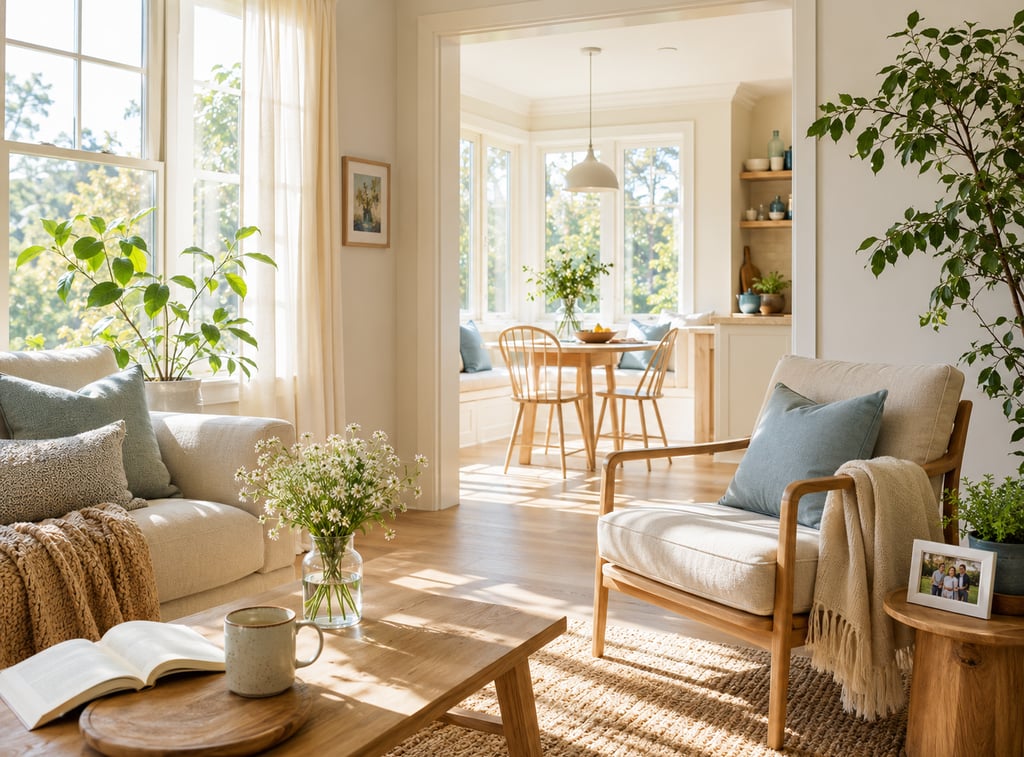
There is a reason some homes stay with us long after we've left them.
Years later, we may not remember the paint color in the living room or the style of the dining table. We forget the brand of the appliances and whether the couch was leather or fabric. Those details quietly fade with time.
What remains is a feeling.
Maybe it was the warmth of the morning sun spilling across the kitchen floor while coffee brewed. Maybe it was the way the living room seemed to glow in the late afternoon as family conversations lingered a little longer than expected. Or perhaps it was the simple comfort of sitting by a window on a rainy day, watching the world slow down while feeling completely at peace inside.
The homes we remember most are rarely the ones that impress us.
They're the ones that make us feel something.
We often spend years searching for happiness in bigger milestones—a new job, a larger house, the next vacation, the next accomplishment. Yet some of life's greatest joys quietly unfold in ordinary places we visit every single day.
Our homes.
Not because they're perfect.
But because they're where life actually happens.
They're where children learn to ride their imaginations before they learn to ride bicycles. They're where friendships grow around dinner tables, where difficult conversations become healing ones, and where tired minds finally find permission to rest after long days.
The environment surrounding those moments matters more than we often realize.
A home isn't simply a collection of walls and furniture.
It's a setting that gently shapes our routines, our relationships, and even our emotional well-being.
One of the quietest influences in that setting is also one of the easiest to overlook.
Natural light.
It asks for almost nothing.
Yet it changes almost everything.
We Don't Just Live Inside Our Homes—Our Homes Live Inside Us
Think about the place where you grew up.
You probably remember small details that no one intentionally tried to make memorable.
The window where you watched thunderstorms roll in.
The patch of sunlight where the family dog always fell asleep.
The dining room that somehow looked different every season as daylight shifted throughout the year.
The bedroom where the morning sun always arrived just before your alarm clock.
Those memories aren't important because of architecture.
They're important because they became part of your life.
Psychologists have long understood that our surroundings quietly influence our thoughts, emotions, and behaviors. Every environment sends subtle signals that our brains constantly interpret without us realizing it.
A cluttered room can make us feel mentally overwhelmed before we've consciously noticed the mess.
A quiet garden can lower our stress without anyone saying a word.
A room filled with daylight often feels more welcoming than one hidden behind heavy curtains.
None of this happens dramatically.
It happens gently.
One ordinary day at a time.
Over weeks, months, and years, these seemingly insignificant experiences accumulate into habits, moods, and memories.
It's one reason two houses with nearly identical floor plans can feel completely different.
One feels alive.
The other feels merely functional.
The difference often isn't expensive furniture or professional decorating.
It's the atmosphere.
Atmosphere is difficult to measure.
You can't easily list it on a property brochure.
Yet almost everyone recognizes it the moment they walk through the front door.
Some spaces quietly invite you to stay.
Others encourage you to leave.
Natural light is one of the strongest contributors to that invisible feeling.
The Quiet Language of Light
Sunlight communicates in ways we rarely stop to appreciate.
Morning light feels hopeful.
It enters gently, encouraging us to begin again.
Afternoon light feels productive.
Rooms become brighter, conversations become livelier, and homes seem full of possibility.
Evening light softens everything.
The pace slows.
The edges of the day become gentler.
Artificial lighting helps us see.
Natural light helps us feel.
Perhaps that's why people instinctively choose the table beside the window in a café.
Why airport lounges with large windows feel less stressful.
Why hospital rooms filled with daylight often seem more comforting than those hidden in interior hallways.
We're naturally drawn toward light because we've evolved alongside it for thousands of years.
Long before electric bulbs illuminated our evenings, the rising and setting sun quietly organized daily life.
Our bodies still respond to those rhythms today.
Morning daylight helps regulate our internal clocks, encouraging alertness and supporting healthy sleep patterns later that night.
Bright natural environments often improve concentration, reduce feelings of fatigue, and create a greater sense of openness.
Even when we don't consciously notice these effects, our minds do.
This doesn't mean every room needs floor-to-ceiling windows.
It simply reminds us that our relationship with natural light runs deeper than aesthetics.
It's biological.
It's emotional.
And it's deeply human.
Why Bright Spaces Often Feel Like Safe Spaces
Have you ever noticed how people naturally gather in the brightest room during family celebrations?
No one usually announces it.
It simply happens.
Children spread their toys where the sunlight reaches the floor.
Someone pulls a chair closer to the window while reading.
Guests drift toward the patio where daylight still lingers.
Families unknowingly organize themselves around comfort.
Researchers studying environmental psychology often describe this as our response to restorative environments—places that help our minds recover from stress rather than contribute to it.
Life today asks a great deal of our attention.
Phones vibrate.
Emails arrive.
Calendars fill.
News updates compete for our focus.
By the end of the day, many of us aren't physically exhausted as much as we're mentally full.
Our homes become more than places to sleep.
They become places where our minds either recover or continue feeling overwhelmed.
Light plays an important role in that recovery.
It creates visual openness.
It softens enclosed spaces.
It reminds us that there's still a world beyond our responsibilities.
Something as simple as looking through a window at trees moving in the breeze can briefly interrupt anxious thought patterns and invite our attention back to the present moment.
Not every problem disappears.
But perspective quietly returns.
Sometimes that's exactly what we need.
Joy Isn't Created by Perfection
It's easy to believe that beautiful homes belong to other people.
The ones featured in magazines.
The carefully staged living rooms.
The spotless kitchens.
The perfectly coordinated furniture.
Yet when you ask people about the homes they've loved most, perfection rarely enters the conversation.
They remember pancake breakfasts on Saturday mornings.
Movie nights with blankets scattered across the floor.
Birthday candles reflecting in the dining room window.
Grandparents sitting in their favorite chair every afternoon.
They remember ordinary moments that became extraordinary simply because they happened with people they loved.
Those memories rarely depended on expensive renovations.
They depended on feeling comfortable enough to slow down.
Joy has an interesting habit of growing where people feel safe.
Not safe because everything is under control.
Safe because the environment quietly allows them to be themselves.
Homes that welcome natural light often support this feeling in subtle ways.
They encourage us to open the curtains instead of hiding behind them.
They invite us to notice the weather changing outside.
They remind us that every season brings its own kind of beauty.
A bright winter morning feels different from a warm summer evening.
A rainy afternoon offers a different kind of comfort than a sunny spring day.
Natural light keeps us connected to those rhythms instead of separating us from them.
Perhaps that's why homes filled with daylight often feel more alive.
Not because the light itself creates happiness.
But because it creates a setting where happiness has room to grow.
The Small Details That Quietly Shape Everyday Life
One of the greatest misconceptions about home design is that dramatic changes create the biggest improvements.
Sometimes they do.
More often, however, it's the smallest details that slowly reshape our daily experience.
A chair moved closer to the window suddenly becomes your favorite place to read.
A breakfast table placed where the morning sun reaches it encourages slower mornings.
A hallway that once felt dark becomes inviting after a simple adjustment to how light moves through the space.
These changes don't demand attention.
They quietly improve life in ways that accumulate over time.
That's the beauty of intentional living.
It isn't about chasing perfection.
It's about noticing opportunities to make ordinary days feel a little lighter, a little calmer, and a little more meaningful.
The homes that support our well-being rarely achieve that through grand gestures.
Instead, they succeed through hundreds of thoughtful decisions that gently work together in the background.
And among those decisions, few have a more lasting influence than allowing natural light to become part of everyday life.
Because sometimes the brightest transformation isn't changing the home itself.
It's changing how we experience the life already unfolding inside it.
Seeing Home Differently
One of the most meaningful shifts we can make isn't changing our home.
It's changing the way we look at it.
It's surprisingly easy to become blind to the spaces we see every day. We stop noticing the morning light that reaches the kitchen counter. We stop appreciating the breeze that comes through the patio door on cool evenings. We no longer see the reflection of the trees outside dancing across the living room wall because it has become part of the background.
Familiarity has a funny way of making beautiful things invisible.
Think about the places where you feel most at ease.
Perhaps it's a quiet cabin overlooking a lake.
A favorite café where sunlight pours through tall windows.
A library with comfortable chairs tucked beside large panes of glass.
Or maybe it's the porch at your grandparents' house, where afternoons seemed to stretch on forever.
Those places probably have different architecture, different furniture, and different surroundings.
Yet they often share one important characteristic.
They invite you to slow down.
Natural light is rarely the only reason those places feel peaceful, but it is almost always part of the experience. It softens the atmosphere, creates a sense of openness, and reminds us that we're connected to something larger than the room we're sitting in.
Perhaps that's why coming home after a long day feels so different when the curtains are open.
The room hasn't changed.
You have.
And the light quietly meets you where you are.
A Home That Encourages Better Days
Most of us think our habits are driven by willpower.
In reality, our environment often has the first vote.
A bright kitchen invites you to sit down for breakfast instead of grabbing something on the way out the door.
A comfortable chair near a sunny window makes it easier to spend twenty minutes reading instead of scrolling through your phone.
An inviting dining room encourages conversations that continue long after the meal has ended.
The environment doesn't force these moments.
It simply makes them more likely.
Behavioral scientists sometimes call this choice architecture—the idea that the spaces around us quietly influence the decisions we make without demanding them.
We arrange our homes based on how we think we'll live.
Eventually, our homes begin influencing how we actually live.
That's why thoughtful design isn't only about appearance.
It's about supporting the kind of life you hope to build.
Do you want slower mornings?
Create a place where you'll actually enjoy sitting with your coffee.
Do you want more family conversations?
Make the dining table somewhere people naturally want to gather.
Do you want to spend less time feeling overwhelmed?
Reduce visual clutter and allow more daylight into the rooms where you spend the most time.
Small changes rarely transform life overnight.
But they gently shape hundreds of ordinary days.
And ordinary days, repeated often enough, become our lives.
The Spaces We Care For Often Care for Us
There's something deeply satisfying about taking care of a home.
Not because a house demands perfection.
But because caring for it is, in many ways, caring for ourselves.
Watering the plants.
Opening the windows on a cool morning.
Wiping down the kitchen after dinner.
Replacing a worn-out chair you've loved for years.
These small acts aren't simply chores.
They're quiet expressions of gratitude for the place that shelters your life.
The same is true when we care for the parts of a home that often go unnoticed.
A clean window doesn't just improve the view.
It invites more daylight inside.
A patio door that opens smoothly makes it easier to enjoy fresh air on pleasant evenings.
Clear glass reconnects us with changing seasons instead of separating us from them.
Sometimes homeowners only notice these details after something changes.
A crack appears.
Condensation builds between panes.
The afternoon light seems dimmer than it used to be.
Because these changes happen gradually, we often adapt without realizing what we've been missing.
Then one day the view becomes clear again.
The room suddenly feels brighter.
The colors appear warmer.
The sunlight reaches farther across the floor.
Nothing dramatic has happened.
And yet everything feels slightly different.
Homeowners looking for Residential window glass repair Huntsville AL often discover that restoring aging or damaged glass isn't simply about fixing a window. It's about bringing back the natural light, outdoor views, and everyday comfort that quietly make a home feel alive.
That's what thoughtful home care often does.
It restores experiences, not just materials.
Nature Was Never Meant to Stay Outside
For much of human history, daily life unfolded alongside nature.
People woke with the sunrise.
Meals followed the rhythm of the day.
Children played outdoors until evening arrived.
Even work was closely connected to changing seasons and natural light.
Modern life is different.
Many of us spend our days beneath fluorescent lighting, moving from office buildings to cars to living rooms without spending much time outdoors.
It's no surprise that we crave nature when we finally have a free afternoon.
We head to parks.
Walk along the beach.
Visit botanical gardens.
Open hiking apps.
Plan weekend escapes.
We're responding to something deeply human.
Researchers studying biophilic design—the idea that people thrive when connected to nature—have found that even simple visual connections with the outdoors can support emotional well-being.
A view of trees.
Sunlight filtering through leaves.
Clouds drifting across the sky.
A garden outside the kitchen window.
These experiences remind us that life exists beyond deadlines and notifications.
Our homes can become part of that connection.
Not by erasing the boundary between indoors and outdoors.
But by making it feel more welcoming.
A well-placed window frames the changing seasons like a living painting.
Morning birds become part of breakfast.
Rainstorms become something to watch instead of something to rush through.
The first signs of autumn become impossible to miss.
Nature doesn't interrupt our lives.
It quietly enriches them.
A Brighter Home Doesn't Have to Be a Bigger Home
One of the most persistent myths about happiness is that it always requires more.
A bigger house.
A larger backyard.
Another renovation.
Another purchase.
Sometimes those things genuinely improve our quality of life.
Often, though, what we're really searching for isn't more space.
It's a better experience of the space we already have.
A small apartment filled with daylight can feel surprisingly open.
A modest dining room can become the heart of the home when people genuinely enjoy gathering there.
A simple reading nook beside a sunny window can become someone's favorite place in the entire house.
Contentment has a remarkable ability to grow in spaces that encourage presence.
Not because those spaces are luxurious.
But because they help us notice the life already unfolding around us.
Perhaps that's one of the quiet lessons natural light teaches.
It doesn't ask us to build a different life.
It simply helps us see the beauty in the one we already have.
And sometimes, that's the brightest change of all.
Making Room for More Light—And More Life
One of the most encouraging things about creating a brighter home is that it doesn't always begin with a major renovation.
In fact, some of the most meaningful changes cost very little.
They begin with paying attention.
Spend a day noticing how sunlight moves through your home.
Watch where it first appears in the morning.
Notice which room feels the warmest in the afternoon.
See how the colors in your home change as the day slowly unfolds.
You might discover that a corner you've hardly used is bathed in beautiful morning light.
You may realize that opening the curtains just a little earlier transforms the atmosphere of your living room.
Or perhaps you'll find yourself lingering a few extra minutes at the dining table because the late afternoon sun makes the whole room feel calm.
These aren't dramatic moments.
They're gentle reminders that our homes are constantly changing with the rhythm of the day.
When we begin noticing those rhythms, we often begin living differently, too.
Instead of rushing through the house, we become more present within it.
Instead of viewing our home as another item on a to-do list, we start seeing it as a place that quietly supports us.
Sometimes, the smallest changes create the greatest sense of comfort:
Open your curtains as soon as the morning begins.
Rearrange a favorite chair so it catches more daylight.
Keep windows clean so they can welcome in as much natural light as possible.
Add a few indoor plants where they'll naturally thrive.
Clear unnecessary clutter from windowsills and surrounding spaces.
Create a quiet corner that's reserved for reading, journaling, or simply enjoying a cup of coffee.
None of these ideas require perfection.
They simply encourage you to experience your home a little differently.
Because often, the goal isn't to create a magazine-worthy space.
It's to create a home that feels like a gentle exhale after a busy day.
The Homes We Remember Were Never Perfect
Years from now, very few of us will remember whether our kitchen had the newest countertops.
We'll probably forget the exact color of the walls.
We won't remember whether the dining chairs matched perfectly.
But we'll remember where life happened.
We'll remember birthday cakes carried across the room while everyone sang.
We'll remember children building blanket forts in the living room.
We'll remember quiet evenings spent talking long after dinner had ended.
We'll remember sitting by the window during thunderstorms, feeling grateful simply to be inside together.
Memory has a beautiful way of filtering out perfection.
What remains are feelings.
Comfort.
Safety.
Laughter.
Belonging.
The homes that stay in our hearts aren't necessarily the most impressive ones.
They're the ones that gave ordinary moments room to become extraordinary memories.
Natural light often plays a quiet role in those memories.
Not because we consciously think about it.
But because it creates the atmosphere where life unfolds.
The sunlight across the breakfast table.
The golden glow filling the living room before sunset.
The first rays of morning reaching a child's bedroom.
These details become part of the emotional backdrop of our lives.
Almost invisible while they're happening.
Unforgettable once they're gone.
Joy Lives in Ordinary Moments
At Joy Digital Magazine, we often return to the same simple truth:
Joy isn't something we chase.
It's something we notice.
It appears in conversations that weren't planned.
In slow Sunday mornings.
In neighbors waving from across the street.
In books that hold our attention longer than expected.
In the smell of fresh coffee drifting through the house.
In a favorite song playing while dinner is being prepared.
And sometimes, it appears in something as ordinary as sunlight finding its way across the floor.
Modern life encourages us to keep looking ahead.
The next project.
The next purchase.
The next achievement.
The next destination.
But homes have a quiet way of inviting us back to the present.
They remind us that a meaningful life isn't built only through extraordinary experiences.
It's built through thousands of ordinary moments that, together, become extraordinary.
A home filled with warmth, comfort, and natural light won't eliminate life's challenges.
There will still be stressful weeks.
Unexpected setbacks.
Busy seasons.
Moments of uncertainty.
Yet a home that supports your well-being gives you somewhere to return.
A place to pause.
A place to recover.
A place where your shoulders naturally relax the moment you walk through the door.
That may be one of the greatest gifts a home can offer.
Not perfection.
Peace.
The Brightest Homes Reflect More Than Sunlight
When we think about light, it's easy to focus on what it allows us to see.
The room.
The furniture.
The garden outside.
But perhaps its greatest gift is something less visible.
It changes how we experience the people around us.
It encourages slower mornings with family before everyone heads in different directions.
It creates inviting spaces where friends naturally gather instead of rushing home.
It transforms an ordinary afternoon into an opportunity to read, reflect, or simply enjoy being still.
In that sense, natural light becomes something much larger than a design feature.
It becomes part of the emotional rhythm of a home.
It quietly reminds us that beauty doesn't always arrive through dramatic change.
Sometimes it arrives through small decisions repeated over time.
Opening the curtains.
Making time for breakfast together.
Sitting by the window instead of checking another notification.
Choosing presence over distraction.
Little by little, these choices shape the kind of life we experience.
And perhaps that's what intentional living has always been about.
Not creating a flawless home.
Creating a home that helps the people inside it flourish.
Final Reflection
We often think of home as the place we return to after life happens.
But perhaps home is where life has been happening all along.
It's where ordinary mornings become cherished memories.
Where difficult conversations become moments of understanding.
Where celebrations, quiet evenings, laughter, and even tears find a place to belong.
The walls provide shelter.
The furniture offers comfort.
But it's the atmosphere—the feeling of the space—that gives a house its heart.
Natural light is one of the quiet forces that helps create that atmosphere.
It welcomes each new day with possibility.
It softens busy afternoons.
It gently signals that it's time to slow down as evening arrives.
It connects us to changing seasons, to the world outside our windows, and ultimately to one another.
Maybe that's why the homes we remember most aren't defined by their size or style.
They're remembered because of how they made us feel.
Safe.
Peaceful.
Connected.
Loved.
So before searching for the next big change, pause for a moment.
Open the curtains.
Notice the way the sunlight fills the room.
Watch how it transforms familiar spaces into something that feels quietly new.
You may discover that the brightest part of your home was never the light itself.
It was the life unfolding within it all along.