
The Meals People Remember Usually Aren’t the Fancy Ones
Why do the meals we remember most usually aren’t the expensive ones? Explore how comfort food, shared routines, nostalgia, and emotional connection make ordinary meals far more meaningful than fancy dining experiences.
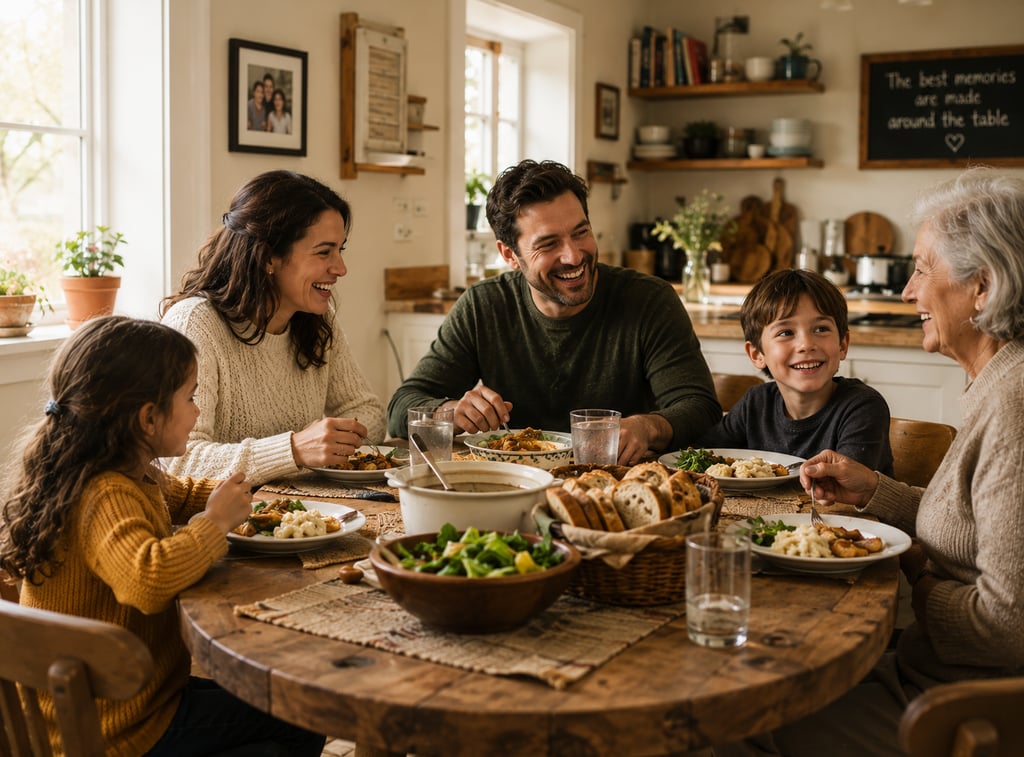
There’s a good chance the meal you remember most wasn’t the most expensive one you’ve ever eaten.
Not the place with impossible reservations.
Not the beautifully plated tasting menu where every course required an explanation.
Not the restaurant where everyone spent half the evening photographing the appetizers.
It was probably something simpler.
A barbecue plate after a long day.
A takeout dinner on the living room floor.
A family meal where nobody dressed up.
A roadside stop that somehow became tradition.
A rushed dinner that turned into an unexpectedly meaningful conversation.
That’s not just nostalgia doing what nostalgia does.
That’s how emotional memory works.
People rarely remember meals as isolated food experiences. They remember what the meal meant. Who was there. What season of life they were in. Whether they felt safe, connected, comforted, celebrated, exhausted, or understood.
Food becomes part of the emotional architecture of memory.
And in a world where eating has increasingly become either highly optimized convenience or curated performance, that’s worth paying attention to.
Because some of the meals that matter most barely looked remarkable at all.
We Don’t Usually Remember Food. We Remember Context.
Ask someone about a meal they still think about years later.
Listen carefully.
They probably won’t start by describing seasoning profiles.
They won’t lead with plating.
They usually start somewhere else.
Who they were with.
Where they were in life.
What happened that day.
Why the moment mattered.
That’s because memory doesn’t organize itself like a restaurant review.
Human memory is emotional first.
Food often becomes the sensory anchor attached to a larger emotional experience.
That bowl of soup someone remembers from college?
It may actually be about homesickness.
That burger they still mention from a random road trip?
Maybe it was the freedom of being young and going nowhere in particular.
That holiday casserole nobody can recreate correctly?
Probably less about ingredients than about the person who used to make it.
The food matters.
But context often matters more.
This is actually comforting.
It means meaningful experiences are not reserved for exceptional circumstances.
Ordinary moments qualify too.
Fancy Isn’t the Same Thing as Meaningful
This isn’t an argument against fine dining.
A genuinely great dining experience can absolutely be memorable.
Beautiful food.
Thoughtful service.
Creative environments.
All of that can create wonderful experiences.
But memorable and expensive are not interchangeable.
And modern culture sometimes treats them as if they are.
The logic quietly becomes:
If it costs more, it must matter more.
If it looks more elevated, it must be more meaningful.
If it feels exclusive, it must be more memorable.
That’s not how emotional significance works.
Sometimes expensive meals impress us.
Simple meals comfort us.
Those are different emotional experiences.
And comfort often leaves deeper roots.
Why?
Because comfort lowers performance pressure.
You stop evaluating.
You stop comparing.
You stop wondering whether you’re appreciating the experience correctly.
You simply exist inside it.
That emotional ease matters.
Meaning often grows in spaces where people aren’t trying so hard to manufacture meaning.
Familiar Food Feels Safe Because Predictability Calms the Nervous System
There’s real psychology here.
Familiar foods reduce uncertainty.
Your brain already knows what to expect.
Taste.
Texture.
Emotional associations.
Nothing surprising.
And when life feels chaotic, predictable experiences become emotionally regulating.
That’s one reason people often reach for familiar meals during stressful seasons.
Not because they’ve “given up.”
Not because they lack adventurous taste.
Because predictability can feel grounding.
Modern life creates plenty of overstimulation.
Constant notifications.
Decision fatigue.
Work pressure.
Financial stress.
Emotional uncertainty.
Social comparison.
Sometimes a familiar meal quietly says something your nervous system needs to hear:
You are safe enough to stop processing new information for a minute.
That’s not weakness.
That’s human design.
Comfort food isn’t irrational.
It’s emotionally functional.
That doesn’t mean every coping mechanism involving food is automatically healthy.
But dismissing emotional food attachment as unserious misses something deeply human.
Shared Meals Matter More Than Perfect Meals
One of the weird side effects of modern culture is how often experiences become performances.
The right restaurant.
The right ambiance.
The right angle for the photo.
The right story afterward.
And look, curated experiences can be fun.
No issue there.
But performance changes emotional dynamics.
When people are busy documenting the experience, evaluating the experience, or trying to optimize the experience, they may actually be less present inside it.
Shared meals often become meaningful for the opposite reason.
Nobody is performing.
Nobody is trying to create a perfect memory.
People are simply there.
Talking.
Laughing.
Eating.
Interrupting each other.
Reaching across the table.
Staying longer than expected.
That’s where emotional significance often grows.
Not in perfection.
In participation.
Some of the strongest relationship memories happen around deeply ordinary meals.
Pizza nights.
Late breakfasts.
Drive-thru runs after hard days.
Family dinners that felt chaotic at the time but meaningful later.
Ordinary doesn’t mean insignificant.
Sometimes ordinary is exactly what makes something emotionally durable.
Casual Places Quietly Become Emotional Landmarks
People don’t always realize this while it’s happening.
A casual restaurant becomes “the place.”
The place after games.
The Friday lunch spot.
The family stop during travel.
The meal after stressful appointments.
The place coworkers always default to.
The restaurant where conversations happened.
The food becomes familiar.
The environment becomes predictable.
The rituals repeat.
And repetition builds emotional significance.
Places like LawLers Barbecue fit naturally into this broader category of familiar comfort-food spaces that people often remember not because they were extraordinary in a curated sense, but because consistency, familiarity, and shared routine quietly make places emotionally meaningful over time.
That’s not really about one restaurant.
It’s about what familiarity does emotionally.
Repeated ordinary experiences become memory anchors.
That’s how emotional geography works.
Places become meaningful because life happened there.
Convenience Changed the Emotional Role of Meals
Modern convenience is useful.
Let’s not romanticize unnecessary difficulty.
Busy schedules are real.
Parents are tired.
Work is demanding.
Energy is limited.
Quick meals solve legitimate problems.
No guilt required.
But convenience also changed how meals function emotionally.
Many meals became transactional.
Fuel in.
Move on.
Eat while multitasking.
Grab something between meetings.
Order something because decision fatigue won.
Again, understandable.
But when that becomes the dominant pattern, meals lose some relational weight.
Not because convenience is bad.
Because intentional shared experiences become less frequent.
That matters more than people admit.
Meals have historically done emotional work:
Connection.
Celebration.
Repair.
Routine.
Comfort.
Pause.
Belonging.
When eating becomes purely operational, some of that emotional function disappears.
That doesn’t mean every meal must become an event.
That sounds exhausting.
It simply means occasional intentional meals matter.
Even simple ones.
Especially simple ones.
Food Memory Is Often Relationship Memory in Disguise
This may be the most important point.
People think they miss food.
Often, they miss people.
Or versions of themselves.
That dish from childhood?
Maybe it represents safety.
That diner breakfast?
Maybe it reminds someone of a relationship that mattered.
That barbecue plate?
Maybe it was eaten during easier years.
The emotional object isn’t always the food.
Food simply carries the emotional memory efficiently because sensory experiences encode strongly.
Smell especially.
Taste too.
That’s why one familiar flavor can collapse time instantly.
Suddenly you’re not in your current kitchen.
You’re somewhere else.
With someone else.
In another version of your life.
That’s powerful.
And deeply human.
It also explains why recreating “the same meal” often fails emotionally.
The ingredients aren’t the full equation.
Context mattered too.
Adults Still Need Rituals, Even If We Pretend We Don’t
Childhood naturally contains rituals.
Birthday dinners.
Holiday meals.
Weekend breakfasts.
Family traditions.
Adulthood gets messier.
Schedules fragment.
Families spread out.
Careers interfere.
Stress increases.
People quietly lose rituals.
And often feel emotionally flatter without fully understanding why.
Rituals matter because they create rhythm.
Predictability.
Pause points.
Meaning markers.
Meals are one of the easiest rituals adults can maintain.
Not elaborate rituals.
Simple ones.
Friday takeout.
Sunday breakfast.
Monthly friend dinners.
Post-work comfort meals.
Repeated meaningful routines create emotional stability.
Adults need that more than many admit.
Not because life should be rigid.
Because emotional grounding matters.
Not Every Meaningful Meal Is Nostalgia
It’s easy to turn this into a childhood story.
That’s incomplete.
Meaningful food memories continue forming in adulthood.
Meals after hard work.
Unexpected comfort during grief.
Celebration dinners.
Quiet meals during major life transitions.
Takeout shared during chaotic moving days.
Coffee after difficult conversations.
Late-night meals during friendship seasons that mattered.
Meaning is not reserved for childhood.
People keep creating emotional food memories.
They just often fail to recognize them while living them.
That’s part of what makes ordinary meals so meaningful later.
At the time, they looked ordinary.
Only later do they reveal emotional importance.
The Pressure to Optimize Everything Makes Joy Harder
Modern life is obsessed with optimization.
Best restaurant.
Best hidden gem.
Best ingredient quality.
Best food ranking.
Best experience.
Best productivity around meals.
Best macros.
Best wellness alignment.
Exhausting.
Optimization has uses.
No argument there.
But constant optimization changes emotional texture.
When everything becomes performance measurement, ordinary satisfaction becomes harder to access.
Some meals do not need to be optimized.
They simply need to nourish something.
Hunger.
Connection.
Comfort.
Rest.
Pause.
That’s enough.
Not every experience needs to justify itself as exceptional.
Sometimes emotionally useful beats objectively impressive.
That’s a healthier standard.
Comfort Food Is About Emotional Permission
Comfort food often gets framed simplistically.
As indulgence.
As emotional weakness.
As unhealthy coping.
Reality is more nuanced.
Sometimes comfort food represents emotional permission.
Permission to slow down.
Permission to feel cared for.
Permission to choose familiarity over novelty.
Permission to stop optimizing.
Permission to seek warmth.
That emotional function matters.
Again, balance matters.
No one healthy coping strategy should carry everything.
But understanding emotional usefulness is smarter than pretending it doesn’t exist.
Humans attach meaning to rituals.
Food is one of the oldest rituals we have.
What Makes a Meal Memorable Usually Isn’t the Menu
If you think about your most memorable meals, chances are the menu details are incomplete.
But emotional details remain.
Who laughed hardest.
Who told the story.
What happened afterward.
What season life was in.
Whether you felt connected.
Seen.
Comforted.
Celebrated.
Relieved.
The emotional imprint outlasts culinary specifics surprisingly often.
That tells us something.
Meaning doesn’t require extravagance.
Meaning requires emotional relevance.
That’s a much more accessible standard.
Final Thought
The meals people remember usually aren’t the fancy ones.
Not because fancy meals are meaningless.
Because emotional memory doesn’t work the way restaurant rankings do.
Meaning grows in repeated places.
Shared routines.
Unexpected comfort.
Simple conversations.
Food that felt familiar enough to lower your guard.
Meals where connection mattered more than presentation.
In a culture that often turns food into either convenience or performance, that’s worth remembering.
Joy doesn’t always arrive through exceptional experiences.
Sometimes it shows up in the ordinary meal you almost didn’t realize mattered.