
The Homes That Feel Right Usually Share These Quiet Characteristics
Discover the quiet characteristics that make a house truly feel like home. Learn how thoughtful design, natural light, flexible spaces, welcoming neighborhoods, and intentional living can help you choose a home that supports everyday happiness, meaningful relationships, and lasting joy.
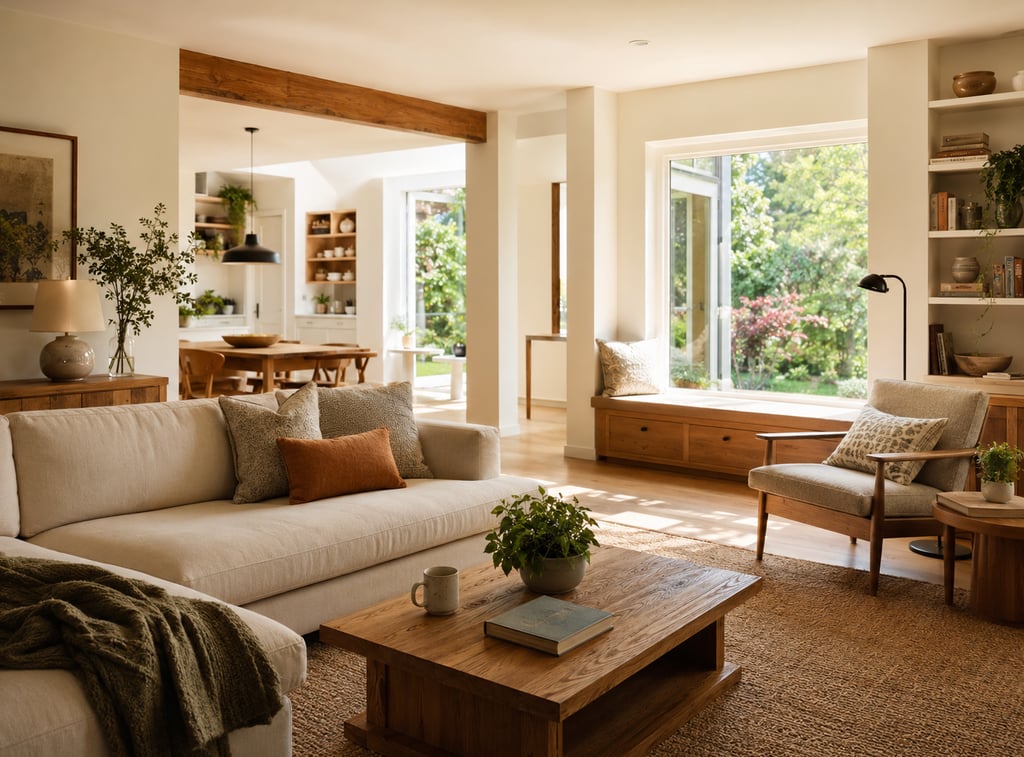
There’s a moment that catches many people by surprise.
It doesn’t happen when the paperwork is signed or when the moving truck pulls into the driveway.
It happens much earlier.
You step inside a house for the first time, look around without saying much, and something quietly shifts.
You imagine where your favorite chair might go.
You picture sunlight pouring through the windows while coffee brews on a slow Saturday morning.
You wonder where friends would naturally gather during the holidays.
Without realizing it, you've stopped looking at a house and started imagining a life.
That's a powerful moment.
Interestingly, it usually has very little to do with expensive finishes or the latest design trends.
The homes that stay with us—the ones we continue loving years after moving in—often succeed because they support ordinary life in extraordinary ways.
They make mornings a little calmer.
They make family dinners easier to enjoy.
They provide quiet corners after difficult days and welcoming spaces during joyful ones.
In other words, they help us live well.
That's worth paying attention to.
Whether you're actively searching for new construction homes near me, planning for the future, or simply thinking about what "home" really means, understanding these quieter characteristics can help you look beyond appearances and focus on what truly matters.
Because while a house can impress you in an afternoon, a home earns your affection one ordinary day at a time.
Home Is Built Through Everyday Moments
When people talk about buying a home, the conversation often revolves around milestones.
The purchase.
The closing date.
The move.
Those are exciting moments, and they deserve to be celebrated.
But they aren't where most of life happens.
Life happens on ordinary Tuesday evenings.
It's folding laundry while dinner simmers on the stove.
It's helping children finish homework at the kitchen table.
It's sharing takeout after an unexpectedly long workday because everyone is simply too tired to cook.
It's laughing with friends long after dessert has been served.
It's reading a book while rain taps gently against the windows.
These moments rarely appear in real estate advertisements.
Yet they're the moments that quietly become our favorite memories.
That's why choosing a home isn't really about choosing where you'll sleep.
It's about choosing where your life will unfold.
When we remember that, our priorities begin to change.
Instead of asking,
"Does this house have everything?"
We begin asking,
"Will this home support the life I want to build?"
That's a much gentler question.
It's also a much wiser one.
The Best Homes Quietly Make Life Easier
There's something wonderful about a home that simply works.
Not because it's extravagant.
Not because it's enormous.
But because everyday life flows naturally inside it.
You come home after work.
Your keys have a place.
Shoes don't become obstacles near the front door.
Preparing dinner feels comfortable instead of crowded.
There's enough storage to keep everyday clutter from taking over the living room.
Laundry fits naturally into your routine rather than interrupting it.
None of these details would normally convince someone to buy a home.
Yet over the course of months and years, they become some of the things homeowners appreciate most.
Thoughtful design isn't always dramatic.
In fact, it's usually quite the opposite.
Good design quietly removes little frustrations before they become bigger ones.
It allows routines to happen with less effort.
And when everyday life feels a little less stressful, we often discover we have more patience, more energy, and more room to enjoy the people around us.
Sometimes joy isn't created by adding something extraordinary.
Sometimes it's created by removing small sources of daily stress.
Pause and Consider
The next time you walk through a home, try asking yourself these questions instead of focusing only on finishes:
Does moving through this space feel natural?
Could I picture an ordinary weekday here?
Would preparing meals feel enjoyable?
Is there enough room for the way my family actually lives?
What small frustrations might this layout quietly solve?
Those answers often reveal more than granite countertops ever will.
Natural Light Has a Way of Changing Everything
Think about the places where you naturally enjoy spending time.
A cozy reading corner.
A bright breakfast nook.
A living room where afternoon sunlight fills the space.
There's a reason those places feel inviting.
Natural light changes more than what we see.
It influences how we experience a room.
Research continues to show that regular exposure to daylight supports healthy sleep patterns, helps regulate our internal body clocks, and contributes to emotional well-being. While no home can eliminate life's challenges, spaces filled with natural light often feel more uplifting and welcoming.
There's something reassuring about opening the curtains each morning and watching sunlight gradually fill the room.
It quietly signals that a new day has begun.
That's why homes designed to embrace natural light often continue feeling fresh years after decorating trends have changed.
Paint colors can always be updated.
Furniture can be replaced.
But thoughtfully placed windows continue offering the same gift every single day.
Flexibility Is One of the Greatest Forms of Comfort
If there's one thing life teaches us, it's that very little stays exactly the same.
Families grow.
Children become teenagers.
Parents grow older.
Careers change.
Hobbies evolve.
Sometimes unexpected opportunities appear.
Sometimes unexpected challenges do too.
The homes that continue serving people well aren't always the largest.
They're often the ones prepared to adapt.
Perhaps today's guest bedroom becomes tomorrow's nursery.
A dining room becomes a home office.
A loft transforms into a creative studio.
A playroom eventually becomes a quiet retreat.
Flexible spaces give families room to grow without requiring everything else to change.
When touring homes, it can be helpful to ask yourself one simple question:
"Could this room become something different five years from now?"
If the answer is yes, you're looking at a home designed not only for today, but for tomorrow as well.
Comparison Is a Difficult Way to Choose a Home
It's impossible to spend much time online without seeing beautiful homes.
Designer kitchens.
Perfectly organized closets.
Magazine-worthy living rooms.
Stylish outdoor spaces.
There's nothing wrong with enjoying beautiful design.
Inspiration can be wonderful.
The challenge begins when inspiration quietly turns into comparison.
Suddenly, we're evaluating our own lives against carefully curated photographs.
We begin believing every home should always look perfect.
But real homes tell different stories.
There are backpacks by the door.
Half-finished puzzles on the dining table.
Blankets draped over the couch after movie night.
Cookbooks left open in the kitchen.
Shoes kicked off after long walks.
Signs of real life.
Those aren't imperfections.
They're evidence that a home is being lived in.
And perhaps that's one of the healthiest reminders we can carry with us.
A joyful home isn't one that looks perfect every day.
It's one that makes everyday life feel welcome.
A Neighborhood Becomes Part of Your Story
A home never exists by itself.
It's part of a larger community.
The people nearby.
The sidewalks.
The parks.
The schools.
The coffee shop where someone eventually remembers your order.
The walking trail where evening conversations become a habit.
The grocery store you stop at every Thursday.
The familiar route home after work.
These places slowly become woven into everyday routines.
Over time, they become part of what "home" means.
That's why choosing where to live deserves just as much attention as choosing the house itself.
Communities don't have to be perfect.
They simply need to support the kind of life you're hoping to build.
Sometimes the strongest feeling of belonging begins long before you unlock your own front door.
There's Wisdom in Slowing Down
Buying a home can feel surprisingly fast.
Listings appear.
Appointments fill quickly.
Decisions seem urgent.
It's easy to feel pressure to decide before you've had time to think.
But some of the best decisions are made a little more slowly.
Walk through a home twice.
Visit the neighborhood at different times of day.
Imagine an ordinary Wednesday instead of moving day.
Sit quietly for a few moments if possible.
Notice what you feel.
Not because feelings should replace careful planning.
But because they often help us notice details our checklists miss.
Sometimes slowing down is exactly what allows us to move forward with confidence.
The Details You'll Appreciate the Most Are Often the Ones You Didn't Notice at First
When people tour a home, it's natural to focus on the obvious.
The kitchen.
The flooring.
The paint colors.
The primary bedroom.
Those features certainly matter.
But after living in a home for several years, many homeowners discover that their favorite features are often much quieter.
It's the pantry that makes grocery shopping easier.
The entryway that keeps backpacks and shoes from taking over the living room.
The extra cabinet that finally gives every cooking utensil a place.
The window that catches the morning sun while breakfast is being made.
The hallway that's wide enough for two people to pass comfortably.
The small reading nook that slowly becomes everyone's favorite corner.
These aren't the kinds of things that usually appear in glossy brochures.
Yet they're often the details people miss the most when they move.
That's an important reminder.
The best homes don't simply look beautiful.
They quietly support the rhythms of everyday life.
A House Doesn't Need to Be Perfect to Be Right
One of the biggest misconceptions about buying a home is believing there's a "perfect" one waiting somewhere.
The perfect layout.
The perfect neighborhood.
The perfect backyard.
The perfect everything.
Real life is rarely built on perfection.
It's built on priorities.
Every home involves compromises.
Maybe you'd love a larger backyard but prefer a shorter commute.
Perhaps you'd trade a formal dining room for a larger kitchen.
Maybe you'd rather have extra storage than another bedroom.
The goal isn't finding a home without compromises.
It's finding one where the compromises don't interfere with the life that matters most to you.
That shift in thinking often brings a surprising amount of peace.
Instead of chasing perfection, you begin looking for compatibility.
And that's a much healthier goal.
A Helpful Exercise Before You Make a Decision
When you visit a home, try imagining an ordinary day instead of moving day.
Walk through the house slowly and ask yourself questions like:
Morning
Where would I enjoy my first cup of coffee?
Will getting everyone ready feel organized or rushed?
Does natural light reach the spaces where we'll spend our mornings?
Afternoon
Is there enough flexibility for work, school, or hobbies?
Where would groceries naturally go?
Does the layout make daily routines easier?
Evening
Where would family naturally gather?
Could we comfortably host friends here?
Does this home encourage conversation and connection?
These questions may seem simple.
But they often reveal whether a house truly fits your lifestyle.
The answers usually matter far more than whether the countertops happen to be the latest trend.
Why Thoughtful New Construction Appeals to So Many Families
Every family's journey looks different.
Some buyers are purchasing their very first home.
Others are looking for more space.
Some are downsizing.
Others simply want a fresh start.
It's easy to understand why many people begin searching for new construction homes near me during these transitions.
A thoughtfully designed new home can offer features that naturally support modern living, including open gathering spaces, flexible layouts, energy-conscious construction, and storage designed around today's routines rather than yesterday's expectations.
The most valuable feature, however, isn't found on a specification sheet.
It's peace of mind.
Knowing your home has been designed with today's families in mind allows you to focus less on constant repairs and more on building a life inside it.
For anyone exploring new construction homes in Alabama, it can be helpful to look beyond finishes and floor plans alone. Consider how each home supports everyday routines, encourages connection, and creates opportunities for the quiet moments that often become life's most meaningful memories.
After all, the best homes don't simply provide shelter.
They create space for life to happen.
Joy Lives in the Everyday
One of the most comforting ideas is that joy rarely arrives all at once.
It grows gradually.
A familiar chair beside the window.
Fresh flowers on the kitchen table.
Children running through the backyard.
Neighbors waving during an evening walk.
The smell of cookies baking.
The sound of laughter echoing through the hallway.
Movie nights that become Friday traditions.
Conversations that somehow last long after dinner has ended.
These moments don't require luxury.
They don't require perfection.
They simply require a place where people feel comfortable enough to be themselves.
That's what home quietly offers.
A place where life can unfold naturally.
A place where ordinary moments slowly become treasured memories.
A Gentle Reminder for Anyone Looking Ahead
Buying a home is exciting.
It's also emotional.
There are budgets to consider.
Neighborhoods to compare.
Timelines to manage.
Advice from family.
Opinions from friends.
Checklists that seem to grow longer every week.
In the middle of all those practical decisions, don't lose sight of the bigger picture.
You're not simply choosing a house.
You're choosing where birthdays will be celebrated.
Where difficult conversations will happen.
Where ordinary mornings will begin.
Where holidays will become traditions.
Where you'll welcome people you love.
That perspective doesn't make the decision easier.
But it often makes it clearer.
Sometimes the Right Home Feels Peaceful Rather Than Perfect
There's something quietly reassuring about walking into a home and feeling like you don't need to change who you are.
You don't need to impress anyone.
You don't need every room to look like a magazine.
You don't need every trend.
You simply need a place where life feels a little lighter.
A little calmer.
A little more connected.
Those are the homes people continue loving long after moving day.
Not because they're flawless.
But because they faithfully support the people living inside them.
And perhaps that's what we've been searching for all along.
Not perfection.
But peace.
Gentle Takeaways to Remember
If you're searching for your next home, consider carrying these reminders with you:
Look beyond beautiful finishes and imagine everyday life.
Pay attention to how a space makes you feel, not just how it looks.
Choose layouts that support your routines rather than complicate them.
Remember that natural light, flexibility, and thoughtful design often provide lasting value.
Consider the neighborhood as part of your future home.
Let your priorities guide your decision instead of current design trends.
Trust both careful planning and honest reflection.
Remember that the goal isn't finding a perfect house—it's finding the right place to build your life.
Final Thoughts
The homes that stay in our hearts are rarely remembered because they had the biggest kitchens or the newest finishes.
They're remembered because they quietly became part of our stories.
They witnessed ordinary breakfasts that turned into family traditions.
They sheltered us during difficult seasons.
They celebrated birthdays, graduations, and holidays.
They gave us places to rest, laugh, grow, and simply be together.
That's why the homes that feel right usually share the same quiet characteristics.
They aren't trying to impress anyone.
They're thoughtfully designed to support everyday life with comfort, flexibility, warmth, and intention.
And perhaps that's the greatest reminder of all.
Joy doesn't usually arrive because everything is perfect.
It grows little by little in places where we feel safe, connected, and truly at home.