
The Home Systems We Rarely Appreciate Until They Stop Working
The most important parts of a comfortable home are often the ones we rarely notice. Discover how plumbing and other hidden home systems quietly support everyday life, influence peace of mind, and shape the comfort and stability we often take for granted.
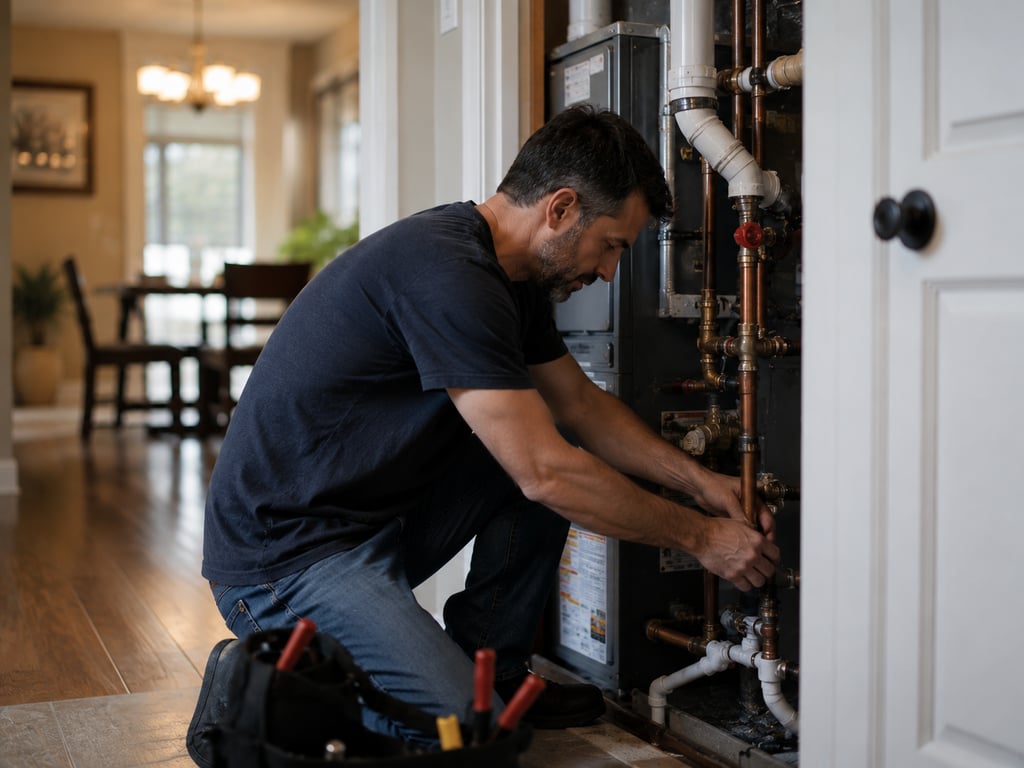
Most of us don't spend much time thinking about what happens when we turn on the faucet.
We expect water to flow.
We expect the shower to be warm.
We expect the toilet to flush, the sink to drain, and the dishwasher to quietly do its job.
These things feel so ordinary that they barely register in our minds.
Until one day they don't work.
A small leak under the sink can suddenly become the center of your attention. A clogged drain can derail your morning routine. A water heater that stops working can make an ordinary Tuesday feel surprisingly stressful.
It's funny how quickly our perspective changes.
The things we barely notice when they're working become incredibly important when they aren't.
That's true of plumbing. It's true of electricity. It's true of heating and cooling systems. It's true of many of the invisible structures that support everyday life.
The best home systems are often the ones we forget exist.
And perhaps that's exactly why they deserve a little more appreciation.
The Comfort Of A Functional Home Is Easy To Take For Granted
Most people don't wake up each morning feeling grateful for running water.
Not because they're ungrateful.
Because comfort has a way of becoming invisible.
We adapt quickly to things that work well.
The lights turn on.
The shower runs.
The washing machine starts.
Everything feels normal.
The brain stops paying attention because there is nothing demanding its focus.
This is actually a wonderful thing.
A functional home creates a sense of ease that allows us to spend our energy elsewhere.
We can focus on our families, our work, our hobbies, and our relationships because the systems around us are quietly supporting daily life.
The problem is that we sometimes forget how much these systems contribute to our well-being.
The routines we enjoy often depend on countless small conveniences happening behind the scenes.
A comfortable home isn't simply a place.
It's a collection of systems working together in ways we rarely notice.
The Small Things Often Create The Biggest Sense Of Stability
Think about what makes a house feel comfortable.
It's probably not one dramatic feature.
It's usually a collection of small things.
A hot shower before work.
Clean dishes after dinner.
Fresh water for your morning coffee.
A kitchen sink that works exactly as expected.
The ability to do laundry without thinking twice about it.
These moments seem ordinary because they happen so consistently.
Yet consistency is part of what makes a home feel safe and dependable.
When something disrupts those routines, we quickly realize how much they matter.
A plumbing problem can suddenly affect several parts of daily life.
Cooking becomes more difficult.
Cleaning becomes more complicated.
Morning routines become frustrating.
Even simple tasks require more planning.
The disruption often feels bigger than the problem itself because it interrupts our sense of normalcy.
There's comfort in knowing your home works.
And we often recognize that comfort only after it's been interrupted.
The Systems Behind The Walls Shape Everyday Life
Most of the important systems in a home are hidden.
We don't see the pipes carrying water.
We don't see the wiring inside the walls.
We don't see the components that help a home function.
Yet these systems quietly influence our daily experience.
A home is much more than its visible features.
It's also infrastructure.
The ability to cook a meal, take a shower, wash clothes, or clean up after dinner all depend on systems doing their jobs.
It's easy to think of infrastructure as something cities worry about.
Roads.
Bridges.
Water systems.
But every home has its own version of infrastructure.
And much like public infrastructure, we usually notice it only when something goes wrong.
The invisible things often make the biggest difference.
Unexpected Home Problems Create More Stress Than We Realize
A home problem isn't always stressful because of the repair itself.
Often, it's stressful because of what it interrupts.
You suddenly need to change plans.
Appointments get rearranged.
Budgets need adjusting.
The to-do list becomes longer.
Unexpected problems also create uncertainty.
How serious is the issue?
How long will it take to fix?
Will it become more expensive?
These questions can occupy a surprising amount of mental energy.
Our homes are supposed to be places where we recover from the stresses of life.
When the home itself becomes the source of stress, it can feel particularly exhausting.
This is one reason seemingly small household issues can have an outsized emotional impact.
They're not just inconveniences.
They interrupt the sense of stability we depend on.
Maintenance Is An Act Of Care
Maintenance isn't glamorous.
Nobody gets excited about checking for leaks or paying attention to plumbing systems.
Yet maintenance is often one of the quiet ways we care for our homes and the people who live in them.
Its benefits are difficult to measure because success often looks like nothing happening.
No emergency.
No disruption.
No unexpected repair.
The absence of a problem can be easy to overlook.
But that doesn't make it unimportant.
A home asks a lot of its systems every day.
Water moves through pipes countless times.
Appliances are used repeatedly.
Fixtures are turned on and off over and over again.
Everything experiences wear.
Paying attention to small concerns before they become larger ones can often save stress, time, and money in the future.
Maintenance is rarely exciting.
But peace of mind rarely is, either.
Why Problems Always Seem To Arrive At The Worst Possible Time
There seems to be an unwritten rule of homeownership.
Problems appear when life is already busy.
A leak develops before guests arrive.
The water heater stops working during the coldest week of the year.
A drain backs up just before an important event.
Part of this frustration comes from expectation.
We naturally assume that tomorrow will look like today.
We expect our homes to continue functioning as they did yesterday.
When something changes unexpectedly, it reminds us that every house is an active, living system that requires attention.
Nothing stays exactly the same forever.
Fortunately, many larger issues are preceded by smaller signs.
An unusual sound.
A slow drain.
A dripping faucet.
A recurring problem that never seems to fully go away.
Paying attention to these details can often prevent larger disruptions later.
Peace Of Mind Is One Of The Most Overlooked Forms Of Comfort
Comfort isn't only physical.
It's emotional.
There's a particular kind of comfort that comes from trusting your home.
You don't think about whether the water will run.
You don't worry about whether the sink will drain.
You simply expect things to work.
That confidence frees up mental energy.
It allows you to focus on other parts of life.
Reliable systems quietly reduce decision-making and stress.
They create space for ordinary moments.
Family dinners.
Weekend projects.
Relaxing evenings.
Simple routines that make a house feel like home.
The value of dependable systems often isn't visible because they allow life to proceed without interruption.
That's a form of comfort worth appreciating.
Caring For A Home Is Also A Form Of Self-Care
Self-care often brings certain images to mind.
Exercise.
Rest.
Healthy meals.
Time with loved ones.
Home care rarely makes the list.
Perhaps it should.
The spaces we live in influence our emotional and mental well-being.
Persistent household problems can create ongoing stress.
Unfinished repairs can quietly occupy mental space.
Recurring issues can create feelings of frustration and uncertainty.
Taking care of your environment is, in many ways, another way of taking care of yourself.
This doesn't mean every project needs immediate attention.
No home is perfect.
Every house has something that could be improved.
The goal isn't perfection.
It's creating an environment that supports everyday life and reduces unnecessary stress.
A comfortable home makes it easier to rest, recharge, and focus on what matters most.
Asking For Help Is Part Of Responsible Homeownership
There are many small projects homeowners can tackle themselves.
There are also situations where support makes sense.
Many people eventually begin researching resources such as local plumbing services when a recurring issue starts affecting daily routines or when a problem seems larger than expected.
Seeking help isn't a sign that you've failed as a homeowner.
It's often a practical decision.
Homes are complex systems.
No one person knows everything about every component inside them.
Part of caring for a home is recognizing when additional expertise can help restore comfort and peace of mind.
Sometimes the most responsible thing you can do is ask for support.
Gratitude Often Begins With Ordinary Things
As people get older, they often discover something interesting.
Many of life's greatest comforts are remarkably ordinary.
A good night's sleep.
A reliable car.
A peaceful evening.
Running water.
A home that works the way it's supposed to.
These things don't usually attract attention because they happen quietly.
They're dependable.
Consistent.
Easy to overlook.
Yet they shape our daily experience in meaningful ways.
When we lose one of these comforts, even temporarily, we quickly realize how valuable it was all along.
Perhaps ordinary things deserve more appreciation than we give them.
The Joy Of A Home That Simply Works
A joyful home doesn't need to be perfect.
It doesn't need expensive renovations or magazine-worthy rooms.
Often, what people want most is something much simpler.
A place that feels dependable.
A place where daily life happens with relative ease.
A place that allows people to focus on the moments that matter.
The systems behind the walls may never become the most interesting part of a home.
That's perfectly fine.
Their purpose isn't to attract attention.
Their purpose is to support ordinary life.
Morning routines.
Family dinners.
Celebrations.
Quiet evenings.
All the small moments that make a house feel meaningful.
The home systems we rarely think about are, in many ways, silent contributors to our well-being.
And perhaps that's why they're worth appreciating.
Because when they work, they give us something incredibly valuable.
The freedom to simply live our lives.