
The Family Photos People Treasure Usually Aren’t the Perfect Ones
A warm, thoughtful look at why the family photos people treasure most are rarely the perfect ones, and why documenting real family moments often matters more than waiting for flawless timing.
There’s a version of family life many people quietly believe they’re supposed to capture.
Everyone coordinated, but in an effortless way.
Children smiling naturally at exactly the right moment.
No one crying.
No one refusing shoes.
No one needing a snack immediately after everyone finally got dressed.
Hair behaving.
Clothes somehow staying clean.
Parents looking relaxed instead of like they just negotiated three emotional hostage situations before leaving the house.
The light warm and flattering.
The mood calm.
The whole thing somehow polished, meaningful, and emotionally authentic all at once.
It’s a lovely idea.
It’s also one of the biggest reasons families keep putting photos off.
Because real family life rarely cooperates with the fantasy version.
And that can make people feel like it’s not the right time yet.
Maybe when work slows down.
Maybe when the baby sleeps better.
Maybe when schedules get less chaotic.
Maybe when everyone feels less tired.
Maybe after braces.
Maybe after the house move.
Maybe after someone loses weight.
Maybe when life looks a little more “together.”
But family life has a funny habit of always being in motion.
Children grow.
Schedules shift.
Faces change.
Relationships evolve.
Grandparents age.
Ordinary routines quietly disappear.
And the “better time” people imagined keeps moving just out of reach.
That’s the difficult truth underneath all of this.
Most people are not actually waiting for the perfect photo.
They’re waiting for the perfect version of life.
And that version usually doesn’t exist.
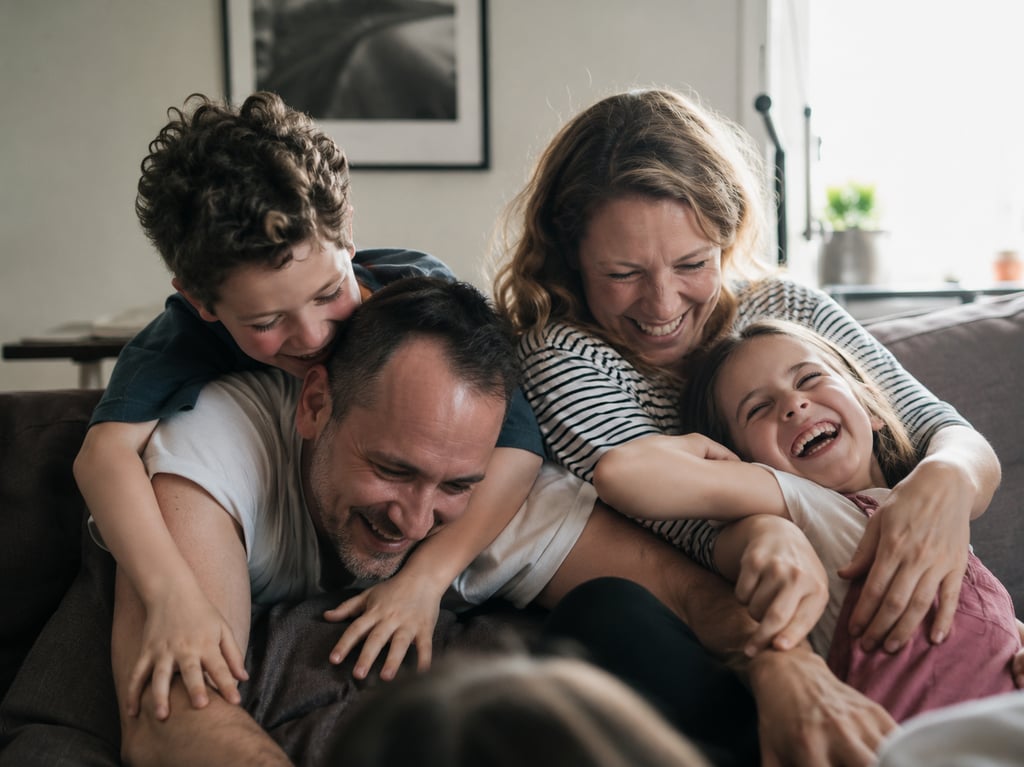
The photos families treasure most are often the ones that captured something real instead.
Not flawless.
Just true.
The Myth of the Right Time
A lot of meaningful life decisions get postponed in the name of timing.
You see it everywhere.
People delay trips until work becomes less busy.
Delay celebrations until finances feel easier.
Delay home projects until life feels calmer.
Delay hard conversations until emotions feel cleaner.
And yes, delay family photos until everything feels more manageable.
The reasoning is understandable.
Nobody wants added stress.
Nobody wants to create a memory that feels rushed, chaotic, or emotionally exhausting.
But family life does not really operate in neat windows of convenience.
There is almost always something happening.
A school transition.
A sports season.
A rough work month.
A sleep regression.
A new baby.
A difficult season in marriage.
A move.
A parent health issue.
General modern exhaustion.
The challenge is that “later” often sounds responsible.
Reasonable.
Practical.
But emotionally, later can be expensive.
Not because time is running out in some dramatic movie-trailer sense.
Because family life changes in increments small enough to ignore while they’re happening.
The toddler phase feels endless until it isn’t.
The missing-tooth smile disappears.
The phase where your child reaches for your hand without thinking ends quietly one day.
Teenagers gradually stop lingering in the kitchen the same way they used to.
Grandparents look subtly different year by year until suddenly the differences feel undeniable.
Ordinary life does not announce its endings.
That’s what makes postponement tricky.
People think they’re delaying documentation.
Sometimes they’re really skipping an entire chapter.
Children Have Never Been Interested in Adult Expectations
Children are refreshingly uncooperative when it comes to adult perfection.
That’s part of what makes them children.
Adults imagine structure.
Children bring reality.
A parent sees a vision.
The child sees grass that feels weird.
Or shoes that suddenly feel intolerable.
Or a sibling who looked at them wrong.
Or a deeply urgent need to run in the opposite direction.
Or absolutely no reason at all.
This can make adults feel like something has gone wrong.
But often, nothing has gone wrong.
Life is just happening.
One of the strange emotional traps around family photography is the belief that meaningful memories require managed behavior.
As if authenticity needs choreography.
But children are rarely most recognizable when performing ideal behavior.
They’re recognizable in their quirks.
Their stubbornness.
Their dramatic emotional weather.
Their strange priorities.
Their familiar expressions.
Years later, parents often laugh about the “difficult” moments that once felt stressful.
Because those moments were honest.
The determined crossed arms.
The suspicious glare.
The goofy mid-run expression.
The sibling chaos.
Those details are often emotionally richer than compliance.
Perfection is easier to admire.
Reality is easier to love.
The Social Media Problem
It would be unfair to pretend social media hasn’t changed expectations.
It has.
Modern families see curated imagery constantly.
Beautifully coordinated outfits.
Soft natural lighting.
Perfectly behaved children.
Effortless intimacy.
Emotional warmth that somehow looks magazine-ready.
Even when we intellectually understand curation, emotional comparison still happens.
That’s human.
The problem is not that beautiful family photography exists.
The problem is when polished imagery quietly becomes the standard by which ordinary family life feels inadequate.
That’s when hesitation grows.
People think:
Our family isn’t like that.
My kids would never sit that calmly.
We’re too chaotic.
I don’t look like that.
Life doesn’t feel that polished.
And suddenly documentation starts feeling like performance.
Instead of memory.
This matters because the emotional purpose gets distorted.
A family photo does not need to prove that life is perfect.
It does not need to function as public evidence that everyone is thriving in matching sweaters.
Some photos are simply about remembering.
Not performing.
That distinction can be freeing.
Adults Are Often the Hardest Part
Children get blamed for family photo stress.
Unfairly, sometimes.
Adults often create just as much resistance.
Just quieter resistance.
Different scripts.
I need to lose weight first.
I look tired.
My skin is awful right now.
I hate photos of myself.
I never photograph well.
Maybe later.
Maybe when I feel better.
If you’ve thought any version of this, you’re in very normal company.
Self-consciousness is deeply human.
Especially in a culture where images feel publicly evaluative.
But there’s a painful irony here.
Adults often remove themselves from memory because they dislike how they currently look.
Years later, children rarely revisit those photos thinking:
Mom should have waited until she lost fifteen pounds.
Dad looked tired here.
Their hair was wrong.
That is almost never the emotional response.
Children tend to experience presence differently than adults critique appearance.
They remember being held.
Being included.
Being near.
Being loved.
Adults often focus on visual flaws children never notice.
That doesn’t mean insecurity is irrational.
Just worth gently challenging.
Because absence leaves a different kind of mark.
What Family Photos Actually Preserve
Photographs preserve more than faces.
This is easy to underestimate.
People think they’re documenting appearance.
They are often documenting context.
The way your child held your hand.
The way your partner looked at the kids.
That temporary obsession with dinosaur boots.
The haircut someone insisted on for months.
The couch where everyone piled together.
The size difference between siblings.
The expressions that belonged to a particular season.
The stage where someone still wanted to be carried.
These details rarely feel historically important in the moment.
That’s what makes them so easy to dismiss.
Daily life feels ordinary while you’re inside it.
Memory changes the emotional scale later.
Suddenly the ordinary becomes precious.
This is one reason imperfect photos age so well.
They often capture context without trying too hard.
And context is where emotional meaning lives.
Messy Seasons Deserve Documentation Too
There’s a natural instinct to wait for calmer seasons.
That makes sense emotionally.
When life feels heavy, adding intentional memory-making can feel like one more thing.
But some of the most meaningful family chapters are objectively messy.
Newborn exhaustion.
Moves.
Career transitions.
Health scares.
Blended family adjustments.
The years where everyone is tired and overscheduled.
The stage where toddlers create chaos as a lifestyle.
These are not clean seasons.
But they are real ones.
And real seasons often become emotionally significant precisely because they were transitional.
Not because they looked beautiful.
Photos from imperfect chapters can become emotional anchors later.
Evidence that life was hard, yes.
But also evidence that everyone made it through together.
Joy does not require polish.
Sometimes it simply requires honesty.
Why Phone Photos Aren’t the Whole Story
Modern families have more photos than any generation before them.
That’s not a bad thing.
Phone cameras made everyday documentation wonderfully easy.
Birthday candles.
School pickup moments.
Messy breakfast faces.
Quick sibling chaos.
Tiny ordinary details.
That matters.
But casual documentation and intentional family storytelling are not exactly the same thing.
One major difference?
The family historian problem.
Usually one person becomes the default photographer.
Often a parent.
Usually mom, though not always.
That means one family member is often underrepresented in the family archive.
They were present.
But visually absent.
That’s a strange kind of invisibility.
Intentional family photography can help correct that.
Not because professional equipment is magical.
Because intentional inclusion changes who gets remembered in the visual story.
Families thinking about documenting a season more intentionally sometimes find it helpful to look at how family-centered photography approaches real-life emotional storytelling rather than perfection. Resources like family photography experiences built around genuine connection can offer perspective on that difference.
The real point is inclusion.
Not polish.
The Photos People Return To Are Rarely the Most Perfect
This surprises people until they think about it.
The family photo people love most is not always technically the strongest one.
Sometimes it’s blurry.
Sometimes someone blinked.
Sometimes hair was chaotic.
Sometimes the framing was imperfect.
And yet.
It carries emotional gravity.
Because emotional resonance and technical perfection are not identical things.
A flawless image can feel emotionally flat.
An imperfect image can feel deeply alive.
The photo where everyone laughed unexpectedly.
The image where a child leaned in instinctively.
The moment that felt like your family instead of a performance.
Those are often the ones people revisit.
Not because perfection doesn’t matter.
Because emotional truth tends to matter more over time.
Family Identity Lives in Small Details
Every family has its own quiet language.
Inside jokes.
Movement patterns.
Comfort habits.
Expressions.
Ways of standing.
Ways of teasing.
The child who always climbs onto one specific parent.
The sibling dynamic everyone recognizes instantly.
The parent who always makes the same face when trying not to laugh.
These things feel ordinary because they are constant.
That’s exactly why they matter.
Family identity often lives in repetition.
And photographs preserve repetition beautifully.
Not because they create meaning.
Because they reveal it.
There Is No Perfect Season
Spring is busy.
Summer is chaotic.
Fall gets booked.
Winter feels inconvenient.
Newborn stage feels exhausting.
Toddler stage feels unpredictable.
Teen years feel emotionally complicated.
Adulthood creates scheduling nightmares.
Every season comes with objections.
Most of them reasonable.
That’s why perfection becomes such an effective delaying mechanism.
The ideal moment keeps relocating.
Families who wait for ideal conditions often discover that ideal conditions remain strangely unavailable.
Because family life is not built for neat convenience.
That’s not failure.
That’s reality.
Joy Rarely Looks Perfect in Real Time
This matters.
Joy is often messier than expected.
Children running half off-frame.
Parents laughing because the plan collapsed.
A toddler emotionally rejecting all structure.
Hair doing whatever hair decided to do.
A sibling moment that was definitely not coordinated.
This is still joy.
Maybe more honest joy.
Real joy is not always symmetrical.
Or polished.
Or camera-ready.
Sometimes it looks suspiciously like affectionate chaos.
And that counts.
What People Actually Regret
Ask adults what they wish they had more of.
The answers are revealing.
More photos with grandparents.
More ordinary family pictures.
More evidence of everyday life.
More moments where everyone was included.
More memories before someone changed.
People rarely say:
I wish our family photos looked more polished.
Regret patterns tell the truth.
Absence tends to hurt more than imperfection.
A Practical Reframe
If family photos feel emotionally complicated, a simpler question helps.
Not:
Will everything go perfectly?
Instead:
What am I actually hoping to preserve?
A stage?
A relationship?
A family rhythm?
A season?
A version of everyday life?
That question changes the emotional tone.
Preservation feels different than performance.
Gentler.
More honest.
More useful.
The Real Question
The most useful question may be this:
Years from now, will I care more that life looked imperfect?
Or that this version of life went undocumented?
That answer tends to arrive quickly.
And quietly.