
The Everyday Rituals That Help Life Feel Less Rushed
Life doesn't have to slow down for you to feel more present. Discover how simple daily rituals can reduce stress, strengthen relationships, and bring more intention to everyday life. Learn why small traditions, meaningful pauses, and shared moments often become the foundation for lasting joy and well-being.
There are days when life feels like one long task list.
You answer emails while eating breakfast. You squeeze errands between meetings. You tell yourself you'll relax after just one more chore, one more notification, or one more thing that can't possibly wait until tomorrow.
Then, almost without realizing it, the day is over.
Nothing especially bad happened.
Nothing especially memorable happened either.
Many of us don't feel rushed because we're doing too much. We feel rushed because our days rarely have clear moments that invite us to pause. We move from one responsibility to the next without giving our minds a chance to catch up.
That's why everyday rituals matter.
Not because they make life perfect or magically eliminate stress, but because they create gentle transitions. They remind us that our days don't have to feel like a race from morning until bedtime.
Some rituals take five minutes.
Others happen almost without thinking.
Yet over time, they become the small anchors that help ordinary days feel calmer, richer, and more intentional.
Why Modern Life Rarely Gives Us Permission to Pause
Think about how many times your attention changes direction during an average day.
A text message interrupts breakfast.
An email arrives while you're finishing another task.
Your phone buzzes during dinner.
Before bed, you quickly check tomorrow's calendar and somehow end up reading the news for twenty minutes.
None of these moments seem significant by themselves.
Together, however, they create something psychologists sometimes call attention residue. Even after moving on to the next activity, part of your mind is still occupied by the previous one.
That's one reason it can feel difficult to truly relax.
You may have technically finished work, yet your thoughts remain focused on unfinished conversations, tomorrow's schedule, or something you forgot to do earlier.
Our lives have become incredibly connected.
Unfortunately, that also means they're rarely divided into clear chapters.
The workday quietly follows us home.
Home responsibilities blend into bedtime.
Weekends begin to resemble weekdays.
Without realizing it, we stop experiencing natural endings.
Rituals help restore those boundaries.
They gently tell your mind:
"This part of the day is finished. Another one is beginning."
That message is more powerful than it sounds.
The Difference Between a Habit and a Ritual
People often use the words habit and ritual interchangeably.
While they're closely related, they serve different purposes.
Habits are usually designed to make life more efficient.
Brushing your teeth.
Packing tomorrow's lunch.
Locking the front door.
Checking your calendar before work.
These routines reduce the number of decisions you need to make each day.
Rituals do something different.
They create meaning.
Imagine making coffee every morning.
If you're simply pouring caffeine into a mug before rushing out the door, that's mostly a habit.
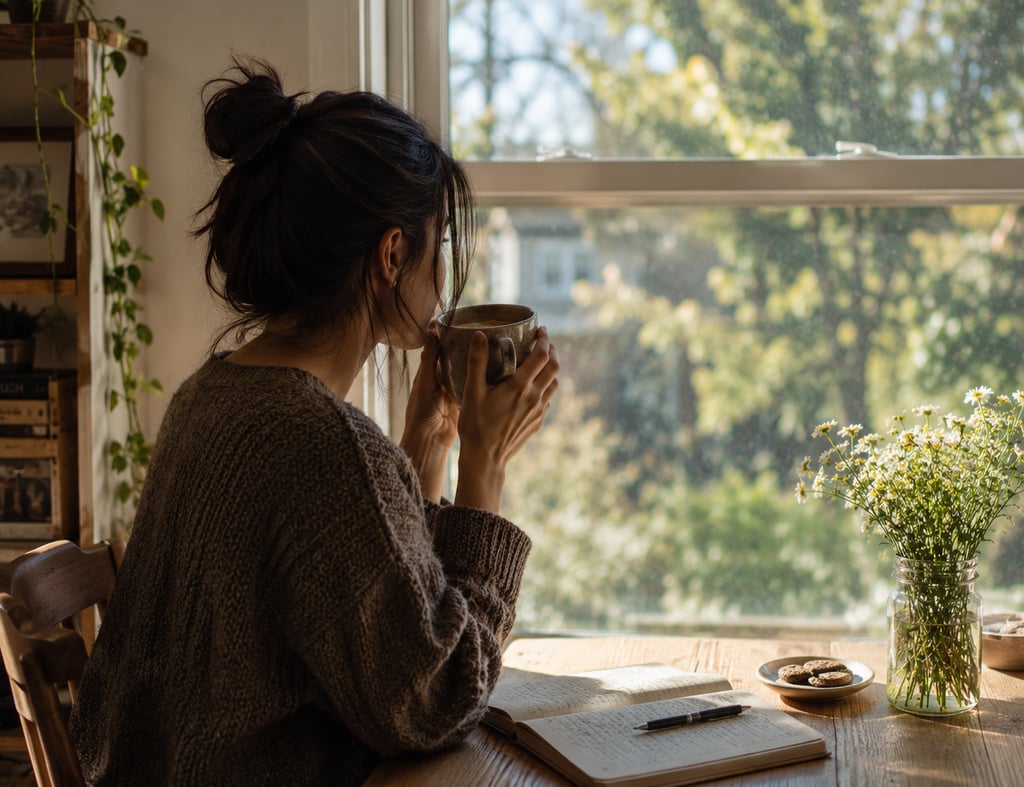
But imagine opening the curtains, sitting quietly by the window, and enjoying that same cup before the rest of the house wakes up.
The coffee hasn't changed.
The intention has.
That small pause becomes something your mind begins to associate with calm rather than urgency.
The ritual isn't valuable because of the drink.
It's valuable because it creates space for presence.
The same idea appears throughout everyday life.
Cooking dinner can become another task to complete.
Or it can become the moment when everyone reconnects after a busy day.
Walking the dog can feel like another responsibility.
Or it can become twenty peaceful minutes without notifications.
The activity stays the same.
The experience changes.
Why Our Brains Find Comfort in Repetition
Have you ever noticed how certain songs instantly remind you of a particular season of life?
Or how the smell of fresh bread brings back memories of childhood?
Our brains naturally connect repeated experiences with emotions.
That's one reason rituals become so meaningful.
Repetition creates familiarity.
Familiarity creates comfort.
During uncertain seasons, those familiar moments quietly remind us that not everything has changed.
This is one reason family traditions become so memorable.
Friday pizza nights.
Sunday morning pancakes.
Movie nights with the same blankets and favorite snacks.
Decorating the house before the holidays.
These traditions aren't meaningful because they're elaborate.
They're meaningful because they happen again and again.
Over time, they become emotional landmarks.
You begin looking forward to them before they even happen.
And when life feels especially busy, they provide reassuring reminders that some parts of your world remain wonderfully familiar.
Morning Rituals Shape More Than Your Schedule
The first few minutes after waking often influence the emotional tone of the rest of the day.
That doesn't mean everyone needs an elaborate morning routine.
Social media sometimes suggests that productive people wake before sunrise, meditate for thirty minutes, journal, exercise, read, prepare a healthy breakfast, and somehow still begin work feeling completely relaxed.
For most people, that's simply unrealistic.
Morning rituals don't need to be impressive.
They need to be consistent.
Maybe it's opening the curtains before looking at your phone.
Perhaps it's spending five quiet minutes enjoying breakfast without scrolling through emails.
Maybe it's taking a short walk before the day becomes busy.
For someone else, it might simply be listening to music while getting ready instead of rushing through the silence.
These moments matter because they allow you to begin the day intentionally instead of reactively.
Rather than immediately responding to everyone else's priorities, you create a few moments that belong entirely to you.
That small shift often changes how the rest of the morning feels.
Everyday Beauty Is Easy to Miss When We're Always Rushing
One of the quiet costs of living at a constant pace is that we stop noticing ordinary beauty.
Not because it disappears.
Because our attention is somewhere else.
The flowers blooming outside the grocery store.
The way afternoon sunlight fills the kitchen.
Children laughing while riding bicycles.
Rain tapping gently against the windows.
The familiar smile from someone you see during your morning walk.
These aren't extraordinary moments.
They're simply easy to overlook when our minds are already thinking about what comes next.
Rituals help us slow down enough to notice them.
A short walk after breakfast becomes more than exercise.
It becomes an opportunity to watch the neighborhood wake up.
Opening a window while making coffee becomes a chance to notice the changing weather.
Sitting outside for a few minutes before work becomes an opportunity to hear birds instead of notifications.
None of these moments make headlines.
Yet they often become the moments we remember most clearly when looking back on a season of life.
Joy has a quiet way of hiding inside ordinary experiences.
Rituals simply help us notice it's been there all along.
Small Beginnings Often Lead to Lasting Change
One reason people abandon new routines is because they try to change everything at once.
A longer workout.
A healthier diet.
More reading.
Less screen time.
Earlier mornings.
Better sleep.
Each goal has value.
Trying to begin all of them simultaneously usually creates frustration instead of progress.
Rituals invite a different approach.
Start with one small moment.
Five quiet minutes before the day begins.
Lighting a candle before dinner.
Walking around the block after work.
Writing down one thing you're grateful for before bed.
Small actions rarely feel dramatic.
But because they're realistic, they're much easier to repeat.
And the rituals we repeat are often the ones that quietly reshape our lives, one ordinary day at a time.
Evening Rituals Help Us Leave the Day Behind
For many people, mornings have at least a little structure.
You wake up.
Get ready.
Prepare breakfast.
Head to work or begin your responsibilities at home.
Evenings, however, are often much less defined.
One task flows into another.
Dinner becomes cleanup.
Cleanup becomes emails.
Emails become scrolling through your phone.
Before long, it's time for bed, yet your mind still feels like it's in the middle of the day.
This is where evening rituals become especially valuable.
Unlike habits that help us accomplish more, evening rituals help us transition.
They gently tell our minds that productivity can pause for a while.
That transition doesn't need to be dramatic.
Changing into comfortable clothes after work.
Putting your phone in another room while preparing dinner.
Stepping outside for ten minutes before the evening begins.
Listening to calming music while tidying the kitchen.
These simple actions create a bridge between responsibility and rest.
Over time, your brain begins to recognize these moments as signals that it's safe to let go of the day's pace.
The Meals We Remember Are Rarely About the Food
Think back to some of your favorite meals.
You probably don't remember every recipe.
You remember the conversations.
The laughter that made someone spill their drink.
The stories grandparents told for the hundredth time.
The evenings when nobody rushed away from the table because there wasn't anywhere more important to be.
Food has always been about more than nourishment.
It creates a reason for people to gather.
When meals become rituals instead of obligations, something changes.
Phones stay on the counter.
People linger a little longer.
Children tell stories they might not have shared otherwise.
Questions replace quick updates.
Listening replaces multitasking.
These moments rarely require expensive ingredients or perfectly prepared meals.
They simply require attention.
Even one shared meal each week can become something everyone quietly looks forward to because consistency creates comfort.
The meal itself may change.
The feeling it creates often stays the same.
Relationships Grow in the Spaces Between Responsibilities
Many people assume stronger relationships require more free time.
While time certainly helps, meaningful connection often grows through ordinary moments that already exist.
Driving children to activities.
Folding laundry together.
Taking an evening walk.
Preparing dinner side by side.
Watering the garden before sunset.
These activities happen anyway.
The difference is whether we experience them as interruptions or opportunities.
A conversation while washing dishes may become the moment your teenager shares something important.
A short walk after dinner may become the first uninterrupted conversation you've had with your spouse all week.
The routine creates the opportunity.
Presence creates the connection.
That is why rituals are so powerful.
They don't necessarily ask us to add more activities to already full schedules.
They invite us to experience familiar activities more intentionally.
Why Shared Rituals Make Us Feel More Connected
There's a reason families often continue traditions for generations.
They provide continuity.
Children grow up expecting pancakes on Saturday mornings.
Friends know they'll gather every autumn for the same celebration.
Couples develop little routines that no one else fully understands.
These traditions become part of a shared identity.
They quietly answer the question:
"This is who we are together."
The traditions themselves don't have to be elaborate.
Watching the sunset from the backyard every Friday evening.
Making homemade pizza together.
Reading before bed with young children.
Calling parents every Sunday afternoon.
Even the smallest repeated experiences gradually become woven into the story of a family.
Years later, people rarely remember how busy everyone was.
They remember what everyone always did together.
Sometimes Celebration Doesn't Need a Special Occasion
Many of us unintentionally save our nicest moments for birthdays, anniversaries, holidays, or vacations.
Those occasions deserve celebrating.
But everyday life deserves small celebrations too.
Finishing a challenging week.
Completing a personal goal.
Having everyone home for dinner.
Watching the first cool evening arrive after a long summer.
These ordinary milestones often pass unnoticed because we're already thinking about tomorrow.
Creating a simple ritual around these moments helps us appreciate them while they're happening.
For some households, that means baking a favorite dessert together.
Others prepare a special meal on Friday evenings simply because another week has come to an end.
Some people enjoy ending the day by sitting on the patio with family or friends, sharing conversation over a thoughtfully prepared meal. For those who appreciate Alabama wine as part of that experience, choosing a bottle for the table can naturally become one element of an evening ritual. The wine itself isn't what makes the moment memorable. It's the opportunity to slow down, reconnect, and enjoy one another's company without feeling rushed.
That's the difference between consumption and ritual.
One is about the product.
The other is about the experience it helps create.
The Most Meaningful Rituals Usually Cost Very Little
One reason people postpone creating new traditions is because they imagine they need more money, more time, or better circumstances.
Fortunately, that's rarely true.
Some of the richest rituals are also the simplest.
Watching the sunrise before the neighborhood wakes up.
Reading one chapter of a book before bed.
Lighting a candle during dinner.
Taking a slow walk after the rain.
Writing one sentence in a journal at the end of each day.
Looking at old family photographs on Sunday afternoons.
None of these require elaborate planning.
Their value comes from repetition and intention.
When something happens often enough, it begins to shape how life feels.
That's why even small rituals deserve our attention.
They remind us that joy doesn't always arrive through extraordinary experiences.
Sometimes it quietly grows through ordinary moments that we're willing to experience fully.
Digital Boundaries Can Become Rituals Too
Not every meaningful ritual involves adding something.
Sometimes it's about choosing what to set aside.
Putting your phone away during dinner.
Leaving laptops closed after a certain hour.
Resisting the urge to answer one last email before bed.
Keeping the television off for the first few minutes after arriving home.
These choices create breathing room.
They protect moments that might otherwise disappear beneath constant notifications.
Technology has brought remarkable convenience into our lives.
It allows us to stay connected, work flexibly, and communicate instantly.
At the same time, it can quietly blur the boundaries between work, rest, and relationships.
Creating small digital rituals helps restore those boundaries.
Not because technology is bad.
Because our attention is valuable.
And the people sitting across the table from us usually deserve more of it than the screen in our hands.
Let Your Rituals Grow With You
One of the most beautiful things about rituals is that they don't have to stay the same forever.
Life changes, and our routines naturally change with it.
The ritual that helped you through your first year of college may not be the one that brings you peace while raising young children. A quiet evening walk may eventually become a walk with a stroller. Weekend coffee alone might turn into coffee shared with friends, neighbors, or grown children who come home to visit.
These changes don't mean you've lost something.
They often mean your rituals are growing alongside your life.
Instead of trying to preserve the perfect routine forever, think of rituals as companions that evolve with each new season.
Some will stay with you for decades.
Others will quietly make room for something new.
The important part isn't keeping every tradition exactly the same.
It's continuing to create moments that remind you to slow down, reconnect, and be present.
Every Season Has Its Own Rhythm
Nature doesn't rush from spring to summer overnight.
The seasons change gradually, each bringing its own pace, beauty, and traditions.
Our lives often work the same way.
Summer may invite longer evenings outside, backyard dinners, and spontaneous walks after sunset.
Autumn encourages warm drinks, sweaters, and gathering around the table a little more often.
Winter naturally calls for slower mornings, cozy blankets, favorite recipes, and conversations that linger long after dinner.
Spring often feels like a fresh beginning, inspiring us to open windows, spend more time outdoors, and welcome new routines.
Allowing your rituals to reflect these changing seasons keeps them feeling fresh instead of becoming obligations.
The rhythm of your life doesn't have to stay exactly the same all year.
Sometimes the season itself tells you what you need.
Why Joy Is Usually Found in Ordinary Days
When people imagine joyful lives, they often picture vacations, celebrations, promotions, or major milestones.
Those moments certainly deserve appreciation.
But if joy depended only on extraordinary events, most of our lives would feel like waiting.
The truth is much kinder.
Joy usually grows in ordinary places.
It's found in the smell of breakfast on a quiet Saturday morning.
It's hearing laughter from another room while you're preparing dinner.
It's watering plants before work.
It's sitting outside long enough to notice the evening sky changing colors.
It's the familiar rhythm of a tradition you've repeated so many times that it feels like part of who you are.
These moments rarely ask for perfect circumstances.
They simply ask for your attention.
The more often we notice them, the more naturally gratitude becomes part of everyday life.
Creating a Ritual Doesn't Mean Creating More Work
Sometimes people hesitate to begin new routines because they already feel overwhelmed.
The idea of adding another item to the schedule sounds exhausting rather than refreshing.
That's a helpful reminder that rituals should never become another source of pressure.
A meaningful ritual should make life feel lighter, not heavier.
If it feels like another obligation, it may be too complicated.
The simplest rituals are often the ones that last.
Five quiet minutes before everyone wakes up.
A short evening walk.
Reading together before bed.
Preparing one favorite meal each weekend.
Watching the sunset without reaching for your phone.
These moments fit into real life because they respect the fact that life is already full.
Rather than demanding more from you, they help you appreciate what is already there.
The Real Purpose of Everyday Rituals
At first glance, rituals seem to be about what we do.
Morning coffee.
Evening walks.
Family dinners.
Weekend baking.
Reading before bed.
But over time, something interesting happens.
The ritual itself becomes less important than what it represents.
A walk becomes a chance to reconnect with someone you love.
Dinner becomes the place where everyone's stories finally slow down enough to be heard.
Lighting a candle becomes a reminder that work is finished for the day.
A favorite playlist becomes the soundtrack to a peaceful evening.
The activity stays familiar.
Its meaning quietly grows.
That's why people often remember the feeling of a tradition long after they forget the details.
The ritual created a space where they felt calm, connected, and fully present.
Those are the experiences that stay with us.
Final Thoughts
Life will probably never become completely unhurried.
There will always be responsibilities to manage, unexpected changes to navigate, and days that feel fuller than we planned.
Waiting for the perfect season to slow down often means waiting much longer than we intended.
Everyday rituals offer another way.
They remind us that we don't have to escape our lives to enjoy them.
Sometimes all we need is a small pause between one part of the day and the next.
A familiar routine that tells our minds it's okay to rest.
A shared meal that encourages conversation instead of multitasking.
A quiet walk that replaces another few minutes of scrolling.
A simple tradition that gently reminds us what matters most.
The beautiful thing about rituals is that they don't ask for perfection.
They simply ask us to return.
Again and again.
To the people we love.
To the moments that restore us.
To the life that's already unfolding around us.
Because in the end, joy isn't usually created by doing something extraordinary.
It's created by noticing the extraordinary value hidden inside ordinary days.