
The Childhood Skills Parents Never Regret Building Early
A thoughtful Joy Digital Mag feature on the childhood skills parents rarely regret building early, from emotional resilience and communication to independence, confidence, safety awareness, and lifelong self-trust.
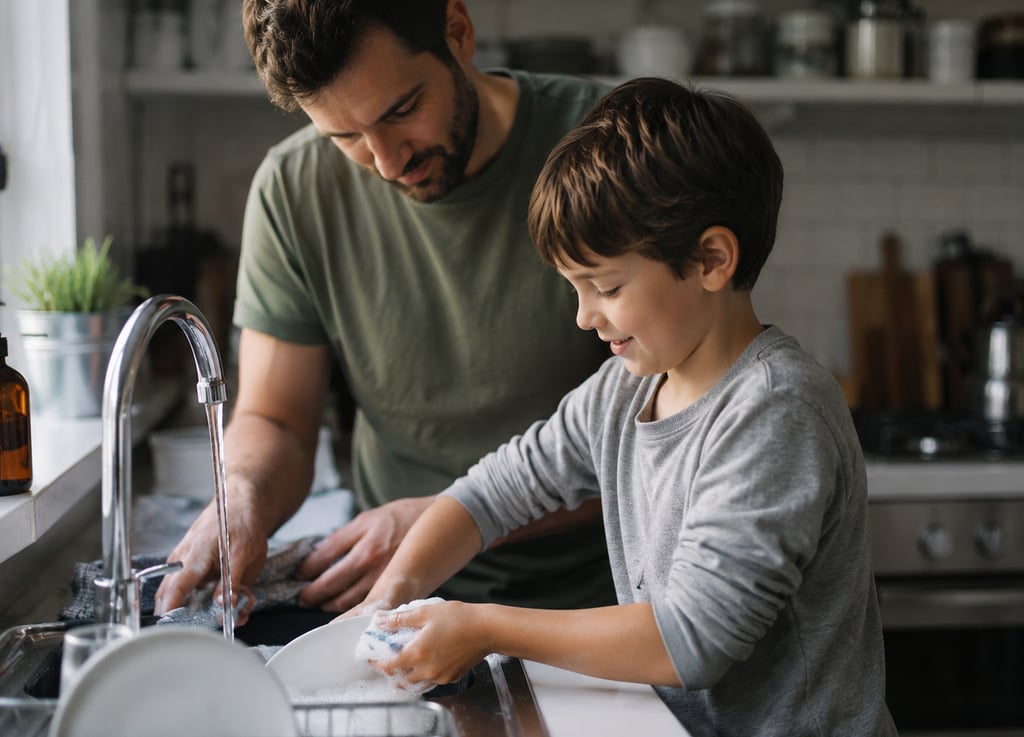
There’s a particular kind of pressure that seems to settle over modern parenting quietly.
Not always loudly. Not always dramatically.
Sometimes it looks like scrolling past another family’s beautifully organized extracurricular calendar and wondering whether your child is somehow missing out.
Sometimes it sounds like casual conversations where someone mentions coding classes, language tutoring, competitive sports, music lessons, enrichment camps, early academic milestones, or “building their college profile” before your child has even fully mastered putting socks in matching pairs.
Sometimes it’s subtler than that.
A quiet internal question.
Am I doing enough?
If you’re a parent, you probably know the feeling.
Not because you want perfection.
Because you care.
And caring can make ordinary decisions feel strangely heavy.
Should they start piano?
Is this the right age for organized sports?
Would swim lessons be useful?
Are they social enough?
Too shy?
Too dependent?
Too sensitive?
Not challenged enough?
Parenting has a way of making everyday decisions feel like permanent character-building moments.
Sometimes they are.
Often they aren’t.
That’s both comforting and slightly frustrating.
Because while not every childhood activity becomes life-changing, some childhood skills really do stay with people long after the activity itself disappears.
And interestingly, many of those skills don’t have much to do with impressiveness.
They don’t necessarily make a childhood look exceptional from the outside.
They don’t always produce cute certificates or social media moments.
They don’t always feel glamorous in the middle of everyday parenting.
But years later, parents tend to feel deeply grateful they invested in them anyway.
Not because the child became extraordinary.
Because life became easier, safer, healthier, and more manageable.
That distinction matters.
Childhood Is Not a Performance Review
Somewhere along the way, parenting culture picked up a strange habit of treating childhood like a long optimization project.
More exposure.
More structure.
More opportunities.
More developmental stimulation.
More intentionality.
There is nothing wrong with thoughtful parenting.
But thoughtful parenting can quietly slide into performance parenting if we’re not careful.
And performance parenting is exhausting.
Because when childhood becomes a project to perfect, every decision starts carrying emotional weight it was never meant to hold.
The “right” activities.
The “right” milestones.
The “right” social experiences.
The “right” emotional environment.
The irony is that children rarely remember the childhood details adults stress about most.
They tend to remember how life felt.
Whether they felt safe.
Whether they felt capable.
Whether mistakes felt survivable.
Whether they trusted themselves.
Whether adults helped them grow or simply managed them.
That shift in perspective changes the conversation.
Instead of asking:
What will make my child look successful?
A better question becomes:
What will actually help them move through life well?
That question leads somewhere much healthier.
Emotional Regulation Is More Useful Than Early Achievement
A child who can read early may impress people.
A child who can recover from disappointment without completely unraveling will benefit for life.
That may sound like an unfair comparison.
It isn’t meant to be.
Academic skills matter.
So do structured learning opportunities.
But emotional regulation quietly shapes everything else.
A child who can tolerate frustration learns differently.
Socializes differently.
Handles mistakes differently.
Experiences challenge differently.
Recovers differently.
Eventually works differently.
Loves differently.
Lives differently.
The thing about emotional regulation is that it develops slowly.
And imperfectly.
Even adults are still learning it.
So the goal is not emotional composure at all times. That would be unrealistic.
The goal is helping children gradually understand that big feelings are manageable.
That frustration does not equal emergency.
That disappointment does not equal disaster.
That anger can be expressed safely.
That sadness can be tolerated.
That embarrassment passes.
That anxiety can be named instead of silently driving behavior.
This kind of parenting work is rarely glamorous.
No one applauds the seventh calm conversation about frustration tolerance.
No one hands out medals for patiently helping a child recover after disappointment.
But the cumulative effect matters enormously.
Children who learn emotional regulation do not become children who never struggle.
They become children who increasingly trust their ability to move through struggle.
That is very different.
And deeply valuable.
Communication Changes Everything
Many children talk constantly.
That is not the same as communication.
Real communication is more practical than verbal confidence alone.
Can they explain what happened clearly?
Can they describe discomfort?
Can they ask for help?
Can they clarify confusion?
Can they express needs respectfully?
Can they describe unsafe situations?
Can they participate in problem-solving conversations?
Can they disagree without escalating immediately?
Communication influences safety.
Relationships.
School experiences.
Medical situations.
Peer interactions.
Later, work dynamics.
Even basic self-advocacy.
Some children naturally communicate more easily than others.
That’s temperament.
But communication itself is teachable.
And it often grows through ordinary moments.
Not formal lessons.
Dinner conversations.
Follow-up questions.
Encouraging full explanations instead of one-word responses.
Helping children name feelings accurately.
Teaching respectful interruption.
Modeling apology language.
Showing them how to ask for clarification instead of pretending understanding.
Small interactions compound.
Children who trust their ability to communicate navigate the world differently.
Not flawlessly.
But more confidently.
Independence Often Starts With Letting Things Be Slightly Inconvenient
Helping children feels loving.
Because often, it is.
The tricky part is knowing when help becomes over-functioning.
It is deeply tempting to make life easier for children.
Tie the shoes faster.
Pack the bag yourself.
Solve the argument immediately.
Step in before frustration builds.
Rescue the forgotten item.
Correct the mistake before consequences land.
All understandable.
Also sometimes unhelpful.
Because independence rarely develops in environments where adults remove every friction point.
Children build capability through participation.
Trying.
Forgetting.
Trying again.
Managing small responsibilities.
Experiencing consequences that are safe but meaningful.
Independence is not emotional abandonment.
It is supported capability.
And supported capability creates something powerful:
self-trust.
A child who thinks I can figure things out carries a different energy into life than a child who assumes adults will always manage complexity for them.
That shift matters.
Confidence Is Not the Same as Competence
This distinction deserves attention.
Modern parenting conversations often talk about confidence as though it can simply be encouraged into existence.
Praise helps.
Support helps.
Warmth helps.
But sustainable confidence usually grows from competence.
Children feel more confident when they become capable.
Not because someone told them they were amazing every five minutes.
Because repeated experience showed them they could do difficult things.
This is why confidence-building activities work best when they are rooted in actual skill development.
Trying something unfamiliar.
Practicing.
Improving.
Struggling.
Eventually succeeding.
That emotional sequence matters.
Confidence built without competence can feel fragile.
Confidence built through experience tends to hold better.
Which leads to an interesting parenting realization:
Sometimes the most confidence-building experiences are not the easiest ones.
Safety Skills Create Freedom
Some childhood skills are developmental.
Some are practical.
Some quietly determine how much freedom children can safely enjoy.
Safety belongs in this category.
Not fear-based safety.
Competence-based safety.
Understanding boundaries.
Recognizing unsafe situations.
Knowing when to ask for help.
Following emergency instructions.
Basic environmental awareness.
Body safety.
Street awareness.
Water safety.
These skills rarely make childhood look impressive.
Still essential.
Water confidence, in particular, often gets treated as optional recreation rather than practical safety.
But many parents eventually realize swimming sits in the same category as other useful life competencies.
Not because every child needs to become athletically exceptional.
Because water exists in ordinary life.
Pools.
Vacations.
Community spaces.
Friends’ homes.
School activities.
Family gatherings.
Comfort around water changes safety outcomes and emotional confidence.
Families thinking practically about childhood skill-building often end up exploring structured options for this exact reason, including programs like family swim lesson resources in Alexandria that focus on safety and skill-building rather than treating swimming as purely recreational.
The bigger point is not about one activity.
It is about capability creating freedom.
Children who feel competent in important environments move through them differently.
Resilience Is Built Through Recovery, Not Avoidance
No loving parent enjoys watching a child struggle.
That is normal.
But removing every hard feeling does not create resilience.
It creates fragility.
This can be difficult emotionally because protection feels like care.
Sometimes it is.
Sometimes it unintentionally teaches children that discomfort should be avoided immediately.
That message becomes limiting later.
Resilience grows through manageable difficulty.
Trying something hard.
Losing.
Being disappointed.
Feeling embarrassed.
Making mistakes.
Recovering.
Trying again.
This does not mean manufacturing suffering.
Or becoming emotionally cold.
It means allowing age-appropriate challenge instead of reflexively removing every obstacle.
Children who learn struggle is survivable tend to handle life differently.
They panic less quickly.
Adapt more easily.
Trust recovery more.
That trust becomes enormously useful.
Social Skills Matter More Than Personality Type
Not every child is naturally outgoing.
That is fine.
Quiet children do not need personality correction.
But social confidence matters regardless of temperament.
Can they greet people appropriately?
Join conversations?
Recover from awkwardness?
Handle group participation?
Respect social boundaries?
Interpret basic interaction cues?
Ask questions?
Participate without overwhelming anxiety?
Social competence is not about extroversion.
It is about comfort.
And comfort usually grows through repetition.
Practice.
Modeling.
Gentle exposure.
Patience.
No child needs to become socially effortless.
But helping children build relational confidence makes life easier.
Relationships are part of life.
Learning how to participate helps.
Asking for Help Is a Life Skill
Adults often assume children will ask when they need support.
Not always.
Some children freeze.
Some avoid embarrassment.
Some fear disappointing adults.
Some genuinely do not know how to ask.
This matters.
Because children who cannot ask for help often struggle unnecessarily.
School confusion.
Social problems.
Safety concerns.
Emotional overwhelm.
Physical discomfort.
Later workplace uncertainty.
Help-seeking is not weakness.
It is competence.
Children benefit from learning:
Confusion is normal.
Questions are allowed.
Clarification is responsible.
Adults are resources.
This lesson travels surprisingly far into adulthood.
Boredom Is Not Always a Problem
Modern life is excellent at eliminating boredom.
Screens help.
Schedules help.
Constant stimulation helps.
And occasionally harms.
Children who never experience boredom sometimes struggle with self-direction.
Not because boredom is magical.
Because constant external stimulation can weaken internal initiative.
Boredom creates opportunities for imagination, problem-solving, and self-generated engagement.
That does not mean children should be abandoned to endless unstimulated frustration.
It means not every quiet moment requires immediate entertainment intervention.
Children benefit from learning:
I can figure out what to do next.
That’s a deeply practical skill.
Responsibility Builds Quiet Confidence
Responsibility sounds less emotionally exciting than confidence.
Ironically, responsibility often creates confidence.
Age-appropriate expectations matter.
Managing belongings.
Following routines.
Contributing at home.
Owning mistakes.
Helping solve problems they helped create.
Responsibility communicates trust.
Children notice that.
When adults consistently expect capability, children often rise toward it.
Not perfectly.
But meaningfully.
Responsibility is not punishment.
It is preparation.
The Skill That May Matter Most
Perhaps the deepest childhood skill parents rarely regret building is this:
A stable sense of self-worth that is not entirely tied to performance.
This one is harder to quantify.
No certificates.
No visible milestones.
No convenient comparison charts.
But deeply important.
Children absolutely benefit from encouragement.
Achievement matters.
Effort matters.
Growth matters.
But when identity becomes overly tied to outcomes, life gets emotionally exhausting.
Grades fluctuate.
Friendships shift.
Performance changes.
Wins come and go.
Children need to know they remain valuable even when outcomes disappoint.
That foundation changes how they approach challenge.
Risk.
Failure.
Relationships.
Adulthood.
It may be one of the most protective things a parent can help build.
Final Thought
Childhood does not need to be optimized to be meaningful.
That may be one of the most freeing parenting truths worth remembering.
Not every activity becomes transformative.
Not every decision becomes defining.
Not every missed opportunity becomes damage.
But practical foundational skills matter.
Emotional regulation.
Communication.
Independence.
Safety awareness.
Confidence through competence.
Resilience.
Responsibility.
Social comfort.
Self-worth.
Parents rarely regret helping children become more capable humans.
Even when the exact activity fades.
Because what lasts is rarely the schedule.
It’s the skill beneath it.