
Is Waterfront Living Really Worth It? The Overlooked Realities of Lakefront Life
Is waterfront living really worth it? Explore the overlooked realities of lakefront life, from maintenance and lifestyle tradeoffs to emotional expectations and practical decision-making.
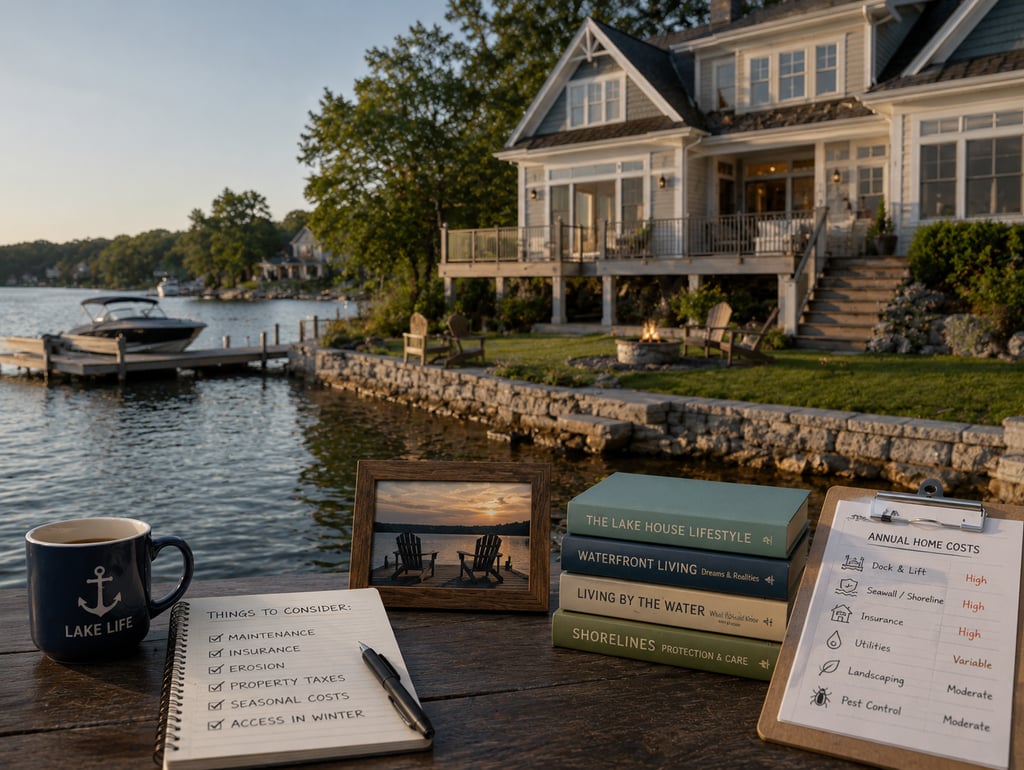
There’s something almost universally compelling about water.
Even people who have never seriously considered relocating can understand the emotional pull of a quiet shoreline, a peaceful dock, or the kind of morning light that reflects off a still lake in a way that instantly makes ordinary life feel quieter.
Waterfront living carries a certain kind of emotional promise.
Not just beauty.
Relief.
For many people, it represents a different pace of life. Less noise. Less rush. Fewer interruptions. More intentional mornings. More outdoor time. A version of adulthood that feels calmer, more spacious, and somehow more emotionally breathable.
And honestly, that dream exists for a reason.
Because for the right person, waterfront living can absolutely feel restorative.
But lifestyle dreams become complicated when they’re built entirely around the emotional highlight reel.
Because beautiful settings still contain ordinary life.
Laundry still exists.
Bills still arrive.
Weather still changes.
Maintenance still needs attention.
Stress still follows you unless your habits change too.
That doesn’t make waterfront living disappointing.
It makes it real.
And reality is not the enemy of joy.
In many cases, reality is what protects joy.
Because the people who tend to love a lifestyle long term are not the ones who romanticized it most intensely.
They’re often the ones who understood it clearly.
So is waterfront living really worth it?
That depends less on the scenery and more on whether the life attached to that scenery genuinely fits you.
Why Waterfront Living Feels Emotionally Different
Some lifestyle decisions are practical first.
Others are emotional first.
Waterfront living is almost always emotional first.
That’s not a bad thing.
Human beings make meaning-driven decisions all the time.
People don’t dream about waterfront life because they’ve carefully analyzed maintenance schedules.
They dream about how they imagine life will feel.
More peaceful.
Less rushed.
More connected.
More grounded.
Less digitally overstimulated.
More reflective.
More present.
That emotional attraction makes complete sense.
Modern life can be exhausting in ways that are hard to explain until you’ve lived it.
The constant digital noise.
Notifications that never seem to stop.
Schedules layered on schedules.
Mental tabs left open.
Background stress that becomes so normal it stops feeling noticeable until you experience something quieter.
Waterfront settings naturally symbolize the opposite of that.
Calm.
Stillness.
Space.
Nature.
Emotional breathing room.
Even if people don’t consciously articulate it that way, many are responding to exactly that emotional contrast.
And emotional contrast can be powerful.
The issue is not the emotional appeal.
The issue is when emotional appeal becomes the entire decision-making framework.
Because emotional appeal alone does not guarantee practical fit.
The Version People Imagine Is Usually Carefully Edited
Ask someone to describe their imagined version of waterfront life, and you’ll usually hear something deeply appealing.
Coffee overlooking the water.
Morning walks.
Reading on the porch.
Weekend boating.
Watching sunsets.
Hosting family.
Feeling calmer.
Sleeping better.
Living more intentionally.
None of those things are unrealistic.
They absolutely happen.
But lifestyle fantasies are almost always curated.
They focus on peak experiences.
Not recurring logistics.
That imagined version usually leaves out things like:
weather exposure
moisture-related wear
land upkeep
insects
storm preparation
drainage concerns
seasonal unpredictability
maintenance costs
distance from conveniences
environmental responsibilities
occasional accessibility tradeoffs
That omission isn’t dishonest.
It’s just human.
People naturally imagine the emotional payoff of a lifestyle before imagining the operational details.
But operational details shape lived experience far more than imagined moments do.
And lifestyle satisfaction often depends on whether the practical side feels manageable instead of exhausting.
Peaceful Doesn’t Always Mean Easy
One of the most useful questions people can ask themselves is this:
What kind of inconvenience am I realistically willing to live with?
Because peaceful environments often involve tradeoffs.
And tradeoffs are deeply personal.
A quieter location may mean longer drives.
Greater privacy may mean less spontaneous connection.
Natural beauty may require more active maintenance.
A more secluded setting may reduce convenience.
None of those things are inherently negative.
For some people, they’re exactly what makes the lifestyle worthwhile.
For others, they become subtle but recurring friction points.
That distinction matters.
Because a beautiful lifestyle can still be emotionally draining if the tradeoffs consistently conflict with how you actually prefer to live.
A lot of people don’t make bad decisions.
They make emotionally understandable decisions that don’t fully match their daily habits.
That’s a very different problem.
And thankfully, a much more solvable one.
Slower Scenery Does Not Automatically Create a Slower Life
This is one of the most emotionally interesting misconceptions.
People often associate waterfront living with slower living.
And visually, that makes sense.
Still water.
Quiet surroundings.
Natural rhythm.
Open space.
The environment itself feels slower.
But environment alone does not automatically transform lifestyle.
That’s important.
Because people sometimes relocate emotionally expecting internal transformation.
Less stress.
More peace.
Better balance.
More presence.
But stress doesn’t disappear simply because your view improved.
Work follows you.
Responsibilities remain.
Family dynamics remain.
Financial pressures remain.
Your internal habits remain unless intentionally addressed.
A beautiful setting can absolutely support healthier rhythms.
But scenery alone does not create emotional regulation.
That requires conscious lifestyle change.
This is not a criticism of waterfront living.
It’s a reminder that environment is influence, not magic.
And honestly, that distinction protects people from unfair disappointment.
Nature Is Beautiful. Nature Is Also Interactive.
People often imagine nature aesthetically.
That’s understandable.
It’s easier to imagine beauty than logistics.
But nature is not passive decor.
It’s active.
Living near water often means more direct interaction with environmental realities.
Changing moisture patterns.
Seasonal shifts.
Landscape movement.
Outdoor maintenance.
Environmental unpredictability.
Natural wear.
Stewardship responsibilities.
That reality feels deeply rewarding for some people.
For others, it feels heavier than expected.
And neither response is wrong.
The key question is whether interaction with nature energizes you or quietly depletes you.
Because admiring natural beauty and maintaining proximity to it are not always emotionally identical experiences.
Maintenance Looks Different When the Environment Changes
Every home requires maintenance.
That’s not unique.
But environment shapes what maintenance feels like.
And proximity to water often changes the rhythm of care.
Moisture awareness becomes more relevant.
Outdoor spaces may require different attention.
Environmental exposure can influence wear patterns.
Landscape stewardship becomes more emotionally present.
That doesn’t mean constant burden.
It means practical awareness matters.
This is where lifestyle expectations become incredibly important.
If someone values stewardship, outdoor care, and property engagement, these realities may feel meaningful rather than frustrating.
If someone wants low-maintenance simplicity, the same realities may feel emotionally draining.
Again, no universal right answer.
Just better alignment.
Privacy Feels Amazing Until It Feels Lonely
Many people are drawn to waterfront life because they want more space.
Less noise.
Less interruption.
Less density.
More quiet.
That makes perfect sense.
Especially in overstimulating modern environments.
But privacy and isolation are not interchangeable.
That difference matters more than people often expect.
Some individuals feel deeply restored by physical separation.
Others discover they miss community energy, casual interaction, convenience, or social spontaneity more than anticipated.
This becomes especially relevant for people relocating based on emotional burnout.
Because sometimes what people actually need is healthier boundaries.
Not necessarily geographic separation.
And confusing those two things can create unexpected emotional disappointment.
Lifestyle Identity Plays a Bigger Role Than People Realize
Sometimes people are not just choosing a property.
They’re choosing an identity.
A calmer version of themselves.
A more intentional version.
A healthier version.
A more outdoorsy version.
A less stressed version.
That emotional aspiration can be beautiful.
But it can also create pressure.
Because aspirational identity choices sometimes assume lifestyle transformation without practical behavior change.
That creates expectation mismatch.
The better question becomes:
Am I choosing a place that supports who I genuinely am?
Or am I hoping the place will transform who I struggle to be?
That distinction matters.
Because supportive environments help.
But sustainable change still requires intentional habits.
Emotional Burnout Makes Lifestyle Fantasies More Seductive
This deserves honesty.
When people feel deeply exhausted, lifestyle fantasy becomes especially powerful.
Because fantasy often represents relief.
Escape.
A symbolic reset.
And waterfront living naturally fits that emotional story.
The problem is that emotionally depleted decision-making sometimes overweights symbolism.
The location becomes emotionally assigned impossible responsibilities.
Save me from stress.
Make life simpler.
Make me calmer.
Fix what feels heavy.
No environment can reliably carry that weight.
Beautiful settings support wellbeing.
They do not replace emotional work.
That doesn’t make the dream foolish.
It makes self-awareness essential.
Exploring Reality Matters More Than Romanticizing It
For people seriously considering this lifestyle, looking at actual waterfront property options can shift the conversation from emotional fantasy into practical reflection.
That’s useful.
Because once lifestyle decisions become concrete, better questions emerge.
How does access feel?
What responsibilities come with the setting?
How does daily life actually function here?
What tradeoffs feel acceptable?
What genuinely excites me versus what simply looks beautiful?
Practical clarity protects emotional satisfaction.
Joy Often Lives in Accurate Expectations
This may be the most important truth.
Disappointment often comes less from objectively bad choices and more from mismatched expectations.
A realistic lifestyle chosen intentionally often creates lasting satisfaction.
A beautiful lifestyle pursued through fantasy alone often creates friction.
Joy doesn’t require perfection.
It requires alignment.
That’s true whether we’re talking about relationships, careers, routines, homes, or environments.
Waterfront living is no exception.
So Is Waterfront Living Worth It?
For the right person?
Absolutely.
For someone who genuinely values natural beauty, quieter rhythms, intentional space, environmental interaction, and the tradeoffs that come with those realities, waterfront living can feel deeply fulfilling.
For someone chasing emotional symbolism without practical alignment?
Less so.
That’s not cynicism.
That’s clarity.
And clarity tends to protect joy far better than fantasy ever could.
Final Thought
Waterfront living is not simply about scenic beauty.
It’s about compatibility.
Your routines.
Your temperament.
Your responsibilities.
Your stress patterns.
Your expectations.
Your actual preferences.
The dream itself is not wrong.
But the healthiest version of the dream is grounded in honesty.
Because joy doesn’t come from chasing a fantasy.
It comes from building a life that genuinely fits the person you already are.